

Deficient Rainfall, Crop Losses, Water Shortages and Farmer Distress Raise Concerns as Maharashtra Prepares for a Difficult Rabi Season
- Maharashtra Records Significant Rainfall Deficit
- Drought Declared in 265 Talukas
- Farmers Face the Biggest Impact
- Rabi Season Faces a Major Challenge
- Water Scarcity Becomes a Statewide Concern
- Drinking Water and Livestock Under Pressure
- Government Moves to Protect Farmers From Loan Pressure
- Panchnama and Crop-Loss Assessment
- Solapur and Other Dry Regions Under Pressure
- Early Monsoon Withdrawal Adds to Concerns
- El Niño and Climate Concerns
- Food Prices Could Also Be Affected
- Need for Water-Efficient Agriculture
- Water Conservation Must Become a Community Effort
- Government Relief Must Reach Farmers Quickly
- The Road Ahead
- How Spiritual Power Can Provide Relief During Drought and Natural Calamities
- Conclusion
- FAQs – Maharashtra Drought 2026
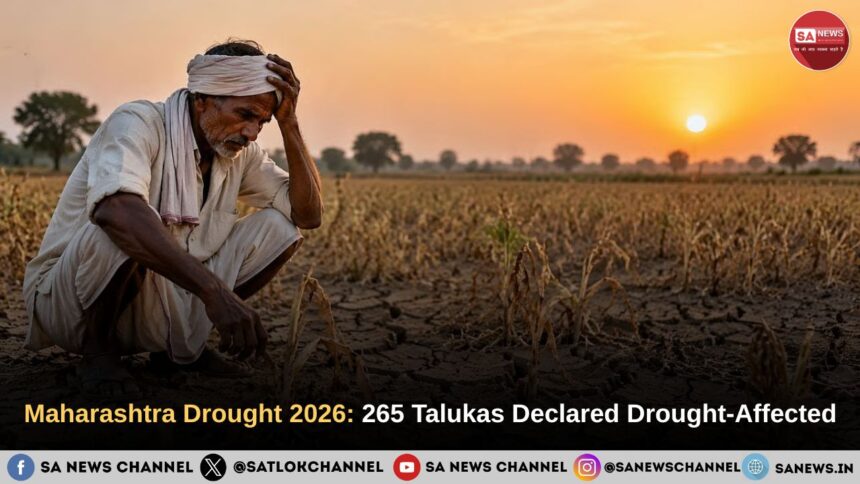
Mumbai, October 5, 2026: Maharashtra is facing a severe drought situation, with the state government declaring 265 of the 358 talukas drought-affected following deficient and uneven rainfall during the 2026 monsoon season. The declaration covers about 74% of the state’s talukas and has triggered a series of relief and water-conservation measures aimed at protecting farmers, livestock and drinking-water supplies.
The drought declaration came after months of inadequate and uneven rainfall across Maharashtra. While some districts received normal or excess rainfall, several important agricultural regions experienced prolonged dry spells and substantial rainfall deficits. The situation has raised concerns about standing crops, groundwater availability, reservoir storage, livestock, agricultural loans and the upcoming Rabi sowing season.
The state government’s decision has also come at a critical time because the southwest monsoon has now withdrawn from Maharashtra. According to recent reports, 21 districts recorded deficient rainfall during the monsoon season, while some districts such as Nashik received excess rainfall. This uneven distribution highlights the highly regional nature of the current drought crisis.
Maharashtra Records Significant Rainfall Deficit
Rainfall is the most important factor determining agricultural production in Maharashtra, where a large proportion of farmers continue to depend on the monsoon. The 2026 monsoon, however, did not provide adequate or evenly distributed rainfall.
Between June 1 and September 22, Maharashtra normally receives around 953.2 mm of rainfall. During the same period in 2026, the state recorded about 787.2 mm, representing a deficit of approximately 17%. Some districts experienced much larger shortfalls. Solapur recorded a rainfall departure of around 57%, while Ahilyanagar recorded a deficit of approximately 42% during the period reported by the IMD.
The situation became particularly serious in parts of Marathwada and other drought-prone regions. The rainfall deficit affected soil moisture, water storage and crop development.
The problem is not simply the total amount of rainfall. The timing and distribution of rainfall are equally important. Agriculture requires rain at different stages of crop growth. Long dry spells between rainfall events can cause serious damage even when the seasonal rainfall total does not appear extremely low.
This year, several agricultural areas experienced precisely such conditions, increasing pressure on farmers who had already invested money in seeds, fertilizers, pesticides, labour and other inputs.
Drought Declared in 265 Talukas
On September 26, the Maharashtra government formally declared 265 of the state’s 358 talukas drought-affected under the applicable drought-management framework. The decision was taken under the state’s drought-management framework after assessing rainfall shortages and other indicators of water scarcity and agricultural distress.
The declaration is significant because it activates various relief mechanisms for affected regions.
Among the immediate measures are:
- Crop-loss assessment and panchnamas
- Restructuring of crop loans
- Concessions related to land revenue
- Deferment/stay on recovery of agricultural loans
- Measures to ensure drinking water availability
- Support for livestock and fodder
- Relaxation of norms under the rural employment guarantee programme
- Planning for water availability during the coming months
The government has also directed officials to speed up the assessment process so that financial assistance can reach affected farmers as quickly as possible. Maharashtra Agriculture Minister Dattatray Bharne said on October 2 that the government intended to provide drought relief to affected farmers before Diwali, while officials had been instructed to complete the panchnama process on a war footing.
Farmers Face the Biggest Impact
Farmers are at the centre of the drought crisis.
A drought does not affect farmers only through crop failure. It can affect the entire agricultural economy. When crops fail or yields decline, farmers may struggle to repay loans, purchase inputs for the next season or meet household expenses.
Soybean, tur, cotton, maize, sugarcane and other crops have been affected differently across regions.
In parts of Marathwada, traders and processors have estimated that soybean production could fall significantly compared with normal levels. Traders and processors have estimated that soybean yields could fall to around 40–50% of normal in Marathwada and around 60–70% of normal in Vidarbha.
The situation is also worrying for longer-duration crops such as tur or pigeon pea. Tur requires a longer growing period, and continued lack of moisture during flowering and pod development can reduce yields.
This could have consequences beyond farmers’ incomes.
Lower agricultural production can reduce market supplies and put upward pressure on food prices. Tur and chana prices have also come under pressure amid concerns about future production.
Rabi Season Faces a Major Challenge
Perhaps the biggest agricultural concern is not only the remaining Kharif crop but also the upcoming Rabi season.
Rabi crops such as wheat, chickpea (gram), and jowar depend heavily on adequate soil moisture and irrigation. A deficient monsoon leaves less water in reservoirs, wells and borewells.
Farmers therefore face a difficult decision: whether to invest in Rabi crops when water availability is uncertain.
If farmers reduce the area under Rabi cultivation, agricultural production could decline further. On the other hand, sowing water-intensive crops without sufficient water could result in additional financial losses.
Experts have warned that the rainfall deficit has already reduced soil moisture and depleted water reserves in several regions. This could discourage farmers from sowing crops such as gram and jowar during the Rabi season.
The situation could therefore become a cycle:
Less rainfall → lower water availability → reduced sowing → lower production → lower farm income → greater financial stress.
Breaking this cycle will require timely government support and careful water management.
Water Scarcity Becomes a Statewide Concern
The drought is no longer only an agricultural problem. It is increasingly becoming a drinking-water and urban water-management issue.
The Maharashtra government has ordered a minimum 10% reduction in water supply/use across urban local bodies from October 16, 2026, amid concerns over water availability and the evolving El Niño conditions. The move is aimed at conserving water amid drought conditions and concerns related to the evolving El Niño pattern.
The government has also prioritised water use.
Drinking water, livestock and fodder requirements will receive priority, followed by irrigation.
Industries have also been directed to reuse or recycle at least 30% of their water consumption. Authorities are also increasing monitoring of illegal extraction of groundwater and other water resources.
The water-cut decision is an indication that the government is preparing not only for the immediate drought but also for a prolonged period of water stress.
Drinking Water and Livestock Under Pressure
For rural Maharashtra, drought is closely connected with livestock.
Farmers who depend on cows, buffaloes, goats and other animals need water and fodder even when crops fail. When water becomes scarce, maintaining livestock becomes expensive.
Reports from drought-affected areas have highlighted cases in which farmers have considered or been forced to sell livestock because of rising costs and inadequate water and fodder. Reports from drought-affected parts of Maharashtra have highlighted the difficult choices facing rural families, particularly where tanker supplies are prioritised for human consumption.
The state has been using water tankers in several locations. Officials have also stressed the need for adequate fodder and water management.
This makes livestock protection an essential component of drought relief.
A farmer may lose a crop because of drought, but if livestock are also lost, the family’s ability to recover financially becomes even more difficult.
Government Moves to Protect Farmers From Loan Pressure
Agricultural debt is another major concern during drought.
Farmers generally invest heavily before and during the crop season. When rainfall fails, their income falls while loan repayments remain.
The Maharashtra government has therefore taken steps to restructure agricultural loans and prevent farmers from facing immediate recovery pressure.
The state’s drought-relief cabinet subcommittee has instructed officials to ensure that farmers are not harassed for crop-loan recovery. The state government has also sought appropriate action regarding recovery of agricultural loans during the drought period.
This is important because drought relief cannot be limited to direct financial assistance. Farmers also need temporary protection from financial pressure until they can recover their agricultural income.
The government has also discussed measures such as crop-loan restructuring, land-revenue concessions and electricity-related relief in drought-affected areas.
Panchnama and Crop-Loss Assessment
One of the most important steps after a drought declaration is an accurate assessment of crop losses.
Officials have been instructed to conduct panchnamas and collect information about the condition of crops. These assessments form the basis for determining eligible farmers and calculating assistance.
The state administration has directed its field machinery—including agriculture officers and local officials—to remain active in affected areas.
According to officials, although sowing had been completed across a large proportion of the targeted agricultural area, the actual condition of crops on the ground remained a major concern. Officials were preparing a factual assessment, with a final report expected later in October.
Accurate assessment is particularly important because drought conditions can vary considerably even within the same district.
Some villages may have received useful rainfall while nearby villages may have experienced prolonged dry periods. Therefore, relief distribution needs to be based on reliable field-level information.
Solapur and Other Dry Regions Under Pressure
Several parts of Maharashtra are particularly vulnerable because of their naturally dry climate and dependence on rainfall.
Solapur, for instance, recorded one of the state’s larger rainfall deficits during the monsoon period, making water management a major concern.
Marathwada has also emerged as one of the most severely affected regions. Latur, Dharashiv, Beed, Nanded and neighbouring areas have reported agricultural stress and rainfall shortages.
In some areas, farmers are dealing with the effects of drought after having already experienced extreme weather events in previous years.
The experience of Beed is particularly concerning. Recent reports have highlighted the contrasting risks faced by some communities, including drought following earlier episodes of damaging flooding.
This demonstrates a growing climate challenge: farmers may face both extreme rainfall and prolonged drought within relatively short periods.
Early Monsoon Withdrawal Adds to Concerns
The withdrawal of the southwest monsoon from Maharashtra has increased concerns because the state now has limited opportunity for significant additional rainfall from the main monsoon system.
The India Meteorological Department declared the withdrawal of the southwest monsoon from Maharashtra on October 3.
Twenty-one districts recorded deficient rainfall during the season.
This means the state must now depend increasingly on stored water, groundwater and other sources until the next monsoon.
The situation makes water conservation particularly important.
Reservoirs, dams, wells and groundwater systems will have to support drinking water, livestock and agricultural requirements for several months.
El Niño and Climate Concerns
The 2026 drought has also occurred amid an intensifying El Niño pattern that has been linked to concerns about rainfall variability and water availability.
El Niño can influence global and regional weather patterns and has historically been associated with changes in rainfall over parts of India.
The Maharashtra government has cited the evolving climatic situation while planning water restrictions.
However, drought should not be understood only as a result of one climatic phenomenon.
Local rainfall distribution, soil conditions, water-storage capacity, groundwater extraction, crop choices and irrigation practices all influence the severity of drought.
This means long-term drought management must go beyond emergency relief.
Food Prices Could Also Be Affected
Agricultural shortages can eventually affect consumers.
If production of soybean, pulses, maize and other crops declines significantly, market supply could tighten.
Pulses are particularly important because they form a major part of the Indian diet. Maharashtra is an important producer of several pulse crops.
A fall in production could contribute to higher prices unless supplies from other states or imports compensate for the shortage.
Experts have already raised concerns about production losses and the possibility of higher prices for certain crops.
Maharashtra’s drought is not only a local agricultural issue. It has the potential to influence regional food markets and household expenses.
Need for Water-Efficient Agriculture
The current crisis also highlights the importance of changing agricultural practices.
Water-intensive crops can create additional pressure in drought-prone regions. Farmers and policymakers may need to encourage crops that require comparatively less water, depending on local soil, climate and market conditions.
The promotion of:
- Drip irrigation
- Sprinkler irrigation
- Farm ponds
- Rainwater harvesting
- Watershed development
- Soil-moisture conservation
- Drought-resistant crop varieties
- Crop diversification
- Efficient groundwater management
can help improve agricultural resilience.
Micro-irrigation can be particularly useful because it delivers water closer to the plant’s root zone and can reduce unnecessary water loss.
However, farmers also need access to affordable technology, electricity, extension services and markets. Simply advising farmers to change crops is not enough.
Water Conservation Must Become a Community Effort
The drought has made it clear that water conservation cannot be the responsibility of farmers alone.
Urban residents, industries, local governments and rural communities all need to participate.
Households can reduce unnecessary water consumption. Industries can increase recycling and reuse. Farmers can adopt efficient irrigation systems. Local bodies can prevent leakage and illegal water extraction.
Village-level water budgeting can also help communities understand how much water is available and how much can safely be used.
Traditional and community-based water-conservation measures such as farm ponds, check dams, percolation tanks and watershed development can play an important role in improving groundwater recharge.
Government Relief Must Reach Farmers Quickly
Declaring drought is only the first step.
For farmers, the real test will be whether relief reaches them on time.
The state government has said it aims to process drought assistance after the necessary field assessments, with the objective of providing relief before Diwali.
Timely assistance is critical because farmers need money not only to meet household expenses but also to prepare for the next agricultural season.
Delays in compensation can force farmers to borrow money from informal sources at high interest rates.
Therefore, transparent beneficiary identification, accurate crop-loss assessment and direct transfer of assistance will be important.
The Road Ahead
Maharashtra now faces the difficult task of managing water resources until the next reliable rainfall season.
The state has already begun preparing for water scarcity by introducing restrictions and prioritising drinking water and livestock needs. Officials are also planning how to preserve water reserves for the coming months.
But the crisis requires both short-term and long-term action.
In the short term, the government must ensure:
- Timely drought compensation.
- Protection of farmers from loan-recovery pressure.
- Adequate drinking water.
- Fodder and water for livestock.
- Support for affected crops.
- Affordable seeds and inputs for the Rabi season.
- Proper functioning of tanker systems.
- Transparent crop-loss assessments.
In the long term, Maharashtra needs stronger watershed development, groundwater recharge, efficient irrigation and climate-resilient agriculture.
How Spiritual Power Can Provide Relief During Drought and Natural Calamities
According to Spiritual Leader Sant Rampal Ji Maharaj, the present age is Kalyug, in which human beings may face various forms of suffering and difficulties. His teachings encourage people to seek spiritual knowledge while also serving humanity. Sant Rampal Ji Maharaj is not only spreading spiritual knowledge but is also giving significant importance to humanitarian service. According to today’s update, relief and service activities are carried out under the Annapurna Muhim for people who approach them for assistance during difficult circumstances.
Such activities are described as including support during flood-like situations, distribution of food and essential supplies, and assistance to gaushalas requiring cattle sheds, fodder and other necessities. These efforts are presented by Sant Rampal Ji Maharaj as an example of putting compassion and service into practice alongside spiritual teachings. In the context of the Maharashtra drought of 2026, this spirit of service can encourage people to support drought-affected farmers, livestock and vulnerable families, conserve water, distribute essential resources and participate in community welfare.
At the same time, drought relief requires scientific water management, government intervention, efficient irrigation and sustainable agricultural practices. Thus, spirituality and humanitarian service can complement practical disaster-management efforts by strengthening compassion, unity and social responsibility. People interested in the spiritual teachings associated with Sant Rampal Ji Maharaj can learn more by reading Gyan Ganga and Jeene Ki Raah , or by exploring his YouTube channel.
Conclusion
The Maharashtra Drought 2026 crisis is a major agricultural, economic and social challenge. With 265 of the state’s 358 talukas declared drought-affected, the crisis has moved beyond individual villages and become a statewide concern.
The rainfall deficit has affected crops, soil moisture and water availability, while farmers are increasingly worried about their incomes, loan repayments and the coming Rabi season.
The government’s drought declaration and relief measures provide an important first response, but their success will depend on how quickly and effectively they reach people on the ground.
The decision to impose a minimum 10% water cut from October 16 further demonstrates the seriousness of the state’s water situation.
For Maharashtra, the coming months will require careful water management, farmer support and community cooperation. The drought also provides an opportunity to rethink agricultural practices and build a more climate-resilient farming system.
The state’s future agricultural security will depend not only on the next monsoon, but also on how effectively Maharashtra conserves every drop of water available today.
The 2026 drought is therefore more than a shortage of rainfall—it is a test of Maharashtra’s ability to protect its farmers, manage its water resources and prepare for an increasingly uncertain climate.
FAQs – Maharashtra Drought 2026
1. What is the 2026 Maharashtra drought?
Maharashtra Drought 2026 refers to the severe water scarcity and agricultural stress caused by inadequate and uneven monsoon rainfall across several parts of the state.
2. How many talukas in Maharashtra have been declared drought-affected in 2026?
A total of 265 out of 358 talukas have been declared drought-affected.
3. What are the major causes of the Maharashtra drought?
The major factors include rainfall deficiency, uneven distribution of monsoon rainfall, prolonged dry spells, declining soil moisture and pressure on water resources.
4. How has the drought affected farmers?
Farmers are facing crop losses, reduced yields, water shortages, livestock-related difficulties and financial pressure due to declining agricultural income.
5. Which crops are affected by the drought?
Crops such as soybean, tur, cotton, maize and other Kharif crops have been affected in different regions, while water availability is also creating uncertainty for Rabi crops.
6. What measures has the Maharashtra government taken?
The government has announced drought-relief measures, including crop-loss assessment, assistance to affected farmers, loan-related relief, drinking-water arrangements and measures to protect livestock.
7. Why is water conservation important during the Maharashtra drought?
Water conservation is essential to protect drinking-water supplies, livestock, agriculture and groundwater resources until the next adequate rainfall season.
8. How can farmers manage drought conditions?
Farmers can adopt water-efficient irrigation, drought-tolerant crop varieties, soil-moisture conservation, farm ponds, rainwater harvesting and suitable crop diversification.
9. Can spirituality help communities during drought and natural calamities?
Spirituality can encourage compassion, community service, responsible use of natural resources and support for affected families. It can complement, but not replace, scientific and government-based drought-management measures.
10. What role can Sant Rampal Ji Maharaj’s teachings play during a drought?
The values associated with Sant Rampal Ji Maharaj, such as compassion, service and helping people in difficult circumstances, can inspire community support and humanitarian assistance for drought-affected people.
11. What is the biggest challenge after the drought declaration?
The key challenge is ensuring that relief reaches genuinely affected farmers quickly while managing drinking water, livestock needs and agricultural water requirements.
12. What can be done to prevent future drought impacts?
Long-term solutions include watershed development, rainwater harvesting, groundwater recharge, micro-irrigation, sustainable agriculture, water conservation and better drought preparedness.