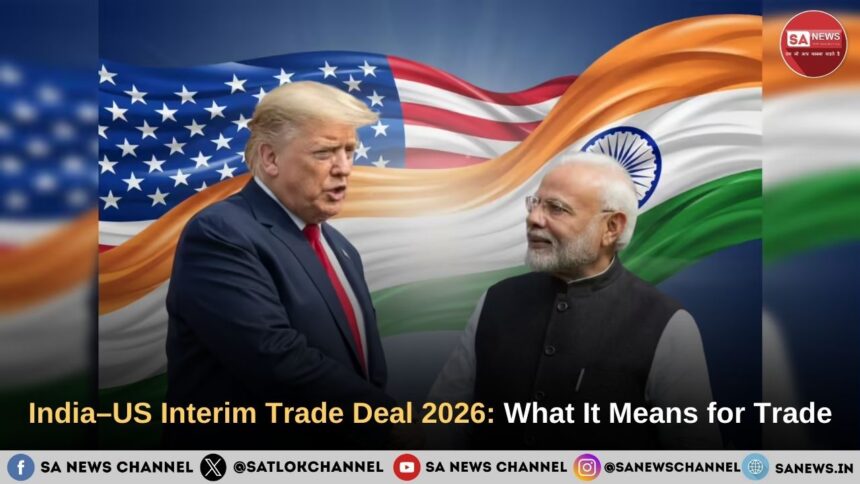
India–US Interim Trade Deal 2026: India and the United States have taken an important step to improve their trade relationship. On 7 February 2026, both countries announced a landmark interim trade deal. This agreement is being seen as a major reset in economic ties between the two nations.
The deal comes after a period of tension, especially after the United States imposed very high tariffs on Indian goods in 2025. Now, with this new agreement, both sides are trying to move forward in a positive direction.
Why This Trade Deal Was Needed
In 2025, trade relations between India and the United States became strained. The U.S. imposed additional duties of up to 50% on many Indian products. This was mainly linked to India’s purchase of Russian oil, which the U.S. did not support.
These high tariffs made Indian products more expensive in the U.S. market. As a result, many Indian exporters suffered losses. Industries such as textiles, leather, footwear, gems, and pharmaceuticals were badly affected.
The new interim trade deal aims to fix this situation and rebuild trust between the two countries.
Big Relief for Indian Exports
One of the most important parts of the deal is the reduction of U.S. tariffs on Indian goods. Under the agreement, the U.S. has cut tariffs from 50% down to 18%.
This is a huge relief for Indian exporters.
Industries that are expected to benefit the most include:
- Textiles and garments
- Leather and footwear
- Chemicals
- Gems and diamonds
- Pharmaceuticals
With lower tariffs, Indian products will become cheaper and more competitive in the U.S. market. This can help Indian companies increase exports, earn more revenue, and create more jobs.
What India Has Agreed to Do
In return for tariff relief, India has agreed to lower or remove tariffs on several American products. These include both agricultural and industrial goods.
Some of the key U.S. products getting better access to India are:
- Dried distillers’ grains (used for animal feed)
- Red sorghum for livestock
- Tree nuts such as almonds and walnuts
- Fresh and processed fruits
- Soybean oil
- Wine and spirits
This means American farmers and producers will find it easier to sell their products in India.
Non-Tariff Barriers Also Addressed
The deal is not only about tariffs. It also talks about non-tariff barriers, which are rules and regulations that make trade difficult.
For many years, the U.S. had concerns about India’s policies in areas like:
- Medical devices
- Information and communication technology (ICT) products
- Agricultural standards
Under the new agreement, both countries have agreed to work on reducing these barriers. This can make trade smoother and faster.
Benefits for the United States
The interim trade deal is also important for the U.S.
With India lowering tariffs, American companies will get:
- Better access to one of the world’s largest markets
- New opportunities for farm exports
- Stronger demand for industrial goods
The agreement also supports the idea of strong and reliable supply chains. This is important at a time when global trade is facing disruptions due to conflicts and economic uncertainty.
Step Toward a Full Trade Agreement
This deal is called an interim agreement, which means it is not the final one. Both India and the U.S. have clearly said that this is only a first step.
Also Read: US Scraps H-1B Lottery, Brings Wage-Based Selection, $100,000 Fee and Expanded Vetting
The long-term goal is to sign a full Bilateral Trade Agreement (BTA). Such an agreement would cover more sectors and provide clear rules for long-term trade cooperation.
Both sides have agreed to continue talks and build on the progress made through this interim pact.
How Industry Leaders Are Reacting
Many industry leaders and business groups have welcomed the agreement. They believe it sends a strong and positive message to the global market.
According to them:
- The deal shows trust between India and the U.S.
- It can attract foreign investment
- It can help revive slow trade growth
Investors usually prefer stable and predictable trade relations. This agreement helps create that confidence.
Concerns Raised by Indian Farmers
While businesses have welcomed the deal, farmer groups in India have raised concerns.
Their main worry is that cheaper agricultural imports from the U.S. could hurt Indian farmers. Products like soybean oil, animal feed, and fruits may compete with local produce.
Farmers fear that:
- Prices of local crops may fall
- Small farmers may struggle to compete
- Domestic agriculture could face pressure
These concerns highlight the need for careful implementation of the agreement, so that farmers are protected while trade grows.
Why This Deal Matters
This interim trade deal is important for several reasons.
First, it reduces tension between two major economies. Second, it helps Indian exporters regain lost ground in the U.S. market. Third, it opens new opportunities for American farmers and businesses.
Most importantly, it shows that dialogue and negotiation can solve trade disputes.
Conclusion
The India–US interim trade deal announced on 7 February 2026 marks a fresh start in economic relations between the two countries. With lower tariffs, improved market access, and a promise to address long-standing trade issues, the agreement creates hope for stronger cooperation.
At the same time, concerns raised by farmers remind us that trade policies must balance growth with protection of local interests.
As talks move forward toward a full Bilateral Trade Agreement, all eyes will be on how both countries manage this balance. If handled carefully, this deal could lead to long-term benefits for businesses, workers, and consumers in both India and the United States.