



You’ve been staring at your laptop for three hours, but you can’t remember what you accomplished. Your coffee has gone cold again. Every notification feels like an assault, and the thought of Monday morning makes your stomach turn. If this sounds familiar, you’re not alone. You’re experiencing the early warning signs of workplace burnout, and ignoring them could cost you more than just your productivity.
- Understanding the Real Causes of Workplace Burnout
- Early Warning Signs You’re Heading Toward Burnout
- Practical Strategies to Prevent Employee Burnout
- Set Non-Negotiable Boundaries
- Master Workload Management Techniques
- Build Recovery into Your Schedule
- Cultivate Meaningful Work Connections
- Realign Your Work with Your Values
- How to Recover from Burnout If You’re Already There
- Creating a Sustainable Career Path
- Take Action Before You Reach Your Breaking Point
- Beyond Burnout: From Sustainable Work to Meaningful Living
Burnout isn’t simply about working too hard or feeling tired. It’s a state of chronic workplace stress that hasn’t been successfully managed, leading to physical exhaustion, mental detachment, and a collapse in professional efficacy. The World Health Organization officially recognized burnout as an occupational phenomenon in 2019, yet millions of professionals continue to push through the warning signs until they hit a wall.
This guide provides evidence-based strategies to help you prevent burnout before it derails your career, health, and wellbeing. Whether you’re navigating a demanding corporate role, managing teams, or building your own business, these practical frameworks will help you sustain high performance without sacrificing yourself in the process.
Understanding the Real Causes of Workplace Burnout
Before you can prevent burnout at work, you need to understand what actually causes it. Contrary to popular belief, burnout isn’t just about working long hours. Research identifies six key organizational factors that contribute to employee burnout:
- Unsustainable workload: Consistently more work than time or resources available
- Perceived lack of control: Limited autonomy over how and when you work
- Insufficient recognition: Effort that goes unnoticed or undervalued
- Poor workplace relationships: Toxic colleagues, unsupportive management, or isolation
- Unfairness: Inconsistent treatment, favoritism, or inequitable policies
- Values mismatch: Personal principles conflicting with organizational culture
Identifying which factors affect you most is the first step toward developing targeted burnout prevention strategies. Take an honest inventory of your current situation before implementing solutions.
Early Warning Signs You’re Heading Toward Burnout
Recognizing burnout symptoms early gives you the best chance of course correction. Watch for these red flags:
Physical symptoms of burnout:
- Chronic fatigue that doesn’t improve with rest
- Frequent headaches or muscle tension
- Changes in sleep patterns or appetite
- Weakened immune system and increased illness
Emotional and mental signs:
- Cynicism about your work or colleagues
- Difficulty concentrating or making decisions
- Sense of failure or self-doubt
- Detachment from work responsibilities
- Loss of motivation or passion for projects that once excited you
Behavioral changes:
- Procrastinating more than usual
- Withdrawing from colleagues or social commitments
- Turning to food, alcohol, or substances to cope
- Taking frustrations out on others
If you’re experiencing three or more of these symptoms consistently for several weeks, it’s time to implement immediate changes.
Practical Strategies to Prevent Employee Burnout
Set Non-Negotiable Boundaries
Preventing burnout starts with establishing clear professional boundaries. Without them, work will expand to fill every available hour of your life.
Implementation framework:
- Define specific work hours and communicate them to your team
- Create a shutdown ritual that marks the end of your workday, such as closing your laptop, changing clothes, or taking a short walk
- Disable work notifications outside designated hours
- Learn to say no to requests that exceed your capacity or fall outside your core responsibilities
One effective technique is the “protected time blocks” method: schedule 2 to 3 hour blocks for deep work with no meetings, emails, or interruptions. Treat these blocks as seriously as you would a client appointment.
Master Workload Management Techniques
Feeling overwhelmed often stems from poor prioritization rather than actual workload. Apply these workplace stress management approaches:
The Eisenhower Matrix: Categorize tasks into four quadrants:
- Urgent and important, do immediately
- Important but not urgent, schedule specifically
- Urgent but not important, delegate if possible
- Neither urgent nor important, eliminate
Time blocking: Rather than keeping an endless to-do list, assign specific time slots to specific tasks. This creates realistic expectations about what you can actually accomplish in a day.
The 80/20 rule: Identify the 20 percent of activities that generate 80 percent of your results. Prioritize these ruthlessly and question everything else.
Also Read : Why Failure Portfolios Are the New Resume: A Smarter Way to Get Hired
Build Recovery into Your Schedule
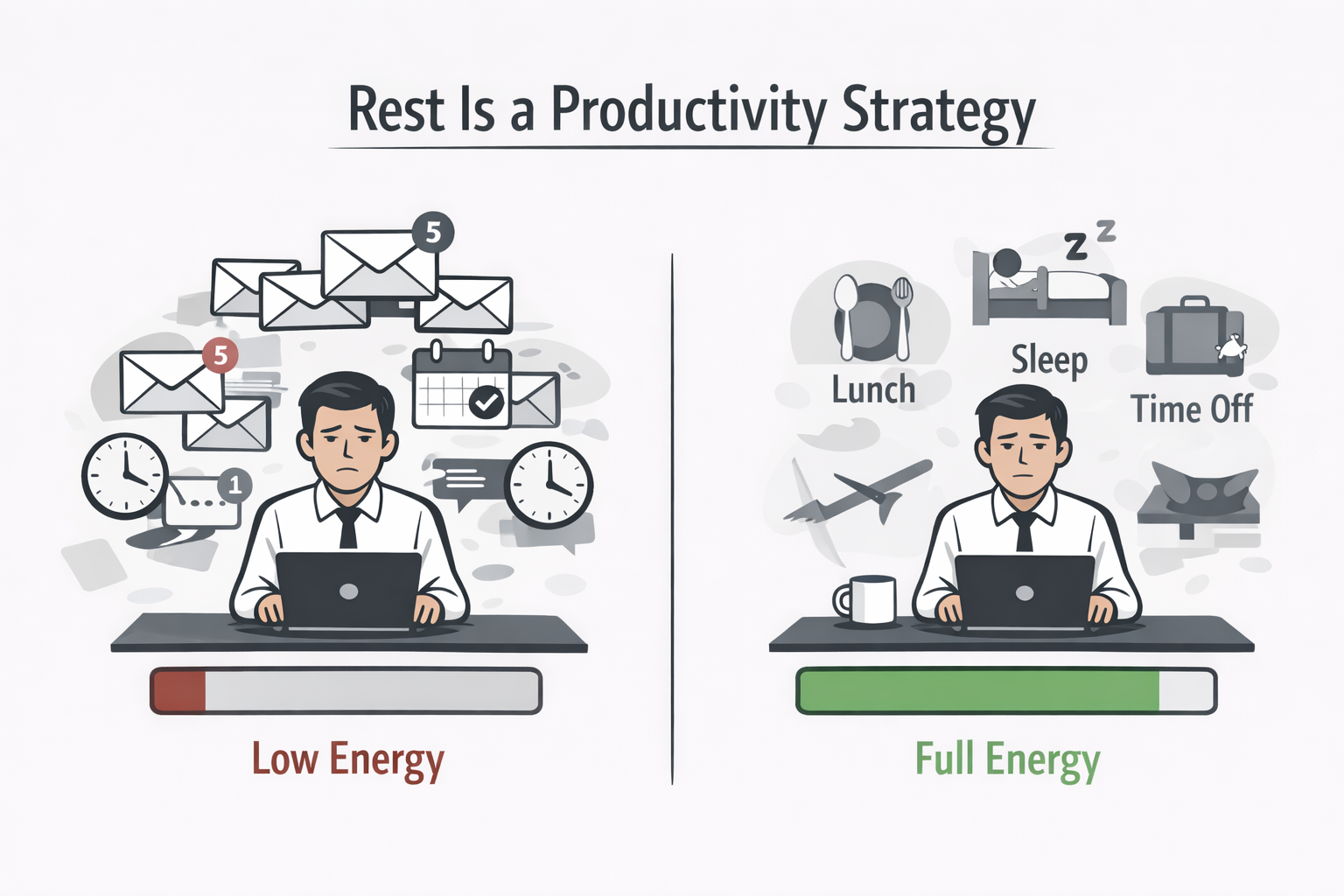
High performance requires strategic recovery. Professional athletes understand this principle. Corporate professionals often don’t.
Implement these work-life balance strategies:
- Take your full lunch break away from your desk
- Use your vacation days, all of them
- Schedule micro-breaks every 90 minutes during intense work periods
- Protect at least one evening per week as completely work-free
- Engage in activities that genuinely restore you, not just different forms of productivity
Research shows that people who take regular breaks demonstrate higher productivity and creative problem-solving than those who power through without pause.
Cultivate Meaningful Work Connections
Isolation accelerates burnout. Strong workplace relationships serve as a protective buffer against stress.
Action steps:
- Schedule regular check-ins with colleagues beyond just work topics
- Find a work ally or mentor you can be honest with about challenges
- Participate in team activities that align with your interests
- Set up informal coffee chats or virtual hangouts
- Share wins and challenges appropriately, connection requires some vulnerability
If your workplace culture is toxic beyond repair, remember that the most important boundary you can set is choosing to work somewhere that values employee wellbeing.
Realign Your Work with Your Values
Values misalignment is one of the most insidious burnout causes. You can have perfect boundaries and manageable workload, but if your work conflicts with your core principles, you’ll still feel depleted.
Reflection exercise:
- List your top five personal values, such as creativity, service, autonomy, learning, or impact
- Honestly assess how your current role honors or violates each value
- Identify small ways to incorporate more alignment in your day-to-day work
- Have a candid conversation with your manager about projects that energize versus drain you
Sometimes preventing burnout means acknowledging that your current role isn’t sustainable long-term and creating an exit strategy.
Also Read : How to Get a Promotion: A Strategic Guide to Advancing Your Career
How to Recover from Burnout If You’re Already There
If you’re past the prevention stage, recovery requires more intensive intervention:
- Talk to someone: Whether HR, your manager, or a mental health professional, you cannot recover from severe burnout alone
- Consider medical leave: Serious burnout may require time away to reset
- Seek professional support: A therapist specializing in workplace issues can provide targeted strategies
- Evaluate whether your environment is salvageable: Sometimes the healthiest choice is leaving a role that’s fundamentally unsustainable
Remember that recovering from burnout takes significantly longer than preventing it. One study found that full recovery can take anywhere from three months to three years, depending on severity.
Creating a Sustainable Career Path
Avoiding burnout isn’t a one-time fix. It’s an ongoing practice of self-awareness and course correction. Build these habits into your professional life:
- Conduct monthly self-assessments on your energy, engagement, and satisfaction levels
- Quarterly career check-ins to ensure your role still aligns with your values and goals
- Annual reviews of your boundaries and whether you’re honoring them
- Regular skill development that keeps work interesting and prevents stagnation
The professionals who sustain long, fulfilling careers aren’t those who push hardest. They’re those who push strategically and recover intentionally.
Take Action Before You Reach Your Breaking Point
Burnout prevention requires honest self-assessment and courageous boundary-setting. It means acknowledging that your sustainable pace might look different from your colleagues’, and that’s not only acceptable. It’s necessary.
Start small: choose one strategy from this guide and implement it this week. Maybe it’s defining your work hours, scheduling protected time for focused work, or having an honest conversation with your manager about workload. Small, consistent actions compound into significant protection against burnout.
Your career is a marathon, not a sprint. The question isn’t whether you can push through exhaustion one more time. It’s whether you’re building a professional life you can sustain for the long haul. The answer to that question determines everything.
Beyond Burnout: From Sustainable Work to Meaningful Living
Protecting yourself from burnout is not only about managing time and energy. It is also an invitation to reflect on why you work, what truly fulfils you, and where your life is ultimately headed. When professional effort aligns with inner purpose, exhaustion gives way to clarity. This deeper balance naturally leads to questions of meaning, consciousness, and connection with the Divine. Many seekers find such reflection enriched through spiritual wisdom that goes beyond routine self care.
Thoughtful books like “Gyan Ganga” and “Way of Living” by Saint Rampal Ji Maharaj gently explore authentic worship, purposeful living, and inner peace. They do not demand belief but encourage understanding, offering a quiet path from outer success to inner enlightenment.