

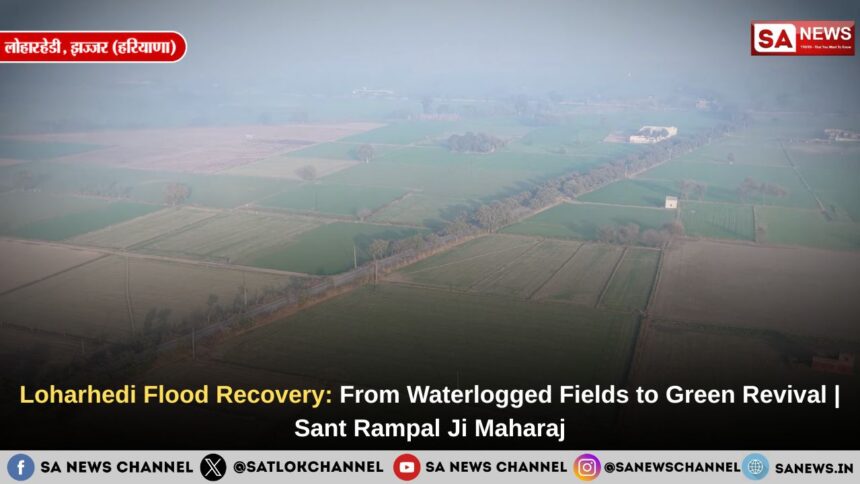
The small village Loharhedi, located in Bahadurgarh tehsil of Jhajjar district in Haryana, had been going through such a tragedy over the past few months that broke the backbone of its farmers. This is not just a story of a natural disaster, but a story of struggle, hope, and transformation that the people here have witnessed and lived through with their own eyes.
- Village Submerged in Water for Months
- Severe Impact on Farmers’ Economic Condition
- Administrative Negligence Worsened the Situation
- Beginning of Relief: When Help Reached the Village
- Technical Solution: How the Water Was Drained
- Ground Reality: From Destruction to Prosperity
- Voices of Farmers: Directly from the Fields
- Social Impact: Hope Returns to the Village
- Loharhedi Becoming an Example by the Blessings of Sant Rampal Ji Maharaj
This report has been prepared from the very land of that village, where until some time ago there was 4–5 feet of stagnant, rotten water, and today the same land is flourishing with green wheat crops.
Village Submerged in Water for Months
For the farmers of Loharhedi, the past seven to eight months were nothing less than a nightmare. The fields were so heavily flooded that not only did farming come to a halt, but there was not even space left to keep livestock. In many parts of the village, conditions became so severe that people were unable to live their daily lives properly.
Village Panchayat member Karmveer says,
“Water had accumulated up to three to four feet. Around 350–400 acres of land in the entire village were submerged. The paddy crop was completely destroyed, and there was no hope left for sowing wheat.”
This was not just the impact of a single season, but prolonged waterlogging had started affecting the quality of the soil itself. The stagnant, rotten water in the fields began to threaten soil fertility.
Severe Impact on Farmers’ Economic Condition
Around 60–65% of Loharhedi’s population depends on agriculture. In such a situation, crop destruction directly impacts their income and livelihood. For the farmers, this was not just a loss, but a crisis of survival.
Farmer Deepak says,
“If the water had not drained, only 20–30% of the land would have remained suitable for farming. The rest would have remained barren. We would have suffered complete losses.”
About 80–90% of the paddy crop had already been destroyed. Many farmers had taken loans for farming, but due to crop failure, they faced a crisis in repaying their debts. Some farmers even said that if the situation had continued like this, they would have had no option but to quit farming.
Administrative Negligence Worsened the Situation
When conditions deteriorated, the villagers approached the administration. However, according to the farmers, they received only assurances.
Karmveer says,
“We went to government offices many times, but every time there was only delay and avoidance. No concrete help was provided. The government did not even take note of our condition.”
This allegation is not of just one individual but reflects the collective experience of the entire village. Farmers say that if timely action had been taken at the government level, much of the damage could have been reduced.
Beginning of Relief: When Help Reached the Village
Amid such a hopeless atmosphere, a new ray of hope emerged when assistance arrived from Sant Rampal Ji Maharaj.
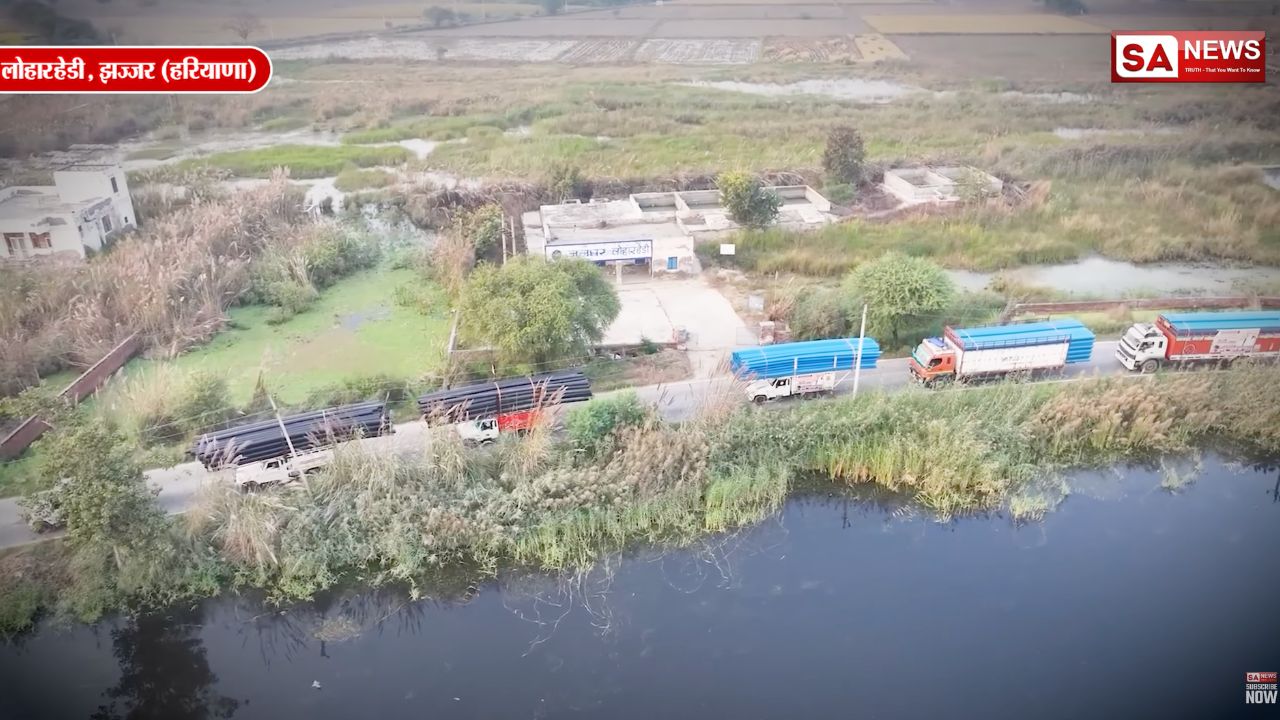
The arrival of relief material in the village was no less than a celebration. Villagers riding on tractors, the sound of drums, and showers of flowers reflected the joy of relief that the village had been waiting for for a long time.
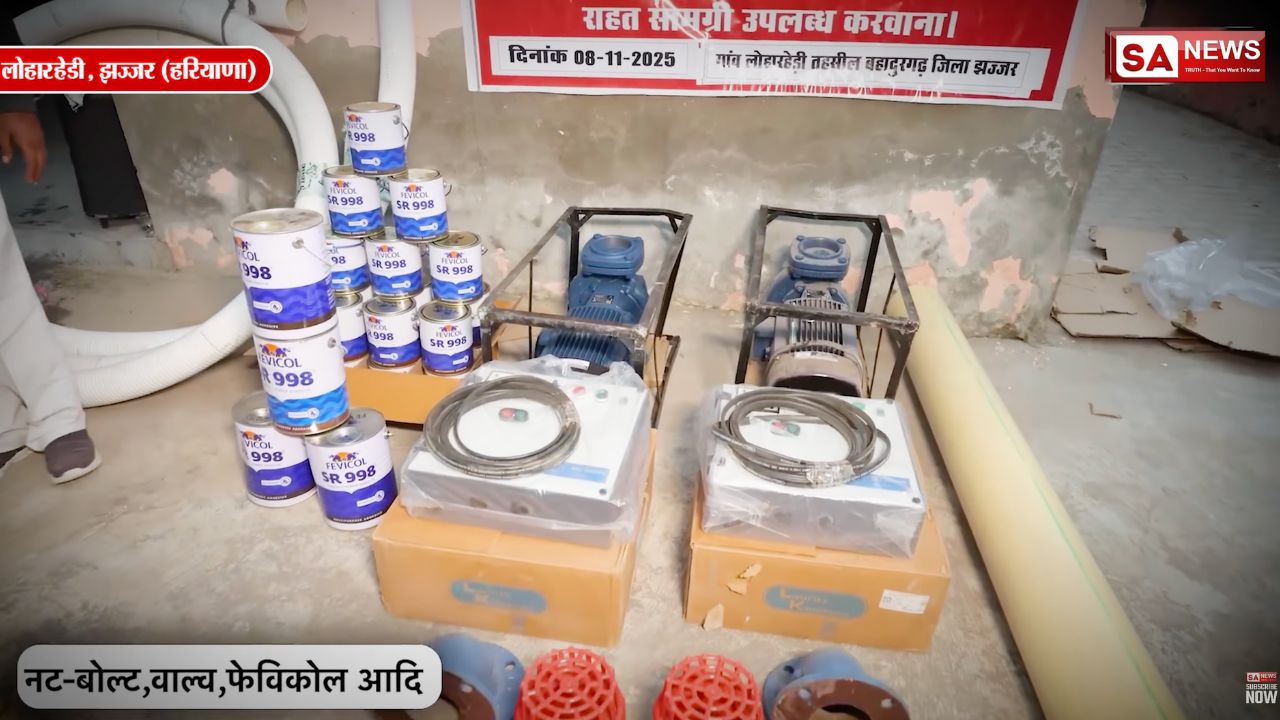
Under the relief work, about 14,000 feet of 8-inch pipeline and two 15 HP motors were provided to the village. Along with this, starters, valves, and other necessary equipment were also made available.
Technical Solution: How the Water Was Drained
This relief was not just symbolic but completely technical and well-planned. The pipeline was laid in such a way that the accumulated water in the fields could be drained far away.
A farmer from the village says,
“With the installation of pipes and motors, water was continuously pumped out. Within a few days, all the water was removed from the fields. Then we sowed the crops again.”
Working day and night, the volunteers and villagers together managed to remove that stubborn water from the village, which had been a curse for the farmers for months.
Ground Reality: From Destruction to Prosperity
Today, when one stands in the fields of Loharhedi, it is hard to believe that this same place was once submerged in water. Where there was once silence and despair, now the sound of tractors and the smiles of farmers can be seen. The fields are waving with wheat crops, and irrigation water has now become life-giving.
An elderly farmer named Rajveer says,
“Earlier this water was our enemy, now the same water is giving life to our crops. Around 90% relief has been achieved.”
Voices of Farmers: Directly from the Fields
Relief and satisfaction are clearly visible in the words of Loharhedi’s farmers.
One farmer says,
“We were completely finished. There was no way out. But when help arrived, it felt like we got a new life.” Another farmer adds,
“If this help had not come, we would not have been able to farm. Now 90% of the land has been sown again.” Farmers also say that this help was provided without any discrimination and no financial burden was placed on them.
Social Impact: Hope Returns to the Village
The impact of this entire event was not limited to the fields but affected the social fabric of the whole village. Where people were earlier hopeless and distressed, now a new energy can be seen in the village. Both youth and elders consider this transformation a significant turning point in their lives.
An elderly villager says, “After Sir Chhotu Ram, if anyone has understood the pain of farmers, it is Him. Today every person in the village is happy.”
Loharhedi Becoming an Example by the Blessings of Sant Rampal Ji Maharaj
The story of Loharhedi is not just of one village, but it shows how timely help and technical solutions can change situations. After being submerged in water for months, today this village has stood up again. Farmers have revived their land and rekindled hope for the future.
This incident also raises the question of whether the administration should have been more active in such circumstances. The support of Sant Rampal Ji Maharaj is not limited to this one crisis; He stands with every needy person without any caste or discrimination. Villagers say that He has never asked anyone about their class or community but has embraced everyone equally.
In today’s time, where many so-called saints take money in the name of service, Maharaj Ji helps selflessly. From treatment of the poor, helpless, and destitute to building homes, providing education and food, and offering financial assistance to farmers—He supports openly. He is an extraordinary saint; today everyone bows before Him. He is the incarnation of Kabir Parmeshwar.