

Synopsis: Bhoda Hoshnag village in Haryana’s Fatehabad district had been facing severe water logging for nearly three months, leaving agricultural fields submerged under 2 to 2.5 feet of foul-smelling water. Crops like cotton and millet had already been destroyed, and daily life had come to a standstill.
- Key Takeaways: Bhoda Hoshnag Flood Relief Efforts
- Flood Crisis Disrupts Life in Bhoda Hoshnag
- Panchayat Seeks External Support After Limited Relief
- Immediate Deployment of Drainage Infrastructure
- Complete System Delivered for Immediate Use
- Responsibility Assigned to Villagers
- Transparency Through Video Documentation
- Impact on Farmers and Rural Economy
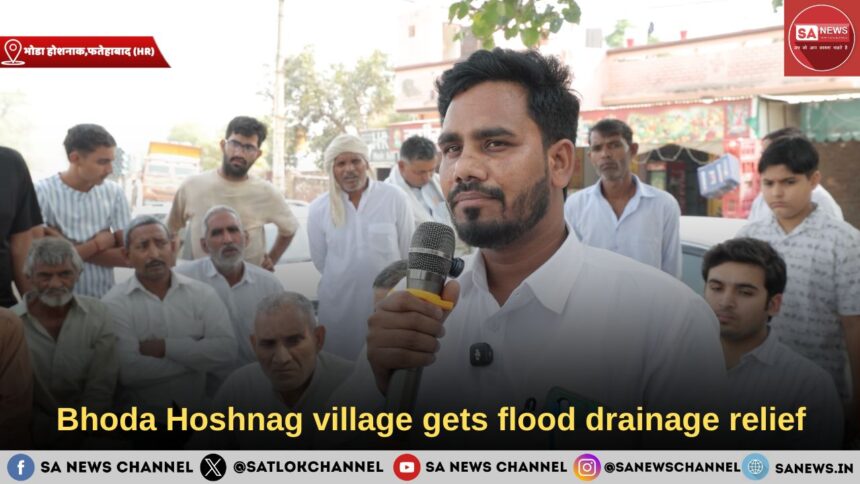
- Ground Reactions Reflect Relief and Hope
- A Long-Term Solution to Recurring Flooding
- Restoring Agricultural Continuity and Stability
Children were being carried to school on shoulders through flooded lanes, while many families had migrated due to health risks, snakes, and worsening conditions. With limited relief from authorities, a drainage solution involving pipelines and motors has now been implemented, offering hope for water removal and timely sowing of the next crop.
In response to the crisis, the village panchayat approached Sant Rampal Ji Maharaj with a formal request after learning about similar assistance provided in nearby areas.
Key Takeaways: Bhoda Hoshnag Flood Relief Efforts
- Bhoda Hoshnag village faced 3 months of severe flooding and waterlogging
- Around 2–2.5 feet of stagnant, polluted water affected fields and homes
- Crops like cotton and millet were completely destroyed
- A drainage system of 6500 ft, 8-inch pipeline and two motors (15 HP & 10 HP) was provided
- Equipment included complete installation materials, ensuring immediate usability
- The system aims to enable water drainage and next crop sowing
- Villagers have been assigned responsibility for implementation and maintenance
- A three-stage video documentation process has been planned for transparency
- The solution is designed as a long-term measure for recurring water logging issues
Flood Crisis Disrupts Life in Bhoda Hoshnag
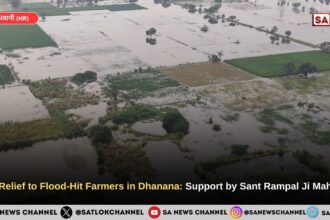
For nearly three months, Bhoda Hoshnag remained under severe water logging conditions. Fields were filled with black, foul-smelling water up to 2–2.5 feet, leading to the complete destruction of standing crops, particularly cotton and millet.
The impact extended beyond agriculture.
- Village lanes turned into pond-like structures
- Children were carried on shoulders to cross waterlogged paths
- Many families left their homes temporarily due to snakes and disease risks
- Schools and local facilities were affected, with education disrupted
Residents described the situation as “similar to living in hell,” highlighting the scale of distress caused by prolonged flooding.
Panchayat Seeks External Support After Limited Relief
With the situation worsening and limited progress from administrative channels, the village panchayat decided to seek help externally. After observing relief efforts in nearby Khasa village, representatives contacted Muninder Dharmarth Trust in Barwala to submit their request to the disciples of Tatvdarshi Sant Rampal Ji Maharaj.
The demand included a structured drainage system capable of removing stagnant water and restoring agricultural activity. The request specifically mentioned:
- 6500 feet of 8-inch pipeline
- Two motors (15 HP and 10 HP)
Immediate Deployment of Drainage Infrastructure
Following the request, the required materials were arranged and delivered to the village. The setup included:
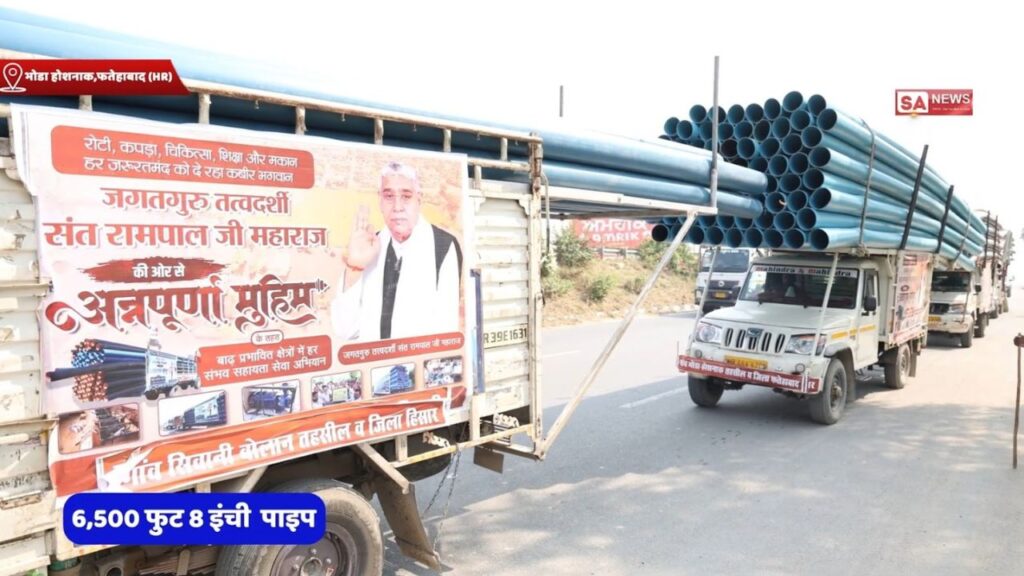
- 6500 ft, 8-inch high-quality pipeline
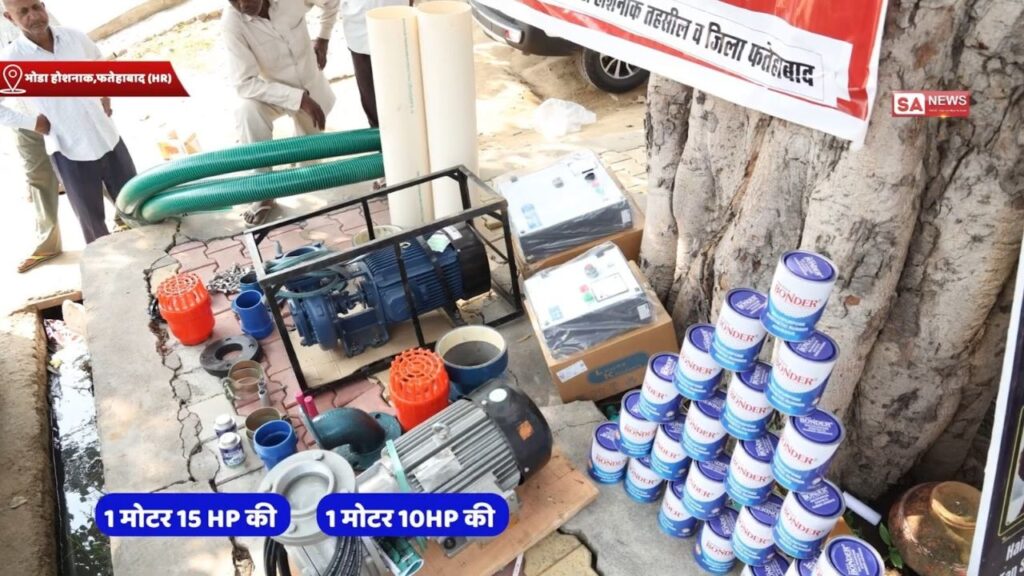
- One 15 HP motor and one 10 HP motor
- Motors from Crompton and Kirloskar
The pipes were described as durable, with an expected lifespan of 20 to 30 years, indicating a long-term solution rather than temporary relief.
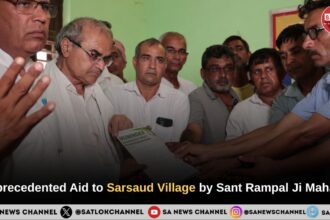
The equipment was handed over at a central village platform (chabutra), in the presence of villagers and the panchayat.
Complete System Delivered for Immediate Use
The support extended far beyond just major equipment. At a single instruction from Tatvadarshi Sant Rampal Ji Maharaj, His disciples arranged everything required to make the system operational, including starters, cables, elbows, suction pipes, rubber gaskets, adhesives like Fevicol, and even the smallest steel nuts and bolts.
Villagers were informed that:
- No additional expenditure was required
- The system was ready for installation and use
- The setup would remain a shared village asset permanently
Responsibility Assigned to Villagers
Along with the material, a formal notice was issued to the village. The key instructions included:
- The water must be drained within the specified time
- The next crop must be sown
- If these conditions are not met, future assistance may not be provided
Villagers were also encouraged to request additional materials if required, but the responsibility for execution and maintenance was clearly assigned to them.
The entire panchayat signed the document, confirming their commitment.
Transparency Through Video Documentation
To ensure accountability and transparency, a structured documentation process has been planned:
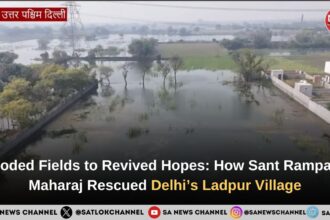
- Drone footage of the flooded village (already recorded)
- A second video after water drainage
- A third video when crops are successfully growing
These videos will be shown during gatherings at Satlok Ashrams to demonstrate how resources are being utilized and to maintain trust in the system.
Impact on Farmers and Rural Economy
The flooding had caused widespread economic distress:
- Farmers reported losses worth lakhs of rupees
- Around 400 acres of land remained submerged
- Livestock suffered due to lack of fodder
- Labourers were also affected, as agricultural activity had stopped
With the drainage system now in place, villagers expect:
- Water to be removed within approximately one month
- Land to dry in time for wheat sowing
- Restoration of basic livelihood and food security
Ground Reactions Reflect Relief and Hope
Villagers described the intervention as a turning point:
- “We got a new life today”
- “For three months, we carried children on our shoulders”
- “Now there is hope for the next crop”
Farmers noted that without such intervention, they could have fallen into debt and prolonged hardship. Many also highlighted that earlier assistance from authorities was insufficient for the scale of flooding.
A Long-Term Solution to Recurring Flooding
Villagers plan to:
- Install and bury the pipeline system permanently
- Use it during future rainfall to prevent water accumulation
The system is being viewed not just as immediate relief, but as a lasting solution to waterlogging, potentially preventing similar crises in the future.
Restoring Agricultural Continuity and Stability
The situation in Bhoda Hoshnag reflects how prolonged waterlogging can disrupt both agriculture and daily life. With a structured drainage system now in place and responsibility shared at the community level, the focus has shifted to timely water removal and crop sowing.
For More Information Please Do Visit Our Various Social Platforms:
Website: www.jagatgururampalji.org
YouTube: Sant Rampal Ji Maharaj
Facebook: Spiritual Leader Sant Rampal Ji
‘X’ handle: @SaintRampalJiM