


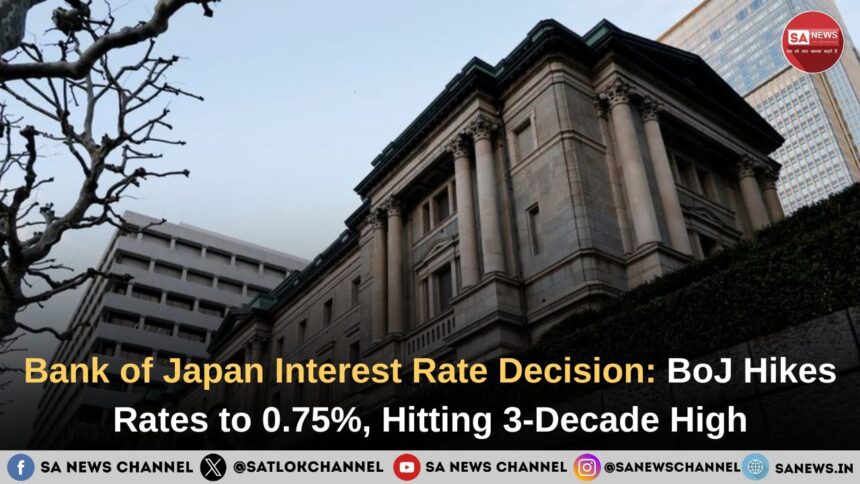
The Bank of Japan (BoJ) has officially raised its key short-term interest rate to 0.75% on Friday, December 19, 2025. This historic move marks the highest level for Japan interest rates in nearly 30 years, signaling a definitive end to the country’s era of ultra-loose monetary policy.
- Key Highlights of the BoJ Decision
- Market Reaction: The “Yen Carry Trade” Unwind Explained
- Summary of BoJ Policy Update (December 2025)
- Impact on India (Sensex & Nifty)
- Sectoral Impact: Winners and Losers
- Global Economic Implications
- True Peace Lies Beyond Economic Fluctuations
- FAQ: Bank of Japan Interest Rate Decision
The Bank of Japan interest rate decision was unanimous, driven by rising wages and inflation that has consistently stayed above the central bank’s 2% target. Governor Kazuo Ueda stated that the economy is on track to meet price stability targets, justifying the Japan rate hike.

Key Highlights of the BoJ Decision
The financial world was closely watching the Bank of Japan interest rate decision time, which occurred during early Asian trading hours.
- Rate Hike: The short-term policy rate was lifted by 25 basis points to 0.75%.
- Inflation Outlook: The BoJ cited a “rising likelihood” of achieving its economic outlook as a primary driver.
- Future Guidance: Governor Ueda signaled that financial conditions would remain accommodative but hinted at further hikes if economic data aligns with forecasts.
Note: This decision is critical for global investors as it affects the “yen carry trade,” a strategy where investors borrow cheap yen to invest in higher-yielding assets abroad.

Market Reaction: The “Yen Carry Trade” Unwind Explained
The most significant global implication of the Japan rate hike is the potential unwinding of the yen carry trade.
What Is the Yen Carry Trade?
For decades, global investors borrowed money in Japan at near-zero interest rates (selling the Yen) to invest in higher-yielding assets in the US, India, and emerging markets. This cheap money fueled stock market rallies worldwide.
With the BoJ interest rate now at 0.75% and the US Federal Reserve cutting rates (signaling potential easing in 2026), the interest rate gap is narrowing.
- The Result: Investors are rushing to pay back their yen loans
- The Impact:
- Selling global assets (US stocks, Indian equities)
- Buying back Yen
- Resulting in falling stock markets and a surging Yen
Also Read: Trump Imposes 145% Tariffs on Chinese Imports: What It Means for Global Trade
Summary of BoJ Policy Update (December 2025)
| Metric | Previous Rate | New Rate | Date of Decision |
| Short-Term Policy Rate | ~0.50% | 0.75% | Dec 19, 2025 |
| Inflation Target | 2.0% | Above 2.0% | Ongoing |
Impact on India (Sensex & Nifty)
Indian markets, which have seen record highs in 2025, are particularly vulnerable. Foreign Institutional Investors (FIIs) who used cheap yen to buy Indian stocks may now pull out capital.
- Nifty 50: Opened lower as fears of liquidity tightening spooked traders
- Rupee vs Yen: INR/JPY volatility is impacting Indian companies with Japanese debt or imports, especially in the auto sector
Also Read: IPO Frenzy: Dalal Street to Witness a Surge with 3 New Issues and 11 Listings Next Week
Detailed Breakdown of Policy Rates (December 2025)
| Central Bank | Current Rate | Trend | Key Concern |
| Bank of Japan (BoJ) | 0.75% | ⬆️ Hiking | Inflation / Wage Growth |
| US Federal Reserve | ~4.25% | ⬇️ Cutting | Employment / Recession Risk |
| RBI (India) | 5.25% | ⬇️ Cutting | Growth Support / Liquidity |
| ECB (Europe) | 3.00% | ⬇️ Cutting | Stagnation |
Sectoral Impact: Winners and Losers
The shift to 0.75% creates clear winners and losers across economies.
1. Japanese Banks (Winners)
For decades, Japanese banks suffered from crushed margins due to zero interest rates. With rates rising:
- Net interest margins are expanding
- Stocks of Mitsubishi UFJ Financial Group and Sumitomo Mitsui rallied sharply
2. Exporters & Auto Giants (Losers)
Japan’s export-heavy economy-led by companies like Toyota and Sony-benefited from a weak yen.
- A stronger yen reduces overseas earnings when repatriated
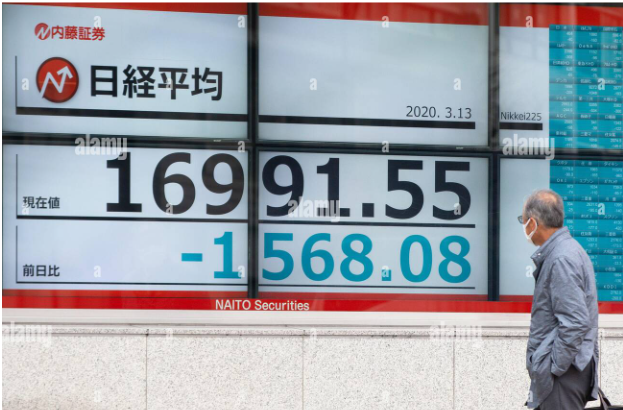
- Nikkei 225 fell 1.3%, closing near 50,168
3. Global Real Estate
Japanese capital has long funded global real estate projects. Higher borrowing costs could cool property markets dependent on Japanese financing.
Global Economic Implications
The BoJ interest rate hike coincides with a complex global economic landscape. While the US Federal Reserve is considering rate cuts, the Bank of Japan is moving in the opposite direction. This divergence creates volatility in currency markets.
Investors searching for Japan interest rate decision time found that the announcement came right before Indian market hours, influencing early trading sentiment. The Japan news cycle is now dominated by speculation on how fast the BoJ will normalize rates further in 2026.
True Peace Lies Beyond Economic Fluctuations
While the world focuses on the Bank of Japan interest rate decision and the fluctuations of the global economy, it is essential to reflect on the nature of material instability. Economies rise and fall, currencies strengthen and weaken, and interest rates fluctuate-causing stress and uncertainty for millions.
The world is obsessed with Maya (wealth)-gold, markets, and interest rates-yet even the most stable economies remain fragile. One decision in Tokyo can erase wealth in New York or Mumbai.
Supreme God Kabir Sahib explains that this world (Mrityu Lok) is inherently unstable-the realm of Kaal Brahm.
- The rich fear losing wealth
- The poor fear never gaining it
True peace is not found in stock charts, but in Satlok, where there is no currency, debt, or death-only eternal bliss. This is attained not through investment portfolios, but through a true way of worship under the guidance of enlightened saint.
FAQ: Bank of Japan Interest Rate Decision
1. What is the new Bank of Japan interest rate as of December 2025?
The Bank of Japan has raised its short-term policy interest rate to 0.75%, the highest level in nearly three decades.
2. Why did the BoJ decide to hike interest rates?
The decision was driven by a solid cycle of rising wages and inflation consistently exceeding the 2% target, giving the central bank confidence in the economic outlook.
3. How does the BoJ interest rate decision impact Indian markets?
A hike in Japanese rates can trigger the unwinding of the yen carry trade, potentially leading to foreign fund outflows from emerging markets like India, causing volatility in the Nifty and Sensex.
4. When was the last time Japan’s interest rates were this high?
The current rate of 0.75% is the highest Japan has seen since the mid-1990s, marking a significant shift from its long-standing zero or negative interest rate policy.