


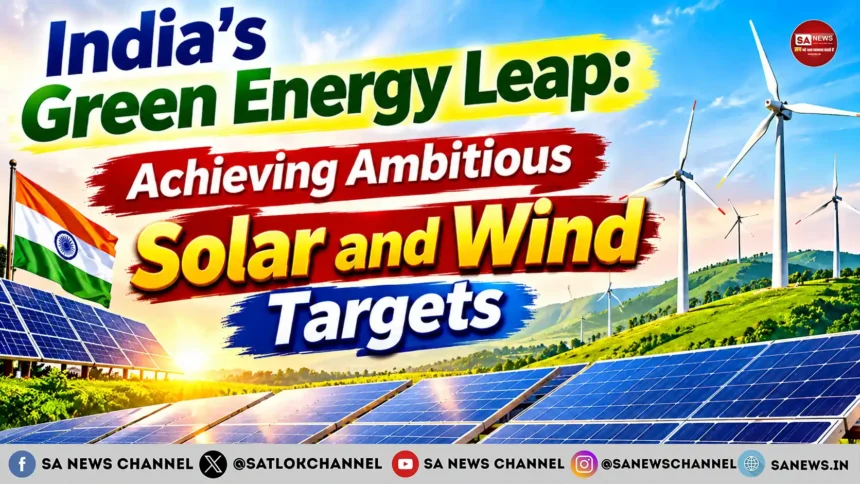
India is undergoing one of the most remarkable energy transformations in modern history. As urban centers expand and industrial production accelerates, the demand for reliable electricity has soared. Rather than relying solely on traditional fossil fuels, the nation has embraced clean power as a primary driver of growth. By prioritizing solar power, wind energy, and grid modernization, India is redefining how economic progress and environmental responsibility can work hand in hand. This shift toward sustainable energy not only reduces carbon emissions but also lays the foundation for a resilient, self-reliant future for millions of citizens.
- The Scale of India’s Green Energy Expansion
- Why Is Solar Energy Important for India?
- Wind Energy: Harnessing the Power of Nature
- Solar and Wind Energy: Why India Needs Both
- Major Government Initiatives Supporting Green Energy
- 1. National Solar Mission
- 2. PM-KUSUM Scheme
- 3. Green Energy Corridors
- 4. National Green Hydrogen Mission
- Economic Opportunities: How Green Energy Can Create Jobs
- How Green Energy Can Improve India’s Energy Security
- Challenges India Must Overcome to Achieve Its Targets
- 1. Land Availability
- 2. Energy Storage
- 3. Transmission Infrastructure
- 4. Investment and Financing
- 5. Environmental Protection
- Addressing Grid Integration and Storage Challenges
- Spiritual Wisdom for Environmental Protection and Sustainable Living
- FAQs on India’s Green Energy Leap
The Scale of India’s Green Energy Expansion
The scale of India’s renewable energy sector has grown significantly over the past decade. From modest installations a decade ago, the country has crossed over 300 GW of non-fossil installed power capacity. This milestone reflects sustained policy support, large-scale infrastructure projects, and increasing private investment across multiple sectors.
Solar energy serves as the primary engine of this growth, supported by extensive utility-scale solar parks and growing rooftop adoption. Alongside solar, wind energy continues to play an essential role, particularly in coastal and high-wind regions like Gujarat, Tamil Nadu, and Rajasthan. Together, solar and wind installations supply an increasing share of daily electricity needs, curbing reliance on coal and reducing overall greenhouse gas emissions.
Why Is Solar Energy Important for India?
There are several reasons why solar energy has become a priority:
- Abundant sunlight: India receives considerable sunlight, providing significant potential for solar electricity generation.
- Lower electricity expenses: Households and businesses can reduce their dependence on grid electricity through rooftop solar systems.
- Reduced pollution: Solar power generates electricity without directly burning fossil fuels.
Also read: Solution to Pollution Video : बढ़ते प्रदूषण से पृथ्वी को नुकसान, क्या है इसका समाधान? | SA News
Wind Energy: Harnessing the Power of Nature
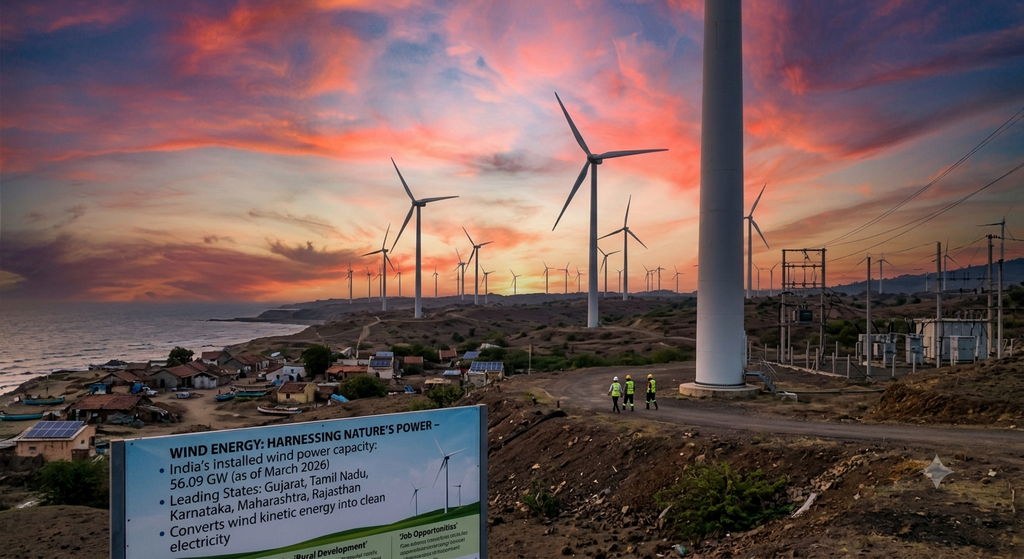
While solar energy depends on sunlight, wind energy uses the natural movement of air to generate electricity. India has considerable wind energy potential, particularly in coastal and western regions.
States such as Gujarat, Tamil Nadu, Karnataka, Maharashtra and Rajasthan have become important centres for wind power development.
Wind turbines convert the kinetic energy of moving air into electrical energy. Once installed, they can generate electricity without requiring the continuous purchase of fuel.
According to the Ministry of New and Renewable Energy, India’s installed wind power capacity reached approximately 56.09 GW by March 2022026. Wind power additions during FY 2025–26 reached a record 6.05 GW.
- Rural development: Solar installations can support electricity access in remote and underserved areas.
- Employment opportunities: Solar manufacturing, installation, maintenance and distribution create jobs.
Solar energy also offers an opportunity to make electricity generation more decentralised. Instead of depending entirely on large power stations, households, schools, hospitals and commercial buildings can generate some of their own electricity.
Benefits of Wind Energy
Wind power offers several advantages:
- It is a renewable and naturally replenished energy source.
- It reduces dependence on coal and other fossil fuels.
- It creates employment in manufacturing, construction and maintenance.
- It can support electricity generation in rural and coastal regions.
- It can work alongside solar power to create a more balanced energy system.
One important advantage is that wind and solar energy can complement each other. Solar panels generally produce electricity during daylight hours, while wind generation patterns can vary depending on the season and location.
Combining these sources can help improve the overall availability of renewable electricity.
Solar and Wind Energy: Why India Needs Both
India cannot depend on a single renewable energy source to meet all its future electricity requirements.Solar and wind energy have different generation patterns. Solar power is closely linked to sunlight, whereas wind power depends on wind speed and weather conditions.When both technologies are developed together, they can provide a more balanced electricity supply.
For example, a region may experience strong solar generation during the day and better wind generation during particular evenings or seasons.This is why the government and energy developers are increasingly exploring hybrid renewable energy projects.The International Energy Agency highlights that hybrid projects can reduce output variability, improve the use of transmission infrastructure and provide electricity profiles that better match consumer demand.
Major Government Initiatives Supporting Green Energy
India’s renewable energy growth is supported by several government policies and programmes. These initiatives aim to encourage investment, improve infrastructure and make clean electricity more accessible.
1. National Solar Mission
The National Solar Mission was introduced to accelerate solar power development in India. It encouraged investment in solar parks, photovoltaic technology, manufacturing and large-scale solar electricity generation.
2. PM-KUSUM Scheme
The PM-KUSUM scheme focuses on bringing solar energy to the agricultural sector.It supports the installation of solar-powered agricultural pumps and solarisation of existing irrigation systems and agricultural feeders.Farmers can benefit from reduced dependence on diesel and conventional electricity. Depending on the scheme component and arrangement, they may also earn additional income by supplying surplus electricity to the grid.
3. Green Energy Corridors
Renewable energy projects are often located far from major electricity consumption centres. Therefore, producing electricity is only one part of the challenge. That electricity must also be transported efficiently.Green Energy Corridors are designed to strengthen transmission infrastructure and connect renewable energy-rich regions with the wider electricity network.In March 2026, the Ministry of Power outlined plans to expand transmission infrastructure to integrate more than 500 GW of non-fossil fuel capacity by 2030.
4. National Green Hydrogen Mission
India is also exploring green hydrogen as an important part of its long-term energy transition.Green hydrogen is produced using renewable electricity to split water into hydrogen and oxygen. It has potential applications in industries such as steel, fertilisers, refining and heavy transport.This initiative can help reduce emissions in sectors where direct electrification is difficult.Together, these programmes demonstrate that India’s renewable energy strategy extends beyond solar panels and wind turbines.
Economic Opportunities: How Green Energy Can Create Jobs
The transition to renewable energy is not only about protecting the environment. It can also become an important driver of economic growth.The expansion of solar and wind power creates employment opportunities at different stages of the energy supply chain.
Some important employment areas include:
- Solar panel manufacturing
- Wind turbine production
- Renewable energy project construction
- Electrical engineering
- Installation and maintenance
- Battery manufacturing
- Energy management and research
- Renewable energy financing
India’s growing domestic manufacturing industry can also reduce dependence on imported equipment.
According to the IEA’s 2026 report, India has become the world’s second-largest manufacturer of solar photovoltaic modules. This development creates opportunities for domestic industries and strengthens India’s position in international clean energy markets. For young people, renewable energy offers opportunities to develop skills in engineering, technology, environmental management and technical maintenance.Small businesses can also participate by becoming installation partners, equipment suppliers and service providers.
How Green Energy Can Improve India’s Energy Security
India’s growing energy requirements make energy security an important national priority.Dependence on imported coal, oil and natural gas can expose the economy to international price fluctuations, supply disruptions and geopolitical uncertainties.Renewable energy provides an opportunity to reduce some of these risks because sunlight and wind are naturally available within the country.
The International Energy Agency estimates that renewable electricity helped India save more than USD 100 billion in cumulative coal and natural gas import costs between 2011 and 2025.This demonstrates that renewable energy can offer economic benefits alongside environmental advantages. Increasing domestic solar and wind generation can also support a more diversified electricity system.
However, energy security requires more than generating renewable electricity. India must also develop reliable transmission networks, storage facilities and flexible power systems.
Challenges India Must Overcome to Achieve Its Targets
Despite remarkable progress, India’s green energy journey is not without challenges.Achieving ambitious renewable energy targets requires careful planning, investment and coordination between governments, industries and communities.
1. Land Availability
Large solar parks and wind farms require considerable land.Identifying suitable land while protecting agricultural activities, local communities and natural habitats is a major challenge.Renewable energy development must be planned responsibly to avoid unnecessary environmental damage.
2. Energy Storage
Solar panels cannot generate electricity at night, while wind turbines depend on changing wind conditions.This creates a need for energy storage solutions.Battery energy storage systems and pumped-storage hydropower can help store surplus electricity and release it when demand increases.Without sufficient storage, renewable electricity may not always be available when consumers need it.
3. Transmission Infrastructure
Solar and wind projects are frequently developed in areas with strong natural resources but limited electricity transmission infrastructure.Modernising the grid and expanding transmission capacity are essential to transport electricity from generation sites to cities, industries and villages.
4. Investment and Financing
Renewable energy projects require substantial initial investment.Developers need access to affordable financing, reliable policies and efficient approval processes.Delays in land acquisition, permissions and payments can affect project development.
5. Environmental Protection
Although renewable energy is much cleaner than conventional fossil fuel generation, its development must still consider environmental impacts.Solar installations can affect land use, while wind farms require careful site selection to reduce risks to birds, bats and local ecosystems.Responsible planning is essential to ensure that clean energy projects remain genuinely sustainable.The IEA’s November 2026 report also identifies faster grid development, energy storage, improved system flexibility and streamlined project implementation as important requirements for India’s next stage of renewable growth.
Addressing Grid Integration and Storage Challenges
While expanding capacity is critical, integrating variable solar power and wind energy into the national grid requires careful balancing. Solar generation peaks during mid-day, whereas power demand often spikes during evening hours. To bridge this gap, grid managers and technology developers are deploying high-capacity Battery Energy Storage Systems (BESS) alongside pumped storage hydro projects.
Smart grid infrastructure, advanced weather forecasting, and real-time power management allow distribution companies to handle sudden fluctuations in renewable generation smoothly. These technical upgrades ensure that clean power remains stable, continuous, and reliable across all hours of the day.
Spiritual Wisdom for Environmental Protection and Sustainable Living
As humanity advances technologically-harnessing the power of the sun and the strength of the wind-it becomes essential to reflect on our deeper relationship with the natural world. Modern environmental challenges like climate change, air pollution, and ecological depletion are direct consequences of unrestrained consumption, greed, and a loss of moral alignment.
In his spiritual discourses, Sant Rampal Ji Maharaj emphasizes that true peace, balance, and harmony-both within human society and across nature-can only be restored when human beings live according to divine spiritual principles (Satgyaan). While technological measures like solar panels and wind turbines are helpful tools for managing physical resources, true environmental healing requires a shift in human character and consciousness.
According to the sacred teachings of Supreme God (Supreme Father Kabir), nature is a divine creation designed to support all living beings through balance and restraint. When humans act out of selfishness and material greed, that natural balance is disrupted. Sant Rampal Ji Maharaj teaches that by practicing true devotion, maintaining self-discipline, avoiding harmful habits, and treating all living creation with compassion, humanity aligns itself with divine law.
When human minds are purified through true spiritual knowledge, society naturally adopts lifestyle choices that preserve natural resources rather than exhaust them. Aligning technological progress with spiritual wisdom ensures that our efforts to care for the Earth bring lasting peace and true well-being to all.
FAQs on India’s Green Energy Leap
1. What is India’s target for renewable energy by 2030?
India aims to achieve 500 GW of non-fossil fuel-based power generation capacity by 2030, with solar power and wind energy serving as the major pillars of this expansion.
2. How does PM Surya Ghar Yojana benefit ordinary homeowners?
The scheme provides financial subsidies to assist homeowners in installing rooftop solar panels, enabling families to generate their own clean electricity, drastically lower utility bills, and feed surplus power back into the grid.
3. What is the role of green hydrogen in India’s clean energy plan?
Green hydrogen is produced by splitting water using electricity derived from solar and wind power. It allows heavy industries-such as steelmaking, fertilizer production, and long-haul transport-to replace fossil fuels with clean energy.
4. How do solar and wind energy complement each other in the power grid?
Solar energy generation peaks during bright daytime hours, whereas wind energy often reaches higher output during evening and nighttime hours. Combining both sources provides a balanced, complementary power profile throughout the day.
5. Why is battery energy storage important for renewable energy?
Since solar and wind generation depend on weather and time of day, battery energy storage systems (BESS) store excess energy produced during peak generation times and release it when demand is high or generation drops, keeping the electrical grid stable.