


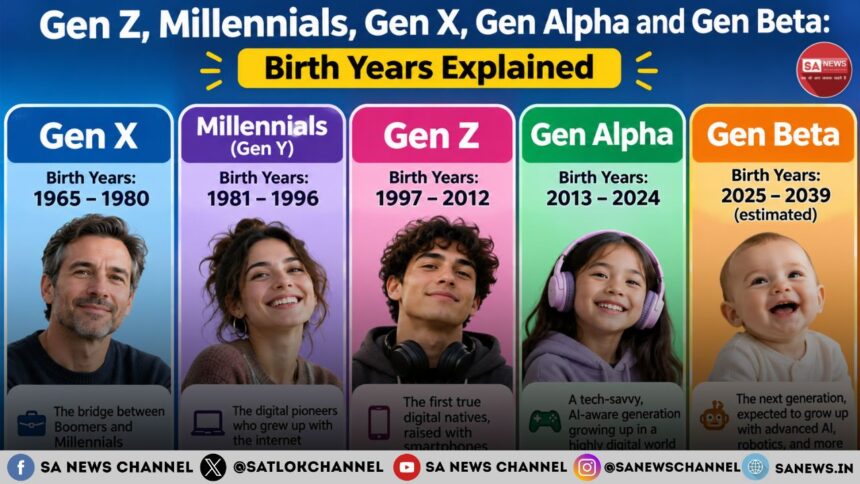
Every generation will have grown up in a different time. Some will be familiar with a time before the internet was common place while others will be used to living in a world of phones, social media and artificial intelligence.
You will likely have heard of various generations such as Gen Z, Millennials, Gen X and Gen Alpha. However, what do they mean? When were these generations born and why do researchers categorise people into these groups?
Let’s take a look at some of the most common generations and how they got their name. You’ll see that the years people were born in can vary depending on the source.
What are Generational Groups?
A generational group is a grouping of people who were born around the same time. They will often have gone through similar historic events, economic times, cultural changes and technological advancements.
For example, those who grew up before the internet was widespread will have had different experiences compared to those who have grown up using smartphones.
However, these groups are not strictly defined by any scientific or official sources. There are slight variations on years of birth between different researchers and demographic organisations. They can provide a general idea of what is happening within society but cannot define specific individuals.
Common Generational Groupings
One of the most common sources is Mark McCrindle, an Australian social researcher. He breaks people down into the following generations.
| Generation | Birth years |
| Baby Boomers | 1946–1964 |
| Generation X | 1965–1979 |
| Millennials (Generation Y) | 1980–1994 |
| Generation Z | 1995–2009 |
| Generation Alpha | 2010–2024 |
| Generation Beta | 2025–2039 |
This provides an easy way to understand generational groupings, however there are variations in the years. Different researchers will have different start and end dates especially with Millennials and Gen Z.
1. Baby Boomers (1946-1964)
Baby boomers were born after the Second World War. Many countries saw a large increase in births during this time which is how they got their name.
Those who were born during this time would have seen huge changes in television, industry, social movements, and consumerism during their childhood and adulthood.
This generation got their name due to the baby boom after the war.
2. Generation X (1965-1979)
Generation X was the next generation after Baby Boomers. The ‘X’ became well known due to Douglas Coupland’s book ‘Generation X: Tales for an Accelerated Culture’ in 1991.
Members of this generation went through a time of huge social and technological change. Many of them did not grow up using personal computers and the internet, but had to adapt to this as adults.
The name Generation X also shows the uncertainty around who they were.
3. Millennials / Generation Y (1980-1994)
Millennials are also known as Generation Y as they come after Generation X.
They got their name due to many members of the generation becoming adults around the turn of the millennium.
They grew up seeing the shift from an offline childhood to a more connected adult life. Personal computers, mobile phones, the internet and social media became more prominent during their formative years.
They often act as a middle ground between a pre-digital world and today’s tech driven society.
4. Generation Z (1995-2009)
Generation Z comes after Millennials and follows the alphabetical theme.
Many members of Gen Z would have grown up with access to the internet, smartphones, online entertainment and social media. They will have used digital communication from a young age.
They have also seen fast technological advancement, changes to education systems and global events.
There are different definitions of what Gen Z means. Some researchers will use 1995 as the start while others will use 1997.
5. Generation Alpha (2010-2024)
Generation Alpha comes after Gen Z. The term was created around 2008 by Mark McCrindle. Instead of following the English alphabet, he used the Greek alphabet.
Children in this generation will be growing up in a world of smartphones, tablets, online learning, artificial intelligence and connected devices.
Many will use technology to learn, communicate and relax. However, they will have a wide range of experiences depending on their family, location and access to technology.
6. Generation Beta (2025-2039)
Generation Beta is the name given to the generation after Generation Alpha.
Children from 2025 to 2039 will fall under this category.
As this generation has only just started, there isn’t much we can say definitively about them. They will be growing up during a time of further technological advancement with improvements in artificial intelligence.
At the moment Generation Beta is just a demographic term for a new cohort of people.
Why are there different years?
There will be different years for different generations as there is no official international guideline.
For example, McCrindle’s system puts the Millennials between 1980-1994 while the common definition is 1981-1996 according to Pew Research Center.
This also affects Gen Z. McCrindle’s system starts Gen Z in 1995 while Pew Research Centre start in 1997.
This means someone born in 1995 or 1996 could fall into different categories.
Pew Research Centre has also warned us not to take generations as strict groupings. The years can help researchers to understand general trends but will not always reflect the experiences of everyone.
FAQs
1. What years were Gen Z born in?
Gen Z were born between 1995-2009 according to McCrindle’s system. However, the common definition is 1997.
2. Are Millennials and Gen Y the same?
Yes! Millennials and Generation Y are the same. Millennials became a popular term as many people became adults around the year 2000.
3. Who created Generation Alpha?
Generation Alpha was created by Mark McCrindle, an Australian social researcher. He created the term around 2008. Instead of continuing with the English alphabet he used the Greek alphabet.
4. What comes after Gen Alpha?
Generation Beta comes after Generation Alpha according to Mark McCrindle. Those born between 2025-2039.
5. Why are the years different on different websites?
Different researchers will have different ways of categorising the generations. There is no official source so there can be differences between sources.
6. Are generations strictly defined?
No! Generations are a general demographic and cultural grouping. They can help you to understand general experiences but cannot define your personality, beliefs or behaviours.
Final Thoughts
Baby Boomers, Gen X, Millennials, Gen Z, Gen Alpha and Gen Beta are all different birth cohorts. They have different names and birth years to help researchers to talk about general changes in society, culture and technology.
However, just because someone was born in a certain year does not mean they will have the same life. People within the same generation can have very different lives, opportunities and opinions. They should be seen as a starting point to understand societal change.