

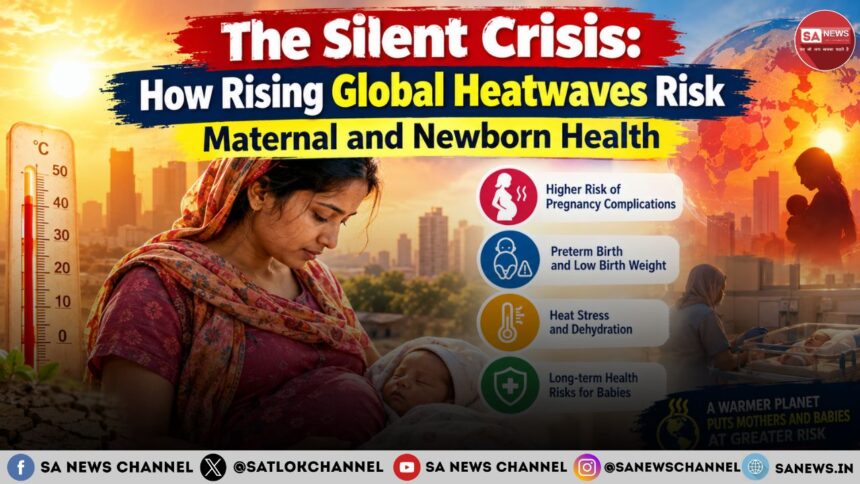
Extreme heat is no longer only an environmental concern; it is becoming an important public health challenge. Rising temperatures and more frequent heatwaves can place additional stress on pregnant women, newborns and healthcare systems. The World Health Organization says climate hazards, including extreme heat, are associated with complications that can affect maternal and perinatal health. Evidence links heat exposure during pregnancy with risks including preterm birth, low birth weight, stillbirth, gestational diabetes and hypertensive disorders.
- Why Rising Heatwaves Are Becoming a Health Crisis
- Why Pregnancy Increases Vulnerability to Extreme Heat
- Dehydration and Heat Stress
- Heatwaves and Preterm Birth
- Stillbirth and Low Birth Weight Risks
- Newborns Are Particularly Sensitive to Heat
- Heat and Essential Newborn Care
- The Unequal Impact of Extreme Heat
- What Can Be Done to Protect Mothers and Babies?
- Climate Action Is Also Maternal Health Action
- The Way Forward
- Compassion, Responsibility and Protection of Life
- FAQs on Global Heatwaves
As heatwaves become more frequent and intense, protecting mothers and babies requires better awareness, healthcare preparedness, cooling measures and stronger climate-health policies.
Why Rising Heatwaves Are Becoming a Health Crisis
Heatwaves are periods of unusually high temperatures that can place significant stress on the human body. According to the WHO, extreme heat and heatwaves are increasing in frequency, duration and intensity as the climate changes.
While everyone can be affected, pregnant women, newborns and young children are among the groups requiring particular attention. Pregnancy naturally places additional demands on the cardiovascular and metabolic systems. Extreme heat can add another layer of physiological stress.This makes maternal health, pregnancy health, newborn health and climate change increasingly interconnected public-health issues.
Why Pregnancy Increases Vulnerability to Extreme Heat
During pregnancy, the body undergoes major physiological changes. Heat exposure can increase discomfort, dehydration and cardiovascular strain.The WHO has reported associations between climate hazards and adverse maternal and perinatal outcomes, including gestational diabetes, hypertensive disorders of pregnancy, preterm birth, low birth weight and stillbirth.
Also Read: Understanding the Symptoms of Vitamin D Deficiency: Causes, Signs, Treatment & Prevention
The risk is not necessarily the same for every pregnant woman. Factors such as access to cooling, housing conditions, occupation, existing health conditions, water availability and access to healthcare can influence vulnerability.
Dehydration and Heat Stress
High temperatures can increase sweating and fluid loss. Dehydration can become particularly concerning during pregnancy, when maintaining adequate hydration is important.
UNICEF advises pregnant women to stay hydrated, reduce strenuous activity during extreme heat and plan necessary activities for cooler parts of the day.
Heatwaves and Preterm Birth
One of the major concerns surrounding extreme heat and pregnancy is preterm birth.
Preterm birth means a baby is born before 37 completed weeks of pregnancy. Research summarized by international health organizations has associated heat exposure with increased risks of adverse birth outcomes, including preterm birth. This makes heat preparedness particularly important during periods of prolonged extreme temperatures.
Stillbirth and Low Birth Weight Risks
Heat exposure has also been associated with stillbirth and low birth weight. UNICEF specifically notes that excessive heat and dehydration during pregnancy can increase risks to the baby, including low birth weight, early birth and stillbirth.
These risks highlight why maternal heat protection should be considered alongside conventional prenatal care.The concern is especially important in communities where homes lack adequate ventilation, electricity or reliable access to clean water and cooling.
Newborns Are Particularly Sensitive to Heat
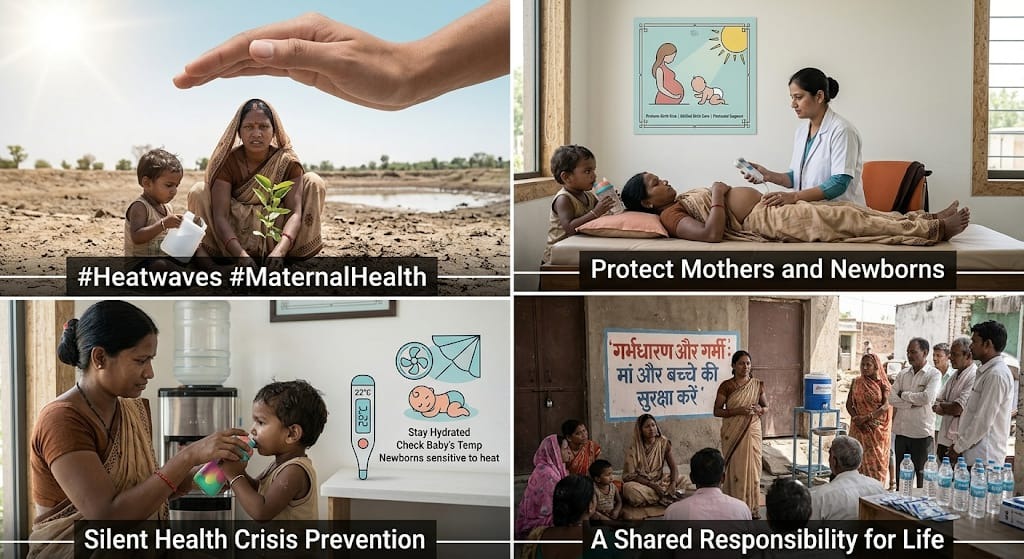
The health challenge does not end at childbirth. Newborn babies have limited ability to regulate their body temperature and require careful protection from excessive heat.
UNICEF explains that infants and young children are particularly vulnerable because their bodies regulate temperature differently from adults. Newborn care therefore needs to include attention to safe temperatures, hydration through appropriate feeding, ventilation and recognition of signs of heat-related illness.
Heat and Essential Newborn Care
Access to skilled healthcare remains critical during and immediately after birth. UNICEF emphasizes skilled care at birth, immediate newborn care, breastfeeding support and postnatal checkups as essential components of newborn survival.
Also Read: Urinary Tract Infection (UTI): Causes, Symptoms, and Prevention Tips for Better Health
Heatwaves can complicate healthcare delivery by affecting transportation, electricity, water supplies and health facilities. WHO notes that extreme heat can disrupt essential health services and place additional pressure on health systems.
The Unequal Impact of Extreme Heat
The maternal and newborn health crisis linked to extreme heat is also an issue of inequality.
Women living in poorly ventilated homes or areas with limited electricity and water may have fewer options for cooling. Outdoor workers and people with limited access to healthcare can face additional exposure.
WHO identifies inadequate housing, limited resources and restricted access to services among factors that can increase vulnerability to extreme heat. Therefore, protecting maternal health requires more than individual precautions. Communities and governments also need effective heat-health action plans.
What Can Be Done to Protect Mothers and Babies?
Prevention is an important part of managing heatwave health risks.Pregnant women can follow local heat warnings, stay hydrated, reduce strenuous activity during peak heat and spend time in cooler environments. Medical appointments and outdoor activities can be planned for cooler periods where possible
Healthcare systems can strengthen maternal healthcare, emergency preparedness and heat-warning communication. WHO’s updated 2026 heat-health guidance recommends approaches covering warning systems, vulnerable populations, communication, health-system resilience, surveillance and monitoring. Governments can also improve urban planning, access to clean water, electricity, cooling infrastructure and climate-resilient healthcare facilities.
Climate Action Is Also Maternal Health Action
The connection between climate change and maternal health is becoming increasingly difficult to ignore.
In March 2026, WHO, UNICEF, UNFPA and partner organizations highlighted the growing risks that extreme heat poses to pregnant and postpartum women, newborns and young children. The organizations called for maternal, newborn and child health to be better integrated into climate and heat-health policies. This means climate adaptation should not be viewed only as an environmental policy. It is also a healthcare priority.
The Way Forward
The growing frequency of extreme heat requires preparation rather than reaction. Better heatwave preparedness, stronger maternal services, public awareness and resilient healthcare facilities can reduce preventable risks.
The WHO emphasizes that many harmful health effects of extreme heat can be prevented through appropriate public-health policies and preparedness.
Protecting mothers and newborns therefore requires cooperation between healthcare professionals, families, communities and governments.
Compassion, Responsibility and Protection of Life
According to the Satgyan imparted by Jagatguru Tatvdarshi Sant Rampal Ji Maharaj, Supreme God Kabir is the sole creator and the true savior of all souls, extending supreme protection to every being, including expectant mothers and vulnerable infants. As illuminated in sacred books like Jeene Ki Raah and Gyan Ganga, while environmental extremities and bodily ailments are inevitable afflictions of the mortal realm, turning to true scripture-based worship (Sat-Bhakti) and leading a morally disciplined life places mother and child under divine refuge.
Upholding moral duty through compassionate care and service, combined with unwavering faith in Supreme God Kabir, provides the ultimate shield against life’s hardships, ensuring safety, inner fortitude, and spiritual deliverance.
FAQs on Global Heatwaves
1. How do heatwaves affect pregnant women?
Extreme heat can cause heat stress and dehydration and is associated with pregnancy complications and adverse birth outcomes.
2. Can extreme heat cause preterm birth?
Heat exposure has been associated with an increased risk of preterm birth and other adverse pregnancy outcomes.
3. Does heat affect newborn babies?
Yes. Newborns have limited ability to regulate body temperature and can be vulnerable to heat stress.
4. How can pregnant women stay safe during a heatwave?
Stay hydrated, avoid strenuous activity during peak heat, remain in cooler areas and seek medical help for severe symptoms.
5. Why is climate change a maternal health issue?
Increasing extreme heat can raise risks for pregnant women and babies, making climate adaptation and heat-health preparedness important parts of maternal and newborn healthcare.