



SpaceX launched four astronauts to the International Space Station on Thursday, carrying NASA’s Crew-13 mission into orbit from Cape Canaveral Space Force Station in Florida after a delay of nearly three weeks. The Falcon 9 rocket lifted off at 11:10 a.m. EDT from Space Launch Complex 40. The Dragon capsule docked with the station at 7:05 p.m. EDT, 7 hours and 55 minutes after launch, which NASA officials said is the fastest any American spacecraft has reached the station.
- Crew-13 launch from Cape Canaveral
- The crew of Crew-13
- Why Crew-13 carries the number 13
- The oxidizer leak that delayed the launch
- Fastest launch-to-docking by a US spacecraft
- A crowded station and a handover
- Six months of research
- Dragon’s role in US crew transport
- A busy week for SpaceX
- Beyond the Stars: Discovering the True Purpose of Human Life
“Thanks for an amazing ride,” commander Jessica Watkins radioed after reaching orbit.
Crew-13 launch from Cape Canaveral
Thick clouds threatened the countdown all morning, but the skies cleared enough for a safe liftoff. Forecasters had put the odds of favorable weather at 60%. The rocket carried the Crew Dragon capsule Grace. The first stage returned to SpaceX’s Landing Zone 40, and by the post-launch news conference Grace had separated from the second stage and was operating normally. It was the booster’s third flight, after a Starlink mission and the Crew-12 launch.
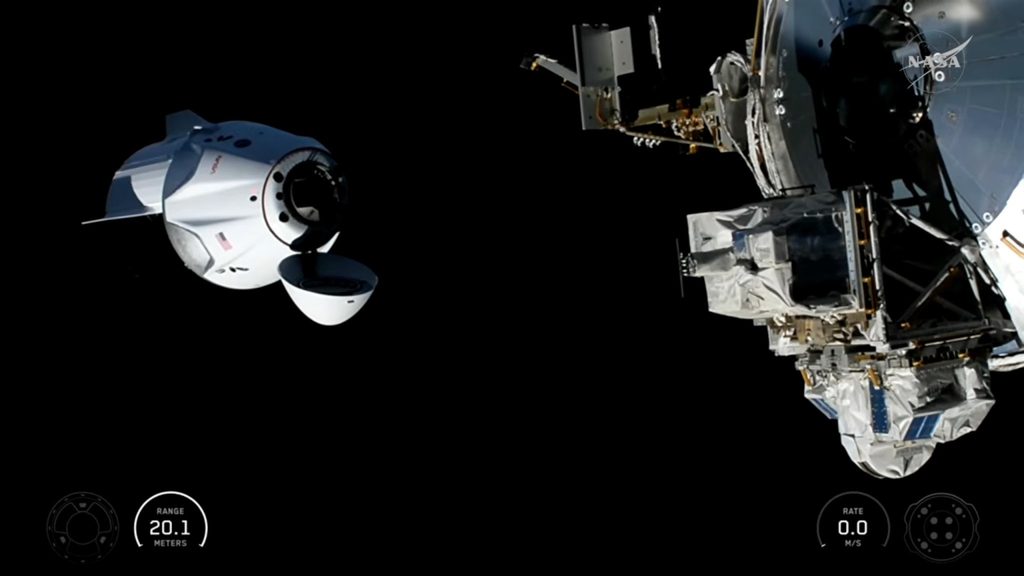
Julianna Scheiman, SpaceX’s director of NASA science and Dragon programs, said Crew-13 is the company’s 21st crewed Dragon mission and its 53rd Dragon flight to the station. It is the 13th crew SpaceX has launched for NASA, not counting a 2020 test flight. Grace flew once before, on the Axiom-4 mission in June 2025, when it spent just over 20 days in space. This is its first long stay at the station.
NASA Administrator Jared Isaacman met the crew before they headed to the pad. He has flown Dragon twice himself, on the private Inspiration4 and Polaris Dawn missions. After the launch he said missions like this can make human spaceflight look routine when it is anything but, and he credited the NASA and industry workforce behind them.
The crew of Crew-13
Watkins became the first Black woman to lead a crew to orbit. She is a geologist who worked with NASA’s Curiosity Mars rover about a decade ago. She spent 170 days aboard the station in 2022 as part of Crew-4, and she is now the first NASA astronaut to launch on a SpaceX Dragon twice.
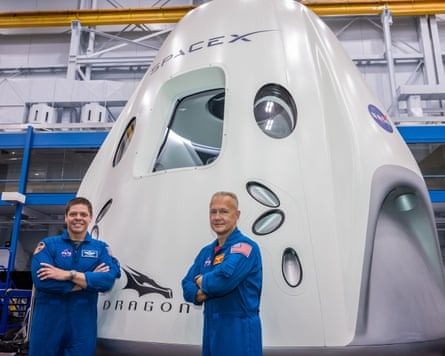
The other three are making their first spaceflights. They are NASA pilot Luke Delaney, a retired Marine; Joshua Kutryk of Canada, a colonel in the Royal Canadian Air Force; and Roscosmos cosmonaut Sergey Teteryatnikov, a former submariner. Kutryk is the first Canadian Space Agency astronaut to fly under NASA’s Commercial Crew Program.
Kutryk will also miss a birth. His wife, Heather, is due to deliver their third child in late November, which will make him the fourth man to become a father while in orbit. NASA manager Dana Weigel said the agency will do its best to keep him in touch with his family. NASA set up a radio link between station astronaut Mike Fincke and his wife’s delivery room in 2004.
Also Read: Vikram-1: India’s First Private Space Mission
Why Crew-13 carries the number 13
NASA’s first human spaceflight program to reach a 13th numbered flight was Apollo, and the agency has not flown a mission numbered 13 since. The crew chose to lean into it rather than avoid it. The mission patch, which the crew designed, pays homage to Apollo 13 with a golden dragon that recalls the three golden horses on the 1970 insignia. Watkins said the crew took “a lot of inspiration” from the Apollo 13 astronauts. After the leak was discovered, Delaney said the crew had not missed the significance of the number.
On launch day the crew rode to the pad in black Teslas with custom plates that called 13 lucky, and they carried a small crocheted golden dragon named Lucky with a four-leaf clover around its neck. Speaking from orbit, Watkins said the crew considered themselves “four of the luckiest humans on or off planet Earth.”
The oxidizer leak that delayed the launch
NASA announced on Aug. 29 that Crew-13 would miss its Sept. 12 target because of an oxidizer leak in Dragon’s propulsion system. The leak was detected during standard prelaunch processing. The team replaced an oxidizer valve and completed the testing and reviews needed to clear the spacecraft for flight.
Crew Dragon has 16 Draco thrusters for maneuvering in orbit. They burn hypergolic propellants, which ignite on contact. SpaceX uses monomethyl hydrazine as fuel and nitrogen tetroxide as the oxidizer. The crew went into final quarantine on Sept. 17 as the launch slipped into October. They arrived on Florida’s Space Coast on Saturday, Sept. 26.
Fastest launch-to-docking by a US spacecraft
The previous American record was 12 hours and 33 minutes, set by a SpaceX cargo Dragon on the CRS-31 flight in November 2024. The fastest crewed trip in a U.S. vehicle had been 14 hours and 43 minutes, by Crew-11 in August 2025.
The shorter trip was possible because the station sat in a favorable position relative to the launch site. That let Dragon catch up with fewer orbits and phasing maneuvers. The tradeoff is an essentially instantaneous launch window, because missing the planned time means waiting for another opportunity with a different rendezvous profile. Scheiman told reporters, “We got lucky this time.” She said the trip was close to the fastest it could be.
A Russian Soyuz still holds the overall record, reaching the station in 3 hours and 3 minutes in May 2020 after two orbits. The difference comes mainly from choices made by mission controllers, not from a more powerful spacecraft. The hatches between Grace and the station were opened later that evening.
A crowded station and a handover
The new arrivals joined seven people already aboard, raising the station’s population to 11. Those seven are NASA astronaut Anil Menon and Roscosmos cosmonauts Pyotr Dubrov and Anna Kikina, who make up the Expedition 75 core crew, along with the four Crew-12 members. Those four are NASA’s Jessica Meir and Jack Hathaway, the European Space Agency’s Sophie Adenot and Roscosmos cosmonaut Andrey Fedyaev.
Crew-12 has been living on the station since February. After a brief handover, the crew is scheduled to begin its return to Earth aboard Dragon Freedom no earlier than Oct. 5.
Six months of research
Crew-13 will use microgravity to produce human stem cell-derived tissues for personalized medicine, disease modeling and drug testing for conditions such as heart disease and Parkinson’s. The crew will also test a new, mostly autonomous plant growth system, look at how plants grow outside dedicated facilities, continue studies of factors linked to blood-flow abnormalities in microgravity, and try a new inflight device for monitoring astronaut health.
Kutryk will take part in a large Canadian research program on how humans adapt to long spaceflight. AstroFit looks at exercise routines that could reduce the physical effects of microgravity. C-STARS examines stress, coping and mental well-being. HomeBase studies how astronauts keep their sense of location and orientation without gravity. Other Canadian studies cover vision changes, anemia, cardiovascular and respiratory health, bone loss and vital signs.
Also Read : Unveiling the History of Space Explorations with Facts & Proofs [2024]
Dragon’s role in US crew transport
Dragon remains the only U.S. vehicle flying astronauts to the station, and Boeing has not flown a crew on Starliner since its troubled 2024 test flight. That flight left astronauts Butch Wilmore and Suni Williams on the station for nine months. NASA and Boeing said earlier this week that Starliner will carry cargo to the station on an uncrewed flight in December or January, followed by a crewed flight in 2028. NASA astronaut Woody Hoburg is set to command that crewed mission.
The future of Dragon itself is less settled. Isaacman said SpaceX intends to sunset older platforms such as Falcon and Dragon as it concentrates on Starship, and that NASA would like to see additional crew and cargo providers. SpaceX President Gwynne Shotwell said Crew Dragon is not being retired today but indicated the program will slow. NASA recently contracted three more Crew Dragon missions for 2027 and 2028. In September it announced that Crew-15, Crew-16 and Crew-17 will fly on Crew Dragon, alongside the already assigned Crew-14.
A busy week for SpaceX
Three hours after Crew-13 lifted off, SpaceX launched a Falcon rocket from California with more than 100 small satellites. Another Falcon was set to fly late Thursday from Florida with a classified satellite for the National Reconnaissance Office. The company’s Starship also reached orbit for the first time this week.
Beyond the Stars: Discovering the True Purpose of Human Life
Crew-13’s remarkable journey to the International Space Station shows how far human curiosity, courage and determination can take us. As astronauts explore the mysteries of the universe, it also reminds us that there is another journey worth taking—the journey towards understanding ourselves, our purpose and our connection with God. Science helps us discover how the universe works, but spiritual wisdom encourages us to reflect on why we are here and what gives our lives lasting meaning.
According to Saint Rampal Ji Maharaj’s teachings, human life is a precious opportunity to attain true spiritual knowledge, practise authentic worship and work towards salvation. He emphasizes understanding the scriptures, recognizing the true path of devotion and following the guidance of a genuine spiritual teacher. His teachings invite people to look beyond material achievements and consider the importance of righteous living, compassion, devotion and spiritual awareness.
For those interested in exploring these ideas, his books “Gyan Ganga” and “Way of Living” offer perspectives on authentic worship, the purpose of human existence and the path to spiritual enlightenment. Just as exploring space inspires us to look beyond our planet, exploring spiritual wisdom can encourage us to look beyond everyday concerns and reflect on life’s deeper questions.