


Smartwatches have evolved far beyond simple step counters and today’s market offers hundreds of options across every price range. And yet many buyers end up paying for features they never use or choosing devices that do not fit their lifestyle. In this guide, we’ll explain exactly how to choose the perfect smartwatch based on your needs, budget, smartphone and daily habits.
- Highlights on Smartwatch Buying Guide 2026
- What Makes a Smartwatch Smart?
- Smartwatch vs Fitness Tracker vs Smart Ring vs Hybrid Watch
- Why Is Choosing the Right Smartwatch Important?
- What Should You Consider Before Buying a Smartwatch?
- Determine Your Primary Purpose
- Fitness and Sports Tracking
- Health Monitoring
- Productivity and Communication
- Outdoor Adventures
- Everyday Lifestyle Use
- How Important Is Smartphone Compatibility When Choosing a Smartwatch?
- Which Smartwatch Features Are Actually Worth Paying For?
- How Much Battery Life Should a Good Smartwatch Offer?
- How Do You Choose a Smartwatch That Matches Your Lifestyle?
- How Do Display, Design and Build Quality Affect Your Experience?
- Which Health and Fitness Tracking Features Matter Most?
- Not All Sensors Are Created Equal
- The Real Cost of Owning a Smartwatch
- The 4P Smartwatch Selection Framework
- Should You Buy the Latest Smartwatch?
- Common Smartwatch Buying Mistakes
- Expert Tip: Focus on the Features You Will Actually Use
- What Questions Should You Ask Before Buying a Smartwatch?
- The Limits of Wearable Technology
- The Missing Piece No Smartwatch Can Measure
- FAQs on Smartwatch Buying Guide
Highlights on Smartwatch Buying Guide 2026
- Smartwatches extend the capabilities of a smartphone by delivering health, fitness and connectivity features directly from your wrist.
- The total value of the global smartwatch market is currently over USD 35.29 billion. (Source: Demandsage)
- Smartwatches are no longer a niche technology. With nearly 562.86 million users worldwide, they have become one of the most widely adopted wearable devices in modern life. (Source: Demandsage)
- Smartphone compatibility is often the most important factor because many smartwatch features depend on seamless integration with your phone.
- Health and fitness features should match your goals rather than marketing claims.
- Battery life varies dramatically between models and directly affects daily convenience.
- Display quality, comfort and durability influence the long-term ownership experience.
- Indians prefer smart wristbands over smartwatches with 13.8% Indians owning smart wristbands within the smart wristband market share.
- Budget planning helps you focus on features you will actually use.
- The perfect smartwatch is the one that aligns with your lifestyle, priorities and device ecosystem.
What Makes a Smartwatch Smart?
While this article is actually a smartwatch buying guide, it is only apt to first cover the basic terminologies associated with a smartwatch to catalyse the further nuances of a smartwatch buying decision.
As the name suggests, smartwatch is a device that embodies smart technology, categorised under wearables, and functions also like a wristwatch apart from a host of functions it houses.
- A smartwatch combines timekeeping, health monitoring, fitness tracking, smartphone connectivity and app functionality in a single device.
- Unlike a traditional watch that primarily tells time, a smartwatch acts as an extension of your smartphone.
- From delivering important alerts and recording physical activity to monitoring wellbeing and enabling contactless transactions, smartwatches now perform a wide range of everyday tasks directly from the wrist.
- Smartwatches differ from fitness trackers in both capability and flexibility.
What Can a Smartwatch Do?
Most modern smartwatches can easily:
- Track steps and workouts
- Monitor heart rate
- Analyse sleep patterns
- Provide GPS navigation
- Display smartphone notifications
- Support voice assistants
- Enable contactless payments
- Control smart home devices
A smartwatch simplifies daily tasks while keeping important information accessible from your wrist. This is the USP pitched by most wearable technology manufacturers to customers.
Smartwatch vs Fitness Tracker vs Smart Ring vs Hybrid Watch
As wearable technology continues to evolve, there are many wearables in the market today that can be worn either on the wrist or on our fingers. Therefore, not every buyer needs a smartwatch. In many cases, another type of wearable may provide a better experience at a lower cost.
The mistake many people make is comparing smartwatch brands before deciding which category of wearable actually suits their lifestyle. Here are the differences:
- Smartwatch: A smartwatch is best for users who want communication, productivity, health tracking and app functionality in a single device.
- As wearable technology has evolved, smartwatches have become capable of managing communication, navigation, health tracking and everyday digital tasks from a single device. However, these capabilities often come at the cost of shorter battery life and a higher purchase price.
- Fitness Tracker: A fitness tracker is best for users who prioritise activity tracking, simplicity and battery life. It is commonly known as a smart wristband in India.
- Fitness trackers typically focus on steps, workouts, sleep and basic health metrics while remaining lighter, slimmer and more affordable than smartwatches. Many can last a week or longer on a single charge.
- Smart Ring: It is the newest entrant in wearable technology. Some people want health data without another screen competing for their attention, and smart rings were created precisely for that purpose.
- Without a display competing for your attention throughout the day, smart rings offer a more discreet and unobtrusive way to monitor health and wellness. Many users find them more comfortable for overnight wear, making them particularly attractive for sleep tracking.
- Hybrid Watch: A hybrid watch suits individuals who prefer the timeless appearance of a conventional watch while still benefiting from a handful of connected features.
- Hybrid watches blend classic analogue styling with discreet notifications, activity tracking and health monitoring. They often offer significantly longer battery life than fully featured smartwatches.
Which One Is Right for You?
The choice depends on numerous factors, however, for the ease of understanding, we will consider function here.
- Therefore, if you want to choose apps, calls and notifications, then smartwatch is your pick.
- If fitness tracking and long battery life is all you are looking for, a fitness tracker would serve you better.
- If sleep and wellness monitoring are your goals, then a smart ring could be a sound option.
- Not everyone wants another screen on their wrist, which is precisely why hybrid watches continue to appeal to those who value both simplicity and refinement.
Why Is Choosing the Right Smartwatch Important?
Smartwatches are not expensive, but also have a continuous cost attached to them, especially those iterations that demand subscription for features. Hence, the right smartwatch is important because the wrong device can lead to unnecessary spending, poor usability and limited functionality.
Some important insights:
- Many buyers purchase premium devices loaded with features they rarely use. For example, an occasional gym-goer may not benefit from advanced triathlon metrics designed for endurance athletes.
- Smartwatch ownership is a long-term investment. Comfort, battery life, software support and ecosystem compatibility all affect satisfaction months or years after purchase.
- The best smartwatch is not necessarily the most expensive model but the one that delivers the right combination of functionality, comfort and value for the user.
With these important standpoints now in place, let us progress in understanding how to zero in on the right smartwatch for you.
What Should You Consider Before Buying a Smartwatch?
In order to make an informed buying decision for the perfect smartwatch, it is important to match features, battery life, design and compatibility to your specific lifestyle and daily needs.
Determine Your Primary Purpose
Smartwatch manufacturers may pitch their product for several use cases. What is important is to identify yours.
Fitness and Sports Tracking
If exercise is your priority, focus on:
- GPS accuracy
- Workout modes
- Recovery tracking
- Heart-rate monitoring
- Training analytics
An example: Runners often benefit from Garmin’s advanced performance metrics, while casual users may find simpler tracking sufficient.
Health Monitoring
If wellness is your focus, then one must prioritise:
- Sleep tracking
- ECG functionality
- Blood oxygen monitoring
- Stress analysis
- Recovery insights
Health tracking features such as heart rate monitoring, sleep analysis, GPS tracking and activity measurement vary significantly between smartwatch models.
Productivity and Communication
If you work on the move, then do consider:
- Notification management
- Voice assistants
- Calling support
- Calendar integration
- Email previews
Outdoor Adventures
For hiking and exploration, look for the following:
- Multi-band GPS
- Offline maps
- Rugged construction
- Extended battery life
Everyday Lifestyle Use
If convenience is your goal, then focus on the following attributes:
- Design
- Comfort
- Smart notifications
- Mobile payments
- Easy charging
Your primary use case should drive every other buying decision. We will now discuss various aspects to consider while purchasing a smartwatch, before offering readers a unique 4P strategy towards the end of this article.
How Important Is Smartphone Compatibility When Choosing a Smartwatch?
Smartphone compatibility is one of the most important factors when choosing a smartwatch because many features depend on seamless integration with the user’s mobile operating system.
Taking Your Future Smartphone In Consideration Too
Smartphone compatibility should be evaluated not only for your current phone but also for future upgrades. An example to note is that Apple Watches only work with iPhones, while some Android-focused watches offer reduced functionality when paired with iOS devices.
By contrast, brands such as Garmin, Fitbit and Amazfit generally support both Android and iPhone ecosystems. If you frequently switch between operating systems, choosing a platform-neutral smartwatch can provide greater long-term flexibility.
A smartwatch may last several years, so compatibility should be considered as a long-term investment rather than a short-term decision.
- Smartwatches for iPhone Users: The Apple Watch remains the most integrated option for iPhone owners because it offers seamless notifications, Apple Health integration, iMessage support, Apple Pay and strong app ecosystem.
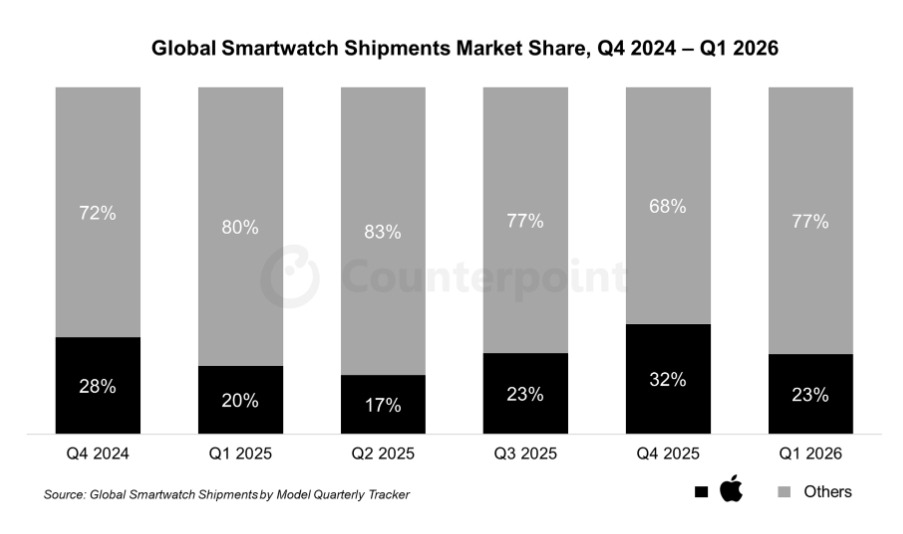
- Apple continues to lead the smartwatch market globally despite increasing competition. Its global market share is currently pitched at 23% in the first financial quarter of 2026. (Source: Counterpoint Research)
- Smartwatches for Android Users: Android users typically benefit from Samsung Galaxy Watch, Google Pixel Watch, Garmin devices and Amazfit smartwatches to name the most popular ones. These watches typically integrate more naturally with Android services and Google applications.
Which Smartwatch Features Are Actually Worth Paying For?
This is another important aspect for us to discuss.
The most valuable smartwatch features are those you use daily rather than those that sound impressive in marketing materials.
We will classify them down into three broad categories for easier understanding:
- Essential Features: Heart-rate monitoring, sleep tracking, GPS, notifications and water resistance. These features deliver benefits for most users.
- Valuable Advanced Features: NFC payments, voice assistants, cellular connectivity, ECG monitoring, etc. For example, frequent travellers often appreciate NFC payments and offline maps more than advanced sports metrics.
- App Ecosystem: App availability can significantly expand a smartwatch’s usefulness. A strong ecosystem provides fitness apps, productivity tools, navigation services and health applications.
However, all features may not be free and may attract subscription costs.
Do Not Ignore Subscription Costs
Many buyers compare smartwatch prices but forget to evaluate subscription fees.
Some wearable brands offer optional premium memberships that provide advanced features such as:
- Detailed sleep analysis
- Recovery scores
- Long-term wellness trends
- Personalised health insights
- Advanced fitness analytics
While basic functionality usually remains available without a subscription, the total cost of ownership can increase substantially over time.
It is important to note that a wearable with a lower purchase price may become more expensive than a premium smartwatch after several years of subscription payments.
Therefore, when comparing devices, evaluate both the purchase price and any ongoing subscription costs.
How Much Battery Life Should a Good Smartwatch Offer?
Battery life expectations should be based on usage patterns, with advanced smartwatches typically requiring more frequent charging than basic fitness-focused wearables. It is similar to considering battery life when purchasing a smartphone.
Typical Battery Expectations Overview:
| Usage Type | Expected Battery Life |
| Apple Watch | 1-2 days |
| Wear OS watches (Android compatible) | 1-3 days |
| Fitness-focused watches | 5-14 days |
| Adventure watches | 14-30 days, sometimes more |
- Daily Charging vs Multi-Day Charging: Feature-rich devices often consume more power because they run advanced operating systems and support larger app ecosystems. This is a similar pain point in smartphones too.
- For example, watches with always-on displays, GPS tracking and cellular connectivity generally require more frequent charging.
- Fast Charging Also Matters: Fast charging in smartwatches can reduce this inconvenience significantly. Some premium models now deliver a full day of usage from just 20-30 minutes of charging.
Longer battery life increases convenience, but feature-rich devices often trade endurance for functionality.
How Do You Choose a Smartwatch That Matches Your Lifestyle?
The best smartwatch depends more on your lifestyle than on its specifications. Since majority smartwatch users buy a smartwatch for health and fitness purposes, we will use this use-case to categorise lifestyles and match them with smartwatch features.
- Runners: Will need accurate GPS, reliable heart-rate monitoring, training metrics, route navigation and long battery life. Dedicated sports watches from Garmin, Coros, Polar and Suunto are often preferred by serious runners because they provide deeper training insights than mainstream smartwatches.
- Gym Enthusiasts: They focus more on workout tracking, heart-rate accuracy, recovery monitoring and strength-training support. Many people assume every smartwatch measures heart rate equally well during weightlifting. However, wrist-based optical sensors can struggle during exercises involving significant wrist movement or muscle tension.
- Sleep-Focused Users: Important features are sleep-stage analysis, recovery tracking, overnight comfort and long battery life. A lighter wearable that can be worn continuously may provide a better sleep-tracking experience than a larger smartwatch.
- Other Health-focused Buyers: Can look for ECG support, blood oxygen monitoring, heart-rate alerts, wellness dashboards, long-term health trends
Apart from health functions, if working professionals are looking to acquire a smartwatch, then notification management, calling features, calendar integration, voice assistants and mobile payments are some key features to look out for.
How Do Display, Design and Build Quality Affect Your Experience?
The next aspect is display quality, design and durability as they directly influence comfort, usability and long-term satisfaction. A brief overview here:
AMOLED vs LCD Displays
AMOLED displays offer better contrast, deeper blacks, improved outdoor visibility and lower power consumption in certain scenarios. Many premium smartwatches now use AMOLED technology. An example is the recently launched Xiaomi Watch S5 features a bright AMOLED display designed for outdoor visibility.
Comfort and Wearability
Comfort matters more than specifications, more so because the weight of a smartwatch can affect your wrist joints too. A watch that feels bulky or heavy may spend more time in a drawer than on your wrist.
Durability and Water Resistance
Here one must pay attention to 5ATM water resistance, gorilla Glass protection, stainless steel or titanium construction and military-grade durability certifications wherever relevant. A durable smartwatch provides better long-term value than a fragile premium model.
Which Health and Fitness Tracking Features Matter Most?
The most important health and fitness features are those that support your personal wellness goals. Here, we will understand which tracking features are very important:
- Activity Tracking: Firstly, every smartwatch should accurately track steps, calories, active minutes and workout sessions.
- Advanced Health Monitoring: Here, of course, the expectation goes beyond just movement tracking. Premium models may offer advanced health monitoring features such as ECG readings, blood oxygen monitoring, stress tracking, sleep stage analysis and recovery metrics. These tools have actually become major purchase drivers across the industry.
- Sports Performance Metrics: This segment involves even deeper insights and valuable metrics such as VO2 Max estimates, training readiness, running dynamics and even recovery recommendations.
Raw Data Matters Less Than Useful Insights
Many smartwatches collect enormous amounts of health data, but the quality of the software experience is equally important. Raw measurements have little value on their own; what matters is the ability to recognise patterns that influence long-term health and daily performance.
To understand simply – two smartwatches may measure similar health metrics, yet one may present the information in a far more actionable and understandable way. Thus, the value of health tracking comes from meaningful interpretation, not from collecting the largest amount of data.
Not All Sensors Are Created Equal
This is a vital yet not-so-often discussed aspect about smartwatches. Many smartwatch buyers focus on whether a device includes a feature. Experienced users focus on how well that feature actually works. This is where sensors come in.
- A specification sheet may tell you that two watches both offer heart-rate monitoring, GPS tracking and sleep analysis. That does not mean they deliver the same quality of data.
- For instance, heart-rate tracking performance can vary depending on skin tone, tattoos, watch fit, exercise intensity and even the type of activity being performed. A watch that performs well during a walk may produce less reliable readings during weight training or interval running.
- Similarly, sleep tracking remains an estimate rather than a direct measurement. Different manufacturers use different algorithms, which can produce noticeably different interpretations of the same night’s sleep.
- GPS performance can also vary significantly. Some devices excel in open environments but struggle in dense cities, forests or mountainous terrain.
This does not mean smartwatch sensors are inaccurate. It simply means they should be viewed as useful indicators rather than medical-grade instruments. They have their own limitations.
It is leave your phone in a bag, pocket or another room.
For people with these needs, a smartwatch can simplify routine interactions and provide gentle reminders that support healthier daily behaviour.
However, a smartwatch may not be necessary in the following cases:
- Rarely exercise or track health data.
- Do not feel the need to duplicate communication features that are already available on your phone.
- Dislike charging multiple devices.
- Prefer traditional watches.
- Find constant alerts distracting rather than helpful.
- Expect a smartwatch to dramatically improve your productivity.
Many buyers assume a smartwatch will transform their daily routine. In reality, the benefits are often incremental rather than revolutionary.
The Hidden Important Question: Do You Need More Data?
One of the biggest selling points of modern smartwatches is health and activity tracking. The difference between knowledge and improvement lies not in what is measured, but in what is done with those measurements.
- A smartwatch can tell you how many hours you slept, how many steps you took and how your heart rate changed throughout the day. However, meaningful improvements still depend on your actions.
- Knowing that you slept six hours instead of eight only creates value if that information encourages healthier habits.
- Similarly, counting steps is merely a measurement; the real benefit comes from the additional movement that follows.
Technology can provide awareness, but it cannot replace discipline, consistency or healthy lifestyle choices.
The goal is not to buy the most advanced wearable. The goal is to buy ‘the’ device that genuinely improves your daily life.
In some cases, that may be a premium smartwatch packed with features. In others, it may be a simple fitness tracker, a smart ring, a hybrid watch, or no wearable at all.
It is interesting to note that even though it is smart technology meant to ‘solve’ some of your lifestyle problems, without your own action and accountability, all the data captured is of no use.
Also Read: Know This Before Buying a New Phone: Smartphone Specifications Guide 2026
The Real Cost of Owning a Smartwatch
The most practical reality of owning a smartwatch is the total cost. The price displayed on the box is often only part of the total ownership cost. Many buyers budget for the watch itself but overlook the additional expenses that can accumulate over several years of use. Here are some that must be taken into consideration:
- Subscription Services: Some wearable brands offer premium subscriptions that provide advanced sleep insights, recovery scores, long-term health analytics, personalised coaching and detailed fitness reports. While these subscriptions are often optional, they can significantly increase the overall cost of ownership.
- LTE Connectivity: Certain smartwatches support cellular connectivity, allowing calls, texts and data access without a phone nearby. However, this convenience may require an additional monthly mobile plan. Again an added cost.
- Accessories and Replacement Costs: Many owners eventually purchase additional straps, screen protectors, charging accessories, sports bands and travel chargers too. These purchases can add up quickly.
- The Cost of Upgrading Too Frequently: Technology marketing often creates pressure to upgrade every year. A smartwatch does not become obsolete the moment a successor is announced; for most users, its core functionality remains largely unchanged.
Therefore, instead of asking ‘How much does this smartwatch cost?’, one must ask ‘How much will this smartwatch cost me over the next three years?’. The answer to this question can help you arrive at a more practical buying decision.
The 4P Smartwatch Selection Framework
This is a unique strategy for you to access which smartwatch will serve your purpose. The 4P smartwatch selection framework stands for Phone, Purpose, Power and Price.
Phone
Your smartphone should be the starting point for every smartwatch purchase. Apple Watches work exclusively with iPhones, while many Android-focused smartwatches offer their best features only when paired with Android devices. Some brands, including Garmin, Fitbit and Amazfit, support both ecosystems more effectively.
Hence, choose a smartwatch that integrates naturally with the phone you use every day.
Purpose
Your lifestyle determines which smartwatch features actually matter. Ask yourself what you primarily want from a wearable, say for example, out of the following:
- Fitness and sports tracking
- Health monitoring
- Productivity and communication
- Outdoor adventures
- Everyday convenience
A marathon runner, office worker and traveller may all need completely different devices despite having the same budget.
Therefore, buy for your primary use case, not for the longest feature list.
Power
Power refers to battery life and charging habits. Battery endurance varies widely across smartwatch models, with some needing frequent top-ups and others operating for several days between charges. Neither option is inherently better. It actually depends on your expectations. If you track sleep every night or travel frequently, longer battery life may become a major advantage.
It is advised to choose a battery life that matches your routine rather than chasing the biggest number.
Price
A higher price does not automatically mean a better smartwatch. Many buyers pay for specialised features they rarely use. Others overlook subscription fees that can increase the long-term cost of ownership. Focus on value rather than prestige.
Pay for features that improve your daily experience, not features that simply look impressive on a specification sheet.
The 4P Rule in One Sentence
The perfect smartwatch is the one that matches your Phone, supports your Purpose, delivers the right Power and fits your Price range.
Should You Buy the Latest Smartwatch?
Every year, manufacturers launch new models featuring improved sensors, faster processors and additional software capabilities. While these upgrades sound compelling, real-world improvements are often smaller than marketing materials suggest.
For many buyers, last year’s flagship model offers nearly the same experience at a substantially lower price. A smartwatch released twelve months ago may still provide:
- The same operating system
- Similar battery life
- Comparable health tracking
- Identical app support
- Years of future software updates
This is particularly true for buyers who use their smartwatch for everyday fitness tracking, notifications and health monitoring.
The newest model often makes the most sense in the following instances:
- A major redesign has occurred
- Battery life has improved significantly
- New health features are genuinely useful to you
- Your existing device is several generations old
Otherwise, previous-generation models frequently represent the best value in the market.
Older Flagship Models Can Be Better Value
Manufacturers typically release updated models annually, yet many year-to-year upgrades are relatively minor. For example, a previous-generation flagship smartwatch may offer nearly identical performance, software support and health features at a significantly lower price.
Buyers willing to purchase a model one generation old can often save hundreds of pounds while sacrificing very little functionality. Last year’s premium smartwatch is often a better value than this year’s mid-range model.
Common Smartwatch Buying Mistakes
Many smartwatch owners regret their purchase not because the device is bad, but because they bought the wrong device for their needs.
Here are some places to exercise caution. These also correspond directly to the points to look out for while buying a smartwatch.
- Buying Based on Brand Alone: A popular brand does not automatically make a smartwatch the right choice for your lifestyle.
- Ignoring Smartphone Compatibility: Some buyers discover too late that certain features work best or only within specific ecosystems.
- Paying for Features You Will Never Use: Many people pay a premium for advanced sports metrics, diving features or specialised sensors they rarely access.
- Underestimating Battery Life Requirements: A watch that requires daily charging may become frustrating if you intend to track sleep every night or travel frequently.
- Prioritising Specifications Over Comfort: Even the most advanced smartwatch becomes useless if it is uncomfortable enough to leave on a bedside table.
- Overlooking Subscription Costs: Recurring fees can dramatically change the true cost of ownership.
- Expecting Technology to Create Healthy Habits: A smartwatch can provide information, reminders and motivation. It cannot exercise, sleep or eat well on your behalf.
The best smartwatch purchase begins with understanding your habits honestly rather than buying the most impressive device available.
Expert Tip: Focus on the Features You Will Actually Use
One of the most common smartwatch buying mistakes is paying for specialised features that rarely get used. Some important examples:
- Divers may benefit from advanced underwater tracking.
- Golfers may appreciate course-mapping tools.
- Ultra-runners may need advanced endurance metrics.
However, many users simply need reliable notifications, activity tracking, sleep monitoring and good battery life. Choosing fewer features that you use every day is usually better than buying dozens of features that remain untouched.
Also Read: Exploring Wearable Technology: How Smart Devices Are Changing Our Lives?
What Questions Should You Ask Before Buying a Smartwatch?
A smartwatch buying checklist helps consumers prioritise essential features and avoid paying for capabilities they are unlikely to use.
This is a summary of almost every cautionary point we have covered in this guide, in detail.
- Which smartphone do I use?
- What is my budget?
- Do I need GPS?
- How important is battery life?
- Do I need health monitoring features?
- Will I wear it daily?
- Do I need mobile payments?
- Is water resistance important?
- Do I need calling functionality?
- Which features will I actually use every week?
A clear checklist reduces impulse purchases and improves long-term satisfaction.
The Limits of Wearable Technology
Modern smartwatches can monitor sleep, track activity and provide valuable insights into physical wellbeing. However, even the most advanced wearable technology remains limited to measuring the body’s condition.
A smartwatch can tell a person that they slept poorly. It cannot teach them how to attain inner peace. It can measure stress levels. It cannot remove the root causes of stress. It can record habits. It cannot transform character.
This highlights an important truth about technology – information and transformation are not the same thing.
Humanity today has access to more data than ever before. Yet many people continue to struggle with anxiety, addiction, anger, loneliness and a lack of purpose. The challenge is often not a lack of information but a lack of inner change.
The Missing Piece No Smartwatch Can Measure
Wearable devices may help people understand their physical habits. But only true spiritual knowledge helps them understand the deeper purpose of human life itself. The reason for humanity’s lack of inner peace is due to the lack of true spiritual knowledge bestowed by a Tatvdarshi Sant (a Complete Saint).
Jagatguru Tatvdarshi Sant Rampal Ji Maharaj reveals that genuine transformation extends beyond physical health and encompasses the purification of thoughts, actions and consciousness. While technology can assist in monitoring the body, true spiritual wisdom inherently transforms the individual from within.
Sant Rampal Ji Maharaj, the singular Complete Saint of our times, bestows true spiritual knowledge as backed by our sacred scriptures, transforming innumerable lives today. He shares that the true purpose of a human birth is to attain salvation by adopting the authentic worship of Supreme God Kabir. The worship bestowed by Sant Rampal Ji Maharaj is so transformative that it immediately calms the soul from within, thereby orchestrating further changes in life, as seconded by millions of His disciples.
The metrics provided by wearable devices are of no use if the true purpose of our human lives remains unfulfilled. Understand in-depth how Sant Rampal Ji Maharaj is transforming lives by listening to His spiritual discourses on:
Website: www.jagatgururampalji.org
YouTube: Sant Rampal Ji Maharaj
Facebook: Spiritual Leader Saint Rampal Ji
‘X’ handle: @SaintRampalJiM
FAQs on Smartwatch Buying Guide
Q1) What should I prioritise when selecting a smartwatch?
Answer: Make sure the watch works well with your phone, as this directly affects the overall user experience.
Q2: How do I choose between a smartwatch and a fitness tracker?
Answer: Pick a smartwatch for greater functionality or a fitness tracker for simplicity, health tracking and longer battery life.