

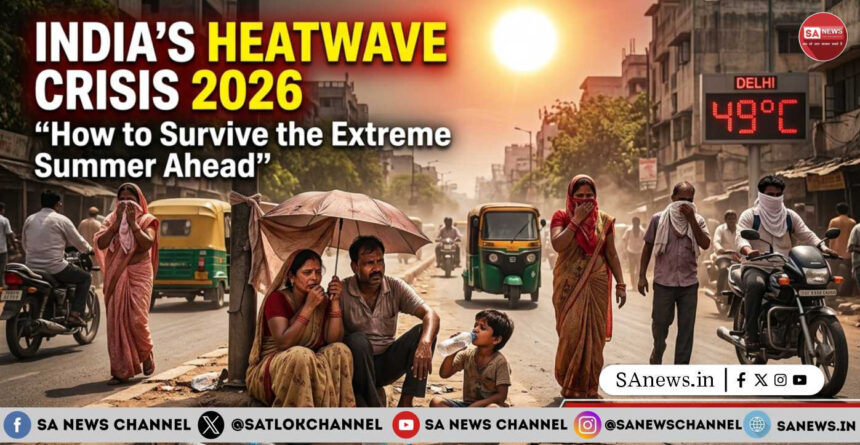
India is not having an unusually hot summer in 2026. It is historically dangerous. Temperatures have surged past 45°C across northern, central, and eastern India, with cities like Orai and Auraiya in Uttar Pradesh and Jaisalmer and Phalodi in Rajasthan recording extreme highs. On one day in late April, all of the planet’s top 50 hottest cities were located inside India’s borders. On April 27th, Banda in Uttar Pradesh recorded 47.6°C, the highest temperature recorded anywhere in India that year.
- 1. The 2026 Climate Shift: Why India is Getting So Hot
- 2. The Great Weather App Myth: Why the Temperature Number Lies
- Environmental Temperature vs. “Feels Like” Temperature
- How the Human Body Cools Itself
- The Role of Humidity: Why 38°C Can Be Deadlier Than 44°C
- Wet-Bulb Temperature Explained Simply
- Why Night Temperatures Matter
- Indoor Heat Trapping
- Why Dehydration Alone is Not the Only Danger
- 3. How to Protect Yourself From Heatwaves at Home Without AC
- A. Mastering Cross-Ventilation and Sunlight Control
- B. Natural Floor and Room Cooling Techniques
- C. Terrace and Roof Heat Reduction
- D. Air Circulation and Fan Strategies
- E. Managing Indoor Heat Sources and Cooking
- F. Precision Hydration and Salt Balance
- G. Proper Clothing Science
- H. Safe Sleeping and Managing Psychological Fatigue
- I. Recognizing Symptoms and Emergency First Aid
- 4. How to Travel Safely During Extreme Heatwaves
And it may not be over. Scientists are watching the emergence of what they call a Super El Niño, a climate pattern that could push temperatures even higher, weaken the monsoon, and extend this heat deep into the year.
For the hundreds of millions of Indians who cannot afford air conditioning, or who live with unreliable electricity, this is not just a weather story. It is a survival situation. This guide is written for them.
1. The 2026 Climate Shift: Why India is Getting So Hot
The extraordinary heat of 2026 is driven by a powerful climate phenomenon known as a Super El Niño.
An El Niño occurs when the surface waters of the central and eastern Pacific Ocean become unusually warm. When these ocean temperatures rise by more than 2°C above normal, it escalates into a Super El Niño. This shift alters global wind and weather patterns completely.
Climate agencies including the World Meteorological Organisation have said there is growing confidence that El Niño conditions will develop between May and July 2026, with the possibility of further strengthening later in the year.
For India, a Super El Niño acts as a giant heat amplifier. It severely disrupts the regular wind flows that bring moisture, causing early, prolonged heatwaves that start as early as April. It also weakens the upcoming monsoon rains, leaving the ground dry, parched, and unable to absorb or deflect solar radiation.
Without moisture in the soil, the ground acts like a giant tandoor, heating the air directly and causing temperatures to skyrocket. This is combined with the rapid spread of concrete construction in Indian cities and towns, creating a permanent cycle of intense heat that does not cool down, even long after the sun goes down.
India has already seen 60% below-normal rainfall in January and February 2026. If heat increases further, demand for water and electricity will rise sharply, increasing the risk of shortages and power cuts.
2. The Great Weather App Myth: Why the Temperature Number Lies
One of the biggest mistakes people make during a heatwave is looking at their smartphone screen and thinking, “The app says it is 38°C today, so it is safer than a 44°C day.” This is actually a misconception.
To survive a heatwave, you must understand how heat actually interacts with the human body.
Environmental Temperature vs. “Feels Like” Temperature
The number you see on a standard weather report is the ambient air temperature measured in a shaded, well-ventilated instrument shelter. It does not account for direct sunlight, wind speed, or moisture.
The “Feels Like” temperature (also called the heat index) is what your body actually experiences. It combines the air temperature with relative humidity.
How the Human Body Cools Itself
The human body is like an engine that must stay at a steady internal temperature of around 37°C. When the outside air is hotter than your body, your primary cooling mechanism is sweat evaporation. Your brain signals your pores to release water. As the air passes over this moisture, the water turns into vapor. This process pulls heat away from your skin, cooling your blood down.
The Role of Humidity: Why 38°C Can Be Deadlier Than 44°C
Sweat evaporation requires the surrounding air to have room for more moisture.
In dry weather (like Rajasthan or Delhi in May): The air is thirsty for moisture. Even at 44°C, your sweat evaporates almost instantly. As long as you keep drinking water, your body’s cooling system keeps working.
In humid weather (like Mumbai, Kolkata, Chennai, or coastal Odisha): The air is already completely saturated with water vapor. At 38°C with 80% humidity, your sweat cannot evaporate. It just pools on your skin, dripping off without cooling you down. Your internal engine stays trapped in its own heat.
Important: A humid 38°C can push your body into heat exhaustion much faster than a dry 44°C.
Wet-Bulb Temperature Explained Simply
Scientists use a metric called Wet-Bulb Temperature to measure this exact danger. It represents the absolute lowest temperature your skin can achieve through sweating.
| Wet-Bulb Temperature | Risk Level to Human Body |
| Below 28°C | Safe for normal activity if hydrated. |
| 28°C to 31°C | Dangerous. Sustained outdoor or intense physical labor causes rapid fatigue. |
| 31°C to 34°C | Extreme Danger. High risk of heatstroke, even for healthy individuals in the shade. |
| 35°C and Above | The Limit of Human Survivability. At this point, the air is so hot and humid that the body cannot shed heat at all. Even a perfectly healthy person sitting naked in front of a fan with unlimited water will overheat and face organ failure within six hours. |
Why Night Temperatures Matter
A major feature of the 2026 heatwaves is that nights remain exceptionally warm, often staying above 32°C. Normally, the human body uses the cooler night hours to recover from daytime heat stress, lowering the heart rate and cooling internal organs. When nights remain hot, your body stays under continuous, round-the-clock stress, leading to cumulative exhaustion.
Indoor Heat Trapping
Most ordinary Indian homes are built with brick, mortar, and concrete. Concrete has a high thermal mass, meaning it acts like a heat sponge. It absorbs the brutal solar energy all through the 12 hours of daylight.
By 5:00 PM, when the sun goes down, the concrete walls and roof begin releasing that trapped heat inward. This is why indoor rooms often feel like ovens at 10:00 PM, even if a cool breeze has started blowing outside.
Why Dehydration Alone is Not the Only Danger
Many people believe that as long as they drink water, they are safe from the heat. This is incorrect.
When your body overheats, it tries to cool down by pumping massive amounts of blood to your skin. This causes your heart to beat violently fast, straining your cardiovascular system. If your core body temperature rises past 40°C, the heat directly damages your cellular structure. Your organs—especially your kidneys, liver, and brain—begin to swell and fail due to pure thermal damage, regardless of how much water is sitting in your stomach.
3. How to Protect Yourself From Heatwaves at Home Without AC
If you live in a rented room, a hostel, a PG, a village home, or an apartment with poor ventilation, you must actively manage your indoor environment to keep temperatures lower than the outside air.
A. Mastering Cross-Ventilation and Sunlight Control
The golden rule of managing an Indian home in summer is simple: Treat the daytime outside air as an enemy, and the nighttime air as a friend.
The Timing Mistake: Most people leave their windows open all day long to “let the air in.” If the outside temperature is 42°C, you are simply inviting a furnace into your room.
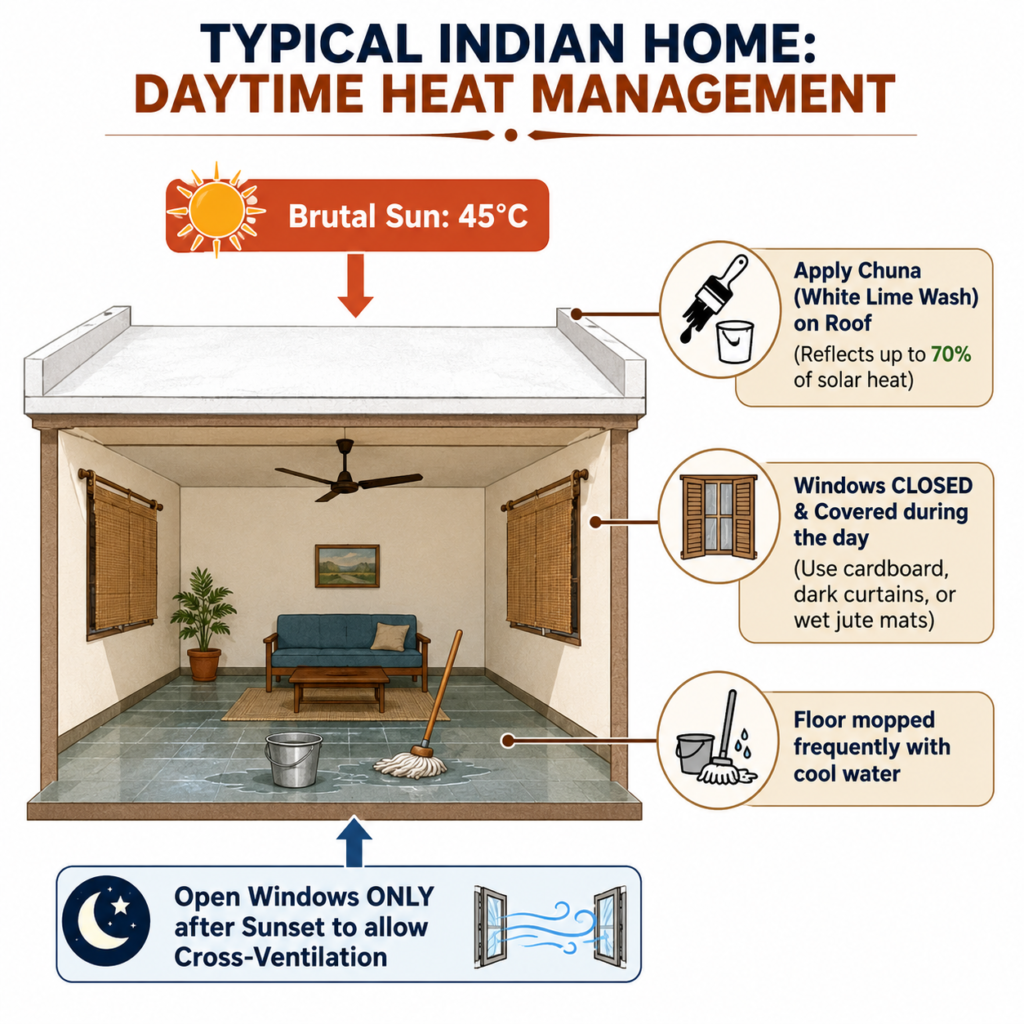
The Routine: Close every single window, door, and ventilator by 8:30 AM, right as the sun begins to bite. Seal the heat out. Do not open them until after 6:30 PM or 7:00 PM, when the outside air temperature has dropped below the indoor temperature.
Blocking Glass Penetration: Glass windows act like greenhouse traps. Sunlight passes through the glass, hits your floor or furniture, turns into radiant heat, and gets trapped inside. Covering windows from the inside with thin cloth curtains helps very little because the heat has already entered the glass.
The Low-Cost Shield: Paste thick, brown corrugated cardboard boxes directly onto the outside or inside of your glass window panes using packing tape. Cardboard is an excellent, free thermal insulator. Alternatively, hang thick bamboo mats (chicks) or heavy jute sacks (bora) outside the window frames. Spraying these jute sacks with water in the afternoon will cool any slight air seeping through.
Read More : Water Is Life: The Global Water Crisis Explained
B. Natural Floor and Room Cooling Techniques
Floor Mopping (Pochha): Mop your floors three to four times a day using cold water. As the water evaporates off the tiles or stone floor, it draws sensible heat out of the room.
The Humidity Warning: This technique works beautifully in dry zones (such as Madhya Pradesh, Rajasthan, or UP). However, if you live in a highly humid city like Mumbai or Chennai, frequent wet mopping during peak hours will drastically increase indoor humidity, making the room feel suffocatingly sticky. In humid areas, limit mopping to once in the morning, and focus entirely on air movement.
C. Terrace and Roof Heat Reduction
If you live on the top floor of an apartment or in a single-story house with a flat concrete roof, you bear the worst of the summer heat.
The Chuna (White Lime Wash) Method: This is the most effective, lowest-cost hack for ordinary Indian homes. Buy a 20 kg bag of white lime powder (Chuna) from a local hardware store. Mix it with water and a packet of synthetic adhesive (like Fevicol) so it doesn’t wash away easily. Use a thick brush to paint your entire terrace roof white. White surfaces reflect up to 70% to 80% of solar radiation, whereas dark concrete absorbs it. This simple step can drop the indoor ceiling temperature by up to 4°C to 6°C.
Tin/Metal Roofs (Patra Houses): Metal sheets conduct heat instantly. A metal roof can reach 60°C, radiating lethal heat downward. To counter this, stack dried coconut leaves, thick layers of straw, or dried grass bundles directly on top of the tin roof. Weight them down with bricks so they do not blow away. Splash the straw bundles in the afternoon to keep the metal underneath cool. Inside the room, stick thick thermocol sheets or multiple layers of cardboard directly to the underside of the ceiling to act as a barrier.
Evening Roof Drenching: Throwing buckets of water on your concrete terrace around 6:00 PM will pull out the stored daytime thermal energy, preventing it from radiating down into your bedroom throughout the night.
D. Air Circulation and Fan Strategies
A ceiling fan simply moves the air that is already present in the room. If the room is closed and filled with hot air, the fan will blast hot air directly onto your body.
Exhaust Fan Optimization: If you have an exhaust fan in your kitchen or bathroom, turn it on during the hottest parts of the day. This forces out the rising hot air near the ceiling.
The Window Fan Hack at Night: Once the sun goes down and the outside air cools down, do not just turn on your ceiling fan. Take a pedestal or table fan, turn it around, and place it facing outward in an open window. This acts as a powerful exhaust system, pulling the heavy, trapped hot air out of your concrete walls and dumping it outside. Open a window on the opposite side of the house to draw the cool night air in.
E. Managing Indoor Heat Sources and Cooking
Appliance Mitigation: Every electrical appliance generates ambient heat. Turn off old television sets, desktop computers, and heavy incandescent bulbs when not in use. Ensure your refrigerator has at least six inches of clear space behind it; otherwise, its cooling coils will overheat and dump massive amounts of hot air directly into your living space.
Smart Cooking Practices: Cooking creates immense heat and steam. Avoid cooking heavy, slow-boiling meals like dry lentils (dal) or deep-fried foods during the middle of the day. Shift your main cooking hours to early morning (before 7:00 AM) or late evening. Keep the kitchen door strictly closed from the rest of the house while cooking, and run the exhaust fan continuously.
F. Precision Hydration and Salt Balance
Drinking water only when you feel thirsty is a recipe for medical failure. Your body loses water and vital minerals continuously through invisible sweat.
The Danger of Plain Water: If you are sweating profusely and drinking liters of plain, purified RO water without replacing salts, you will dilute the sodium levels in your blood. This condition is called hyponatremia. Symptoms include severe muscle cramps, extreme weakness, headaches, and confusion.
The Correct Hydration Strategy: Always mix your water with electrolytes. You do not need expensive sports drinks. Use standard, WHO-approved ORS (Oral Rehydration Salts) packets available at any local chemist for a few rupees.
Homemade Alternatives: If ORS is unavailable, make a traditional salt-sugar solution at home:
1 Liter of Clean Water + 6 Teaspoons of Sugar + Half Teaspoon of Salt
Traditional Indian Drinks: Rely heavily on unsweetened, salted buttermilk (Chaas or Lassi), fresh coconut water, and home-prepared lemon water (Nimbu Paani) with black salt. Eat raw onions with your meals; onions contain quercetin, which helps mitigate heat stroke symptoms naturally.
What to Strictly Avoid:
- Avoid heavy, high-protein meals (like heavy meats or thick dals) in the afternoon, as they increase metabolic heat production during digestion.
- Avoid highly sugary carbonated soft drinks; sugar slows down water absorption in the gut.
- Limit tea and coffee. Caffeine is a diuretic, meaning it forces your kidneys to flush out more water, accelerating dehydration.
G. Proper Clothing Science
Synthetic clothes made of polyester, nylon, or georgette are incredibly dangerous during heatwaves. They are non-porous plastics; they trap a layer of hot, humid air directly against your skin, effectively shutting down your body’s ability to sweat and evaporate.
The Only Option: Wear 100% loose-fitting, light-colored cotton or linen. Cotton acts like a wick, drawing sweat away from your skin and exposing it to the air for maximum cooling.
Color Selection: Wear white, cream, or light pastel shades. Dark colors (especially black and dark blue) absorb nearly all wavelengths of light energy, converting them directly into heat that transfers into your skin. Light colors reflect the light away.
H. Safe Sleeping and Managing Psychological Fatigue
Floor Sleeping: Since hot air expands and rises toward the ceiling, the coolest air in any room is always located within one foot of the floor. In concrete rooms or top floors, move your mattress or a simple woven mat (chatai) directly onto the floor. If you have wiped the floor with cool water an hour prior, sleeping on the floor will drain heat from your body via conduction.
The Hazard of Sealed Rooms: Never sleep in a completely sealed room with multiple family members. The accumulation of carbon dioxide and exhaled body moisture raises indoor humidity rapidly, creating a localized, highly dangerous wet-bulb environment. Keep at least one window or door slightly cracked open to ensure continuous air exchange.
Psychological Heat Fatigue: Prolonged heatwaves trigger severe mental exhaustion. High ambient temperatures alter chemical balances in the brain, leading to severe sleep fragmentation, short tempers, deep lethargy, and a feeling of hopeless brain fog. Recognize that emotional irritability and exhaustion are physical warning signs that your brain is overheating; sit down, cool your neck with water, and rest immediately.
Also Read : Pollution affects our Daily lives. But what’s causing it?
I. Recognizing Symptoms and Emergency First Aid
You must know how to differentiate between a body that is working hard to cool down and a body whose cooling system has broken entirely.
| Condition | Common Symptoms | Immediate Action Required |
| Heat Exhaustion | Heavy, profuse sweating; cold, clammy, pale skin; fast, weak pulse; painful muscle cramps; nausea or dizziness; intense headache. | Move the person to the coolest room. Loosen all clothing. Apply wet clothes to the body. Give them ORS or salted water to sip slowly. Do not let them walk. |
| Heat Stroke (Medical Emergency) | Core body temperature above 104°F (40°C); dry, hot, red skin (sweating may have completely stopped); confusion, slurred speech, or wild behavior; seizures; loss of consciousness. | Call an ambulance immediately. This is life-threatening. While waiting, move them to shade. Pour normal tap water directly over their entire body. Place ice packs or cold wet cloths specifically on their axillae (armpits), groin, and neck where major blood vessels run close to the skin. Fan them aggressively. |
Warning: Never pour ice-cold water over a heat stroke victim all at once. Extreme cold causes skin blood vessels to constrict violently, trapping the lethal heat inside their core organs. Use normal-temperature tap water.
Protecting Vulnerable Groups:
- The Elderly: Older adults have a degraded hypothalamus (the part of the brain controlling temperature) and weak thirst signals. Force them to drink liquids every hour, even if they claim they are not thirsty.
- Children: Toddlers cannot regulate heat efficiently and overheat three to five times faster than adults. Watch for sudden quietness, lethargy, or red cheeks.
- Pets: Dogs do not sweat through their skin; they cool down only by panting. Never leave a dog tied on an open balcony or terrace. Keep a heavy clay pot of fresh water at ground level. Wipe their bellies and paws with a damp towel to help them dump heat.
4. How to Travel Safely During Extreme Heatwaves
Commuting in India during summer without an air-conditioned vehicle is highly challenging. Whether you are walking, riding a two-wheeler, or using crowded public transport, you must plan your transit like a survival mission.
A. Walking Outside
When walking on an Indian street at 2:00 PM, you are hit by heat from two sources: the sun from above, and the asphalt road surface from below. Asphalt roads absorb solar energy and can easily reach temperatures of 60°C.
The Ground Radiation: This intense surface heat radiates straight up into your legs, causing rapid fatigue. Avoid walking directly on black tar roads whenever possible; use earthen pathways, concrete footpaths, or tiled walkways which retain slightly less heat.
The Route Strategy: Never walk in a straight line if it keeps you in direct sunlight. Zig-zag your path to maximize walking under building shadows, tree lines, or shop awnings.
The “Gamcha” or Towel Protocol: Carry a long, white cotton towel (Gamcha or Dupatta). Soak it completely in tap water, wring it out slightly so it isn’t dripping wet, and wrap it fully over your head, covering your ears and the back of your neck. The back of the neck houses your brain stem, which controls blood pressure and temperature. Keeping this area cool prevents sudden heat fainting. Carry an umbrella—ideally one with a silver, reflective UV coating on top.
B. Traveling on Motorcycles and Scooters
Two-wheeler riders are highly vulnerable to a phenomenon known as the blast-furnace effect.
The Velocity Illusion: When riding a motorcycle at 50 km/h in 45°C heat, the wind feels intense. Riders assume this wind is cooling them down. In reality, because the air temperature is significantly higher than your body temperature (37°C), the fast-moving air acts exactly like a giant industrial hair-dryer. It strips moisture from your eyes, skin, and lungs at an accelerated rate, causing severe dehydration before you even realize you are sweating.
Helmet and Jacket Safety: Wearing a dark helmet absorbs immense heat, baking your scalp. Wear a wet cotton handkerchief across your forehead underneath your helmet. Never ride with an open jacket or bare arms. Exposing your bare skin to 45°C wind accelerates moisture loss and causes deep radiation burns. Wear a loose, light-colored, long-sleeve cotton shirt, and button it all the way up to shield your skin from the direct blast of the wind.
Traffic Jam Risks: Standing at a long city traffic signal puts you in immediate danger. You are surrounded by hundreds of idling vehicle engines dumping hot exhaust gas directly onto your legs, combined with the heat rising from the road. If you feel sudden lightheadedness or a racing heart, pull over immediately under a flyover or near a fuel station. Sit in the shade, pour water over your wrists and neck, and do not resume riding until your heart rate normalizes.
C. Driving Cars Without Strong AC
Older cars or budget vehicles with weak or non-functional AC units can quickly become rolling metal ovens.
The Greenhouse Purge: A car parked under the direct sun for two hours can reach an internal air temperature of over 60°C. The steering wheel, dashboard, and vinyl seats retain deep, burning heat. Never enter the car immediately. Open all four doors completely and wait for two minutes to let the trapped, superheated air escape.
The Wind Tunnel Trick: Once you start driving, do not roll up the windows expecting the fan to cool you down. Open the front left window and the rear right window by about four inches. This diagonal opening creates a high-velocity air vortex that actively sucks the hot air out of the cabin far more efficiently than opening windows on the same side.
Touch Protection: Keep a couple of cheap, light-colored cotton towels inside the car. Throw them over the steering wheel and driver’s seat when parking to prevent skin burns when you return.
D. Traveling in Buses and Trains (Non-AC Sleeper, General, and Local Coaches)
Traveling in general train compartments or non-AC state transport buses during a summer heatwave is one of the most high-risk environments due to extreme crowding.
The Crowding Effect: When hundreds of passengers are packed into a closed steel train coach or bus, the collective body heat and exhaled moisture cause local humidity to spike to nearly 90%. This creates a high wet-bulb sub-environment inside the coach, making it impossible for your sweat to evaporate.
Window Seat Tactics: If you have a window seat, pull the steel shutter down halfway to block the direct, burning solar rays from hitting your chest and face, but keep the bottom section open to maintain high-velocity air movement.
The Hydration Standard: Do not rely on finding water vendors at train stations. Carry a minimum of two to three liters of your own water mixed with ORS. Sip small amounts every ten minutes. If you wait until you reach a major junction to drink water, your body may already have crossed into early heat exhaustion.
Public Transit Distress Signals: If you are traveling standing up in a crowded coach and notice that you have suddenly stopped sweating, feel a sudden chill down your spine, or experience blurred vision, you are entering the first stages of a heat stroke. Do not stay quiet due to social hesitation. Inform a co-passenger immediately, ask for water to pour directly onto your head, move toward the open doorway area safely for fresh air, and prepare to exit at the very next stop to seek medical attention.
E. The 2026 Heatwave Emergency Travel Kit
Whenever you leave your home for a journey longer than thirty minutes during peak hours, ensure your bag contains these five non-negotiable items:
- Three Packs of WHO-ORS: Can save your life or the life of a stranger experiencing heat cramps on the road.
- Insulated Steel or Clay Bottle (Matka Bottle): Normal plastic bottles heat up within twenty minutes, making the water unpalatable and warm. Clay or double-walled steel flasks keep water cool enough to help lower your core temperature when consumed.
- A Spare Cotton Towel: To wet at public taps or railway station facilities for instant head cooling.
- A High-Capacity Power Bank: Extreme heat causes smartphone batteries to drain rapidly as the internal lithium-ion chemistry struggles with ambient temperature. In the event of a heat-related power grid failure or transit breakdown, keeping your phone alive is critical for emergency communication.
- The Timing Law: Absolutely avoid any non-essential travel between 12:00 PM and 4:00 PM. Shift your daily commutes, market visits, and chores to early morning (5:30 AM to 8:00 AM) or late evening after the sun has set and the earth has begun to vent its heat.
Conclusion: Practical Wisdom for an Increasingly Hot India
Surviving an Indian summer without AC is not new. Generations before us did it with thick mud walls, deeply shaded courtyards, wet earthen pots, and a community that looked out for its neighbours. Much of what worked then still works now, updated with what we understand about the science of heat and the body.
The core principles are not complicated: keep heat out of your space, keep air moving, keep your body hydrated with the right fluids, avoid the midday sun, and know the warning signs early enough to act. These habits protect not just you but every person you look after.
True protection during extreme heat, as in life itself, comes from wisdom: knowing how the world works, preparing before danger arrives, and caring for those around you. For those seeking deeper wisdom that addresses not just physical survival but the deeper purpose of human life, “Gyan Ganga” and “Way of Living” by Saint Rampal Ji Maharaj offer profound guidance. Both books are available freely and speak to living well in every dimension of existence.