

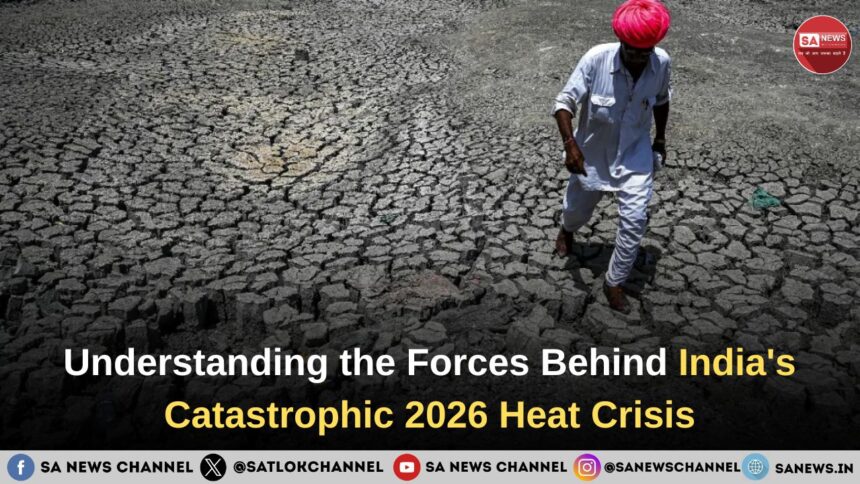
There is something deeply unsettling about opening a weather app and seeing your country hold 95 of the world’s 100 hottest spots simultaneously. That is exactly what happened in April 2026. Temperatures surged past 45°C across several regions of India.
The peak of heatwave conditions in India normally occurs during May and early June, but this year, extreme temperatures began developing as early as mid-April, weeks ahead of historical norms. To understand what’s happening, we need to pull apart each thread carefully so let’s examine the causes.
The Immediate Triggers: What’s Happening in the Atmosphere Right Now
The Heat Dome
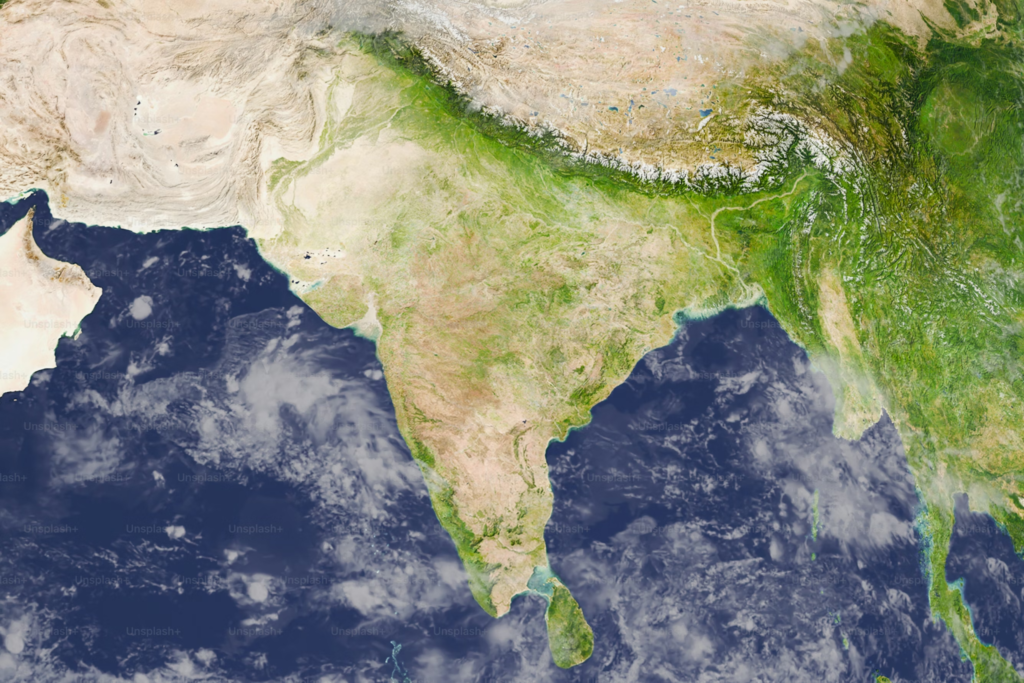
A key driver of the current episode is a “heat dome” that has trapped hot air over the Indo-Gangetic plains and eastern India. Think of it like a lid placed over a pot: a high-pressure system settles over a region, forces hot air downward, and prevents it from escaping.
The air beneath it gets compressed and heats up further, like a bicycle pump warming as you push down on it. Once locked in, a heat dome can persist for days or weeks, and the trapped air just keeps cooking.
Weakened Western Disturbances
Western disturbances, the weather systems that bring snow to the hills and rain to the plains, have become weakened and infrequent this year.
These disturbances are essentially the natural relief valve for northern India. Without them, there is no interruption to the heating cycle, no cloud cover, and no rainfall to cool the ground.
Clear Skies and Dry Winds
Clear skies have played a significant role, as uninterrupted sunlight increases surface heating. Dry continental winds have also prevented cooling, allowing heat to build up over land.
Add to this reduced snow cover in Eurasia and the Himalayas, which normally reflects solar radiation back into space, and you have a system where every natural check on heat has been simultaneously weakened.
The El Niño Shadow
India could face even more difficult weather as global climate signals point to a possible return of El Niño, a natural climate pattern where sea surface temperatures in the central and eastern Pacific Ocean become warmer, disrupting rainfall patterns across Asia. When El Niño and a pre-existing heat dome combine, the results can be catastrophic.
The Structural Reasons: Why India Is Especially Vulnerable
Meteorology explains the immediate spike. But it doesn’t explain why India, specifically, finds itself in this position year after year with worsening intensity. That story is longer, and darker.
The Urban Heat Island Effect
The urban heat island effect has made Indian cities significantly warmer than surrounding areas, driven by rapid construction, reduced tree cover, and heat from vehicles and industry.
Concrete absorbs and re-radiates heat far more intensely than soil or vegetation. Indian cities have expanded at a breakneck pace over the last three decades, often without adequate green infrastructure.
The result is that urban centres now act as heat amplifiers, a city that might naturally sit at 40°C can register 43–44°C because of how its built environment traps and re-emits thermal energy.
Deforestation and the Loss of Natural Buffers
Human-induced global warming and environmental degradation through deforestation, loss of wetlands, and deteriorating green cover have weakened India’s natural buffers against heat.
Forests do two things that matter enormously in a heatwave: they provide shade and they release moisture through a process called evapotranspiration, which cools surrounding air the same way sweat cools your skin. As tree cover disappears, to agriculture, to real estate, to industry, this natural air-conditioning vanishes with it.
The Warm Night Problem
A “warm night,” as defined by the India Meteorological Department, occurs when nighttime temperatures remain significantly above normal levels, meaning that even after sunset, temperatures do not drop enough for the body to cool down and recover from daytime heat exposure.
This is not a minor inconvenience. The human body depends on cooler nights to lower core temperature and recover physiologically. When nights stay hot, people enter the next day already compromised, and the accumulated heat stress compounds rapidly over successive days.
The Human Cost: Who Bears the Brunt
Heat is a deeply inequitable disaster. It doesn’t kill randomly; it targets the most vulnerable with precision.
The Health Emergency
Heat cramps, oedema (swelling), and syncope (fainting) are among the early symptoms of heat illness. In severe cases, heat stroke involves body temperatures of 104°F or more, accompanied by delirium, seizures, or coma.
India witnessed a 34% rise in deaths due to heatwaves between 2003–2012 and 2013–2022, according to IMD data. Between 2000 and 2020 alone, over 10,000 people lost their lives to heatwaves in India.
India’s most vulnerable populations—that is, the elderly, outdoor labourers, children, and the urban poor face the greatest risk.
The Women Who Walk Miles for Water
In villages like Shirsao in Dharashiv, heatwaves have led to drought-like conditions despite adequate rainfall the previous year, because increased evaporation has depleted wells and dried out soil moisture. Women in these areas have only a limited amount of water to drink, in many cases surviving on just one litre for an entire day.
The consequences are grim: genitourinary problems and a high incidence of kidney stones have been reported in such regions, and women agricultural workers are increasingly unable to find paid employment as dehydration incapacitates them.
Slum Dwellers: The Tinderbox Homes
Urban slum dwellers live in tin-roofed homes that trap heat catastrophically, turning into what researchers describe as death chambers by midday.
Many have no fans, no coolers, no electricity. For these families, the heatwave is not a news story, it is an unending physical emergency with no exit.
The Economic Fallout
The financial damage from extreme heat is enormous, systematic, and largely invisible in official accounting.
Labour Productivity Collapse
Studies show that when temperatures cross 35°C, human cognitive and physical performance starts to decline measurably.
For every degree above this threshold, labour productivity drops significantly. In a country where manual outdoor labour underpins agriculture, construction, delivery, and manufacturing, this is not a rounding error.
According to a study by the UN Economic and Social Commission for Asia and the Pacific (UNESCAP), India is projected to lose approximately 5.8% of daily working hours due to rising temperatures by 2030, a loss felt most acutely in agriculture and construction.
Agriculture on the Edge
Excessive heat can accelerate crop maturity, reducing the yield of Rabi crops like wheat, especially in Punjab and Haryana.
Reduced crop yields under extreme heat stress threaten food security for millions of farmers. When wheat yields drop, food prices rise and that affects every Indian, not just farmers.
Power Grids Under Pressure
Electricity demand has surged due to increased use of cooling devices, putting pressure on power infrastructure.
The bitter irony is that the more people run air conditioners to survive the heat, the more fossil fuel is burned to generate that electricity, which warms the planet further. It is a feedback loop with no clean exit. India Observers
Heat-Driven Migration
Heat-driven migration from rural and peri-urban areas is adding pressure on already strained urban infrastructure. When fields become unworkable and water runs out, people move to cities, which are themselves already overheating. Vision IAS
The Environmental Cascade
Heatwaves trigger droughts and wildfires across central and peninsular India, damaging forest cover and biodiversity. High temperatures cause rapid evaporation of soil moisture, affecting agricultural land and long-term soil health.
Deteriorating air quality during heatwaves compounded by dust storms from Rajasthan and wildfire smoke creates a compounding public health burden, particularly in north Indian cities.
Each wildfire destroys the very tree cover that would have buffered against the next heatwave. Each drought depletes aquifers that take generations to replenish. The heatwave doesn’t just pass through, it leaves the landscape more fragile than it found it.
The Cosmic Scale
Understanding the geographical conditions of our planet makes us realize how fragile human lives are, and the planet itself is just as delicate! We’re just a little speck of dust floating in a corner of the cosmos, infinitesimally small. Have you ever wondered what lies behind it?
Sant Rampal Ji Maharaj explains that this universe in which we reside is owned by Kaal Brahm. To attain complete liberation from this universe and the cycle of birth and death, one must follow the way of worship as described in our holy books.
Sant Rampal Ji breaks this down for us, citing evidence from all the holy books, enlightening us, and laying down the path to true salvation.
FAQs
1. What is a “heat dome” and how does it affect India?
A heat dome occurs when a high-pressure system traps hot air over a region like a lid on a pot. In India, this system compresses the air, causing it to heat up further while preventing cooler winds or clouds from entering, leading to prolonged and record-breaking temperatures.
2. Why did the 2026 heatwave start earlier than usual?
While Indian heatwaves typically peak in May or June, the 2026 crisis began in mid-April due to a combination of the heat dome, weakened “Western disturbances” (which usually bring cooling rain), and the warming influence of the El Niño climate pattern.
3. What is the Urban Heat Island effect in Indian cities?
The Urban Heat Island effect describes how cities become significantly hotter than rural areas. This happens because concrete, asphalt, and dense buildings absorb and re-radiate heat, while a lack of trees and green cover prevents natural cooling through shade and moisture.
4. How does extreme heat impact India’s economy?
Extreme heat leads to a collapse in labor productivity, with studies showing a 2% drop in performance for every degree above 35°C. Additionally, it threatens food security by reducing yields of crops like wheat and puts immense strain on the power grid as cooling demand surges.