

Kablana village in Jhajjar district of Haryana, known for its historical and spiritual significance, has witnessed a significant change after years of persistent waterlogging that had severely affected agricultural activity. Nearly 150 to 200 acres of fertile land remained submerged for the past three to four years, leaving farmers without crops and livelihoods.
- Key Takeaways: Kablana, Jhajjar Waterlogging Crisis and Recovery
- Historical Village Faces Prolonged Agricultural Crisis
- Kablana Waterlogging Relief: Third Round of Assistance Moves Village Closer to a Permanent Drainage Solution
- Collective Appeal and Rapid Response
- Water Drainage Brings Visible Change in Fields
- Farmers Share Ground-Level Impact
- Remaining Challenges and Future Expectations
- Village-Wide Response and Observations
- A Shift from Stagnation to Cultivation in Kablana
Fields once filled with stagnant, foul-smelling water are now seeing wheat cultivation again, with crops already sprouting. Villagers attribute this turnaround to a recent intervention that enabled the rapid drainage of accumulated water and restoration of farming activities.
Facing prolonged distress, villagers collectively approached Sant Rampal Ji Maharaj’s Muninder Dharmarth Trust office in Barwala with a prayer, seeking relief from the ongoing crisis that had disrupted their agricultural livelihoods.
Key Takeaways: Kablana, Jhajjar Waterlogging Crisis and Recovery
- Around 150–200 acres of farmland in Kablana remained waterlogged for 3–4 years
- In some areas, water stagnation persisted for 7–10 years, halting farming completely
- Farmers repeatedly approached authorities but received no effective resolution
- After a collective appeal, drainage support was arranged within 10–15 days
- Infrastructure included:
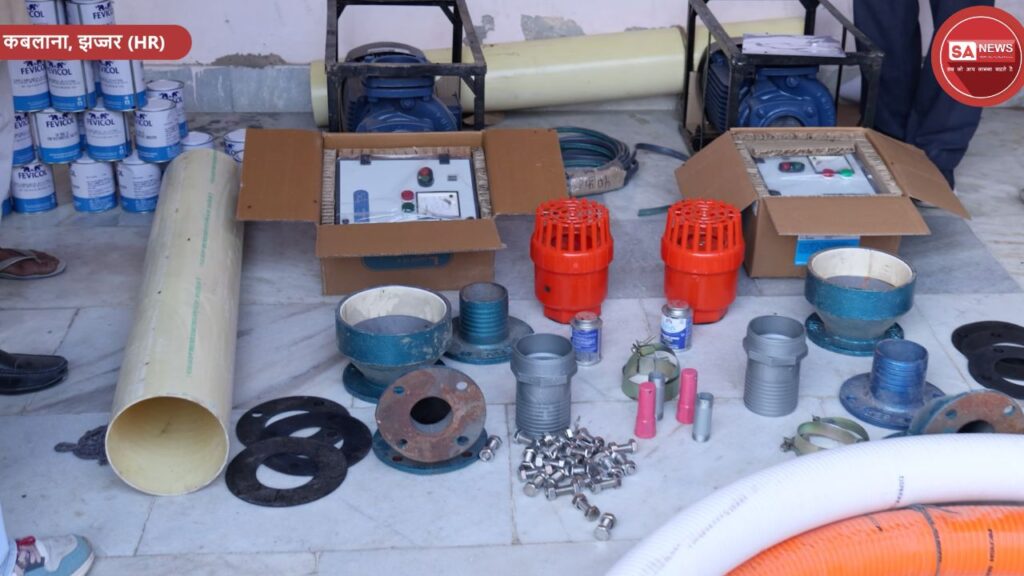
- 15,000 feet long 8-inch pipeline
- Two 10 HP motors
- Complete supporting equipment for installation
- Around 90% of fields have been sown with wheat, with visible crop growth
- Farmers report 70–80% recovery and improvement in conditions
- The equipment has been declared permanent shared property of the village
Historical Village Faces Prolonged Agricultural Crisis
Kablana, a village in Jhajjar district, holds a distinct place in both history and spirituality, being associated with Sant Garib Das Ji Maharaj, who is believed to have met Kabir Sahib Ji on this land. Despite this legacy, the village has faced severe agricultural distress in recent years.
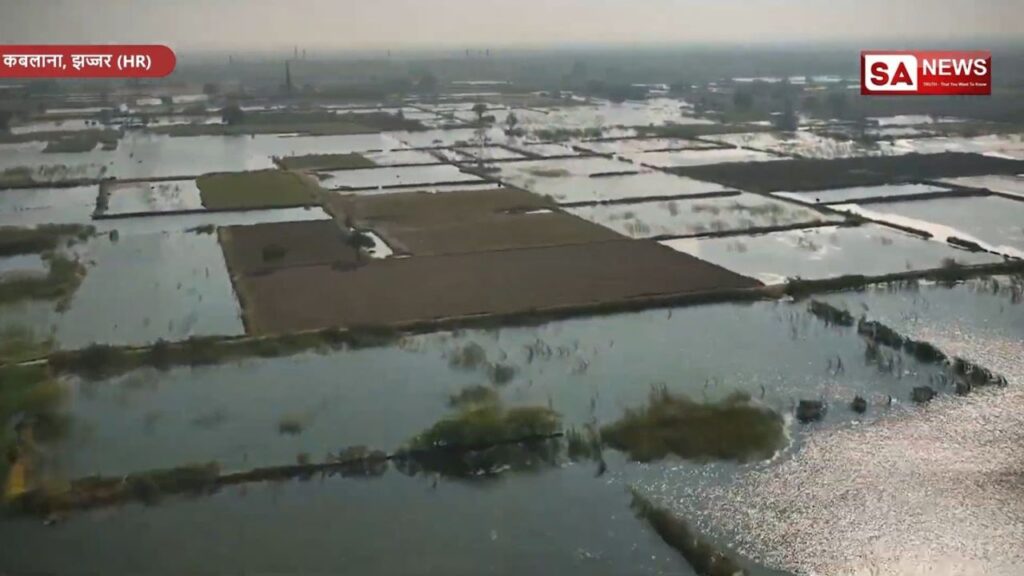
For nearly three to four years, a large portion of farmland, estimated at around 150 to 200 acres, remained submerged under water. Farmers reported that in some areas, water had been stagnating for as long as seven to ten years, making cultivation impossible. Crops such as cotton and millet were destroyed, and even paddy harvesting could not take place due to standing water.
According to Hansveer, the Sarpanch representative of the village, farmers had approached administrative authorities and political representatives for years, but the issue remained unresolved. As a result, agricultural activity declined sharply, and farmers feared for their livelihoods.
Kablana Waterlogging Relief: Third Round of Assistance Moves Village Closer to a Permanent Drainage Solution
Kablana village in Jhajjar district, Haryana, has moved a step closer to resolving its long-standing waterlogging problem following the third round of assistance provided under the Kisan Mazdoor Bachao Abhiyan Phase 2. Acting on a request from the Gram Panchayat, a technical survey was conducted under the orders of Jagannath Mahaprabhu Sant Rampal Ji Maharaj, after which 6,000 feet of 8-inch pipeline along with the necessary pipeline joining material was delivered to complete the remaining drainage line.
This follows earlier assistance of 15,000 feet of pipeline and two motors in 2025, and 15,000 feet of pipeline and three motors in the next phase in 2026. With the latest delivery, Kablana has now received a total of 36,000 feet of 8-inch pipeline and five motors. According to the Gram Panchayat, once the remaining pipeline is installed, the village’s drainage network will be substantially complete, significantly reducing rainwater accumulation in agricultural fields and enabling farmers to carry out sowing and cultivation on time.
Collective Appeal and Rapid Response
Amid growing distress, the villagers of Kablana, representing all 36 communities, made a collective appeal to Tatvdarshi Sant Rampal Ji Maharaj. Following this, support was arranged within a short period of 10 to 15 days.
Under the Annapurna Muhim led by Sant Rampal Ji Maharaj, infrastructure required for water drainage was provided. This included a 15,000 feet long, high-quality 8-inch pipeline and two 10 horsepower motors.
The support extended far beyond just major equipment. At a single instruction from Tatvadarshi Sant Rampal Ji Maharaj, His disciples arranged everything required to make the system operational—starters, cables, elbows, suction pipes, rubber gaskets, adhesives like Fevicol, and even the smallest steel nuts and bolts. As villagers themselves expressed, “We didn’t have to purchase even a single nut from the market to get everything running.”
Villagers confirmed that the entire setup has been designated as a shared asset of the village.
Water Drainage Brings Visible Change in Fields
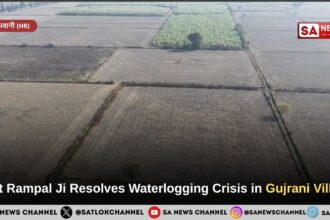
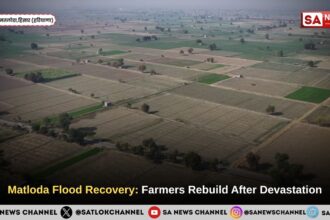
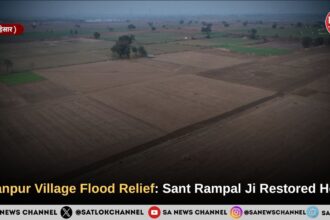
Before the intervention, fields in Kablana were covered with up to six feet of stagnant water. The area remained silent, with no farming activity visible. Following the installation of pipelines and motors, water was drained continuously, day and night, pushing accumulated water beyond village boundaries.
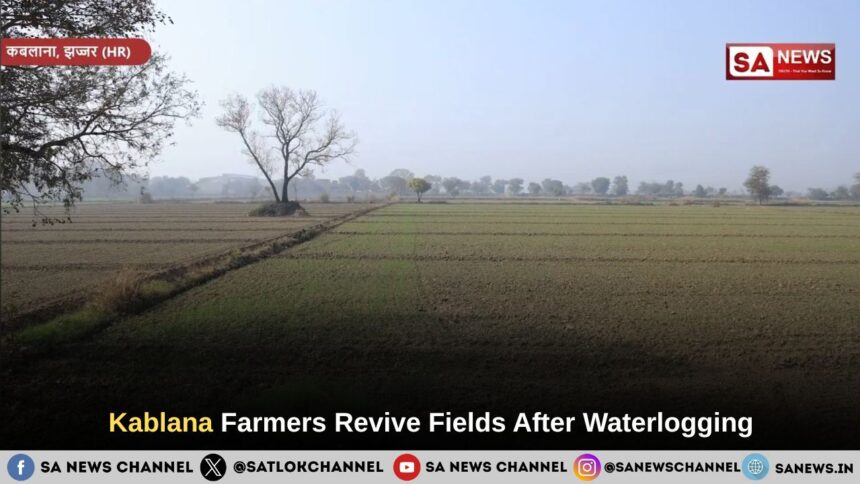
Within a short span, the transformation became visible. Fields that had remained unused for years were prepared for cultivation. Wheat sowing has now been completed across most of the affected land, and crops have already started sprouting.
Farmers reported that approximately 90% of the land has been brought back under cultivation, with visible improvement in agricultural conditions.
Farmers Share Ground-Level Impact
Several farmers and villagers shared their experiences regarding the crisis and subsequent changes:
- Rajkumar (farmer) stated that his fields had remained waterlogged for years, with farming not possible for 7–10 years in some areas. He said the drainage system helped remove water and allowed cultivation to resume.
- Farmers reported that earlier, 1–6 feet of water had accumulated across fields, preventing crop growth.
- According to villagers, around 70% to 80% improvement has already been achieved.
- Wheat crops are now visible across fields, with dense and uniform sowing.
Farmers also noted that earlier losses included damage to crops such as cotton and millet, while paddy was only partially saved in some cases after water removal.
One farmer stated that if water had not been drained in time, further losses were expected, and farming would not have been possible this season.
Remaining Challenges and Future Expectations
While a large portion of water has been drained, villagers indicated that some areas still have residual water. They estimate that the remaining water will be cleared within the next 20 to 30 days.
Farmers also expressed the need for additional motors to address remaining pockets of water and ensure complete drainage. Plans were mentioned to install pipelines permanently in certain areas once the water level reduces further.
Villagers expect that with improved conditions, upcoming crops, including fodder crops like jowar, will also be possible. They believe that agricultural productivity will improve further in the next crop cycle.
Village-Wide Response and Observations
Across Kablana, both farmers and elderly residents acknowledged the visible changes in the village’s agricultural landscape. They noted that fields which had remained barren for years are now being cultivated again.
Villagers highlighted that agriculture is their primary source of livelihood, and the restoration of farming has helped them regain stability. Many stated that earlier, they were dependent on loans and had limited means to sustain their households due to crop failures.
The intervention has resulted in renewed farming activity, improved crop prospects, and a gradual return to normal agricultural practices in the village.
A Shift from Stagnation to Cultivation in Kablana
The situation in Kablana reflects a transition from prolonged waterlogging and agricultural inactivity to active cultivation within a short period. Fields that once remained submerged for years are now being used for wheat production, with visible crop growth across large areas.
While some challenges remain in fully clearing residual water, the majority of affected land has been restored. Farmers report improved conditions and expect better outcomes in the coming crop cycles.
The developments in Kablana underline how timely infrastructure support has enabled farmers to resume cultivation after years of disruption, bringing measurable changes to agricultural activity and rural livelihoods in the village.
For More Information Please Do Visit Our Official Social Media Channels:
Website: www.jagatgururampalji.org
YouTube: Sant Rampal Ji Maharaj
Facebook: Spiritual Leader Sant Rampal Ji
‘X’ handle: @SaintRampalJiM