


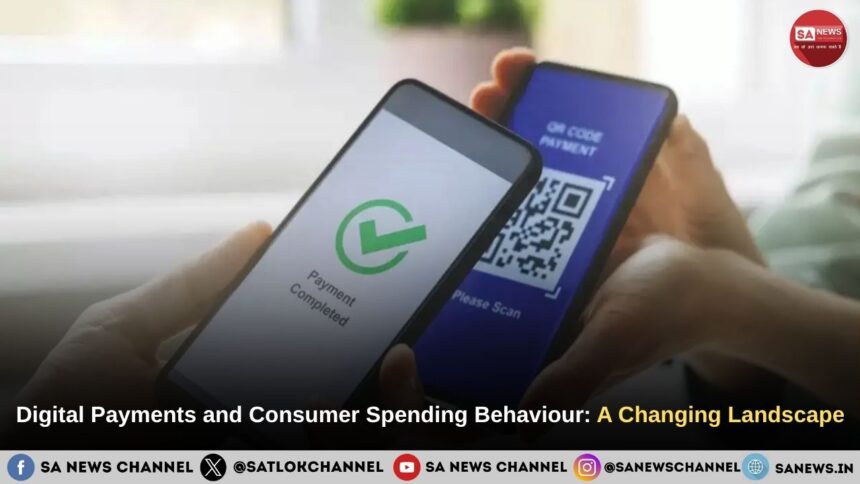
In today’s India, paying for even the smallest purchase has become quicker than ever. Whether it is buying vegetables from a street vendor or paying for an online order, digital payments have quietly become part of daily life. Especially after 2016 (post-demonetisation) and further accelerated during the COVID-19 pandemic (2020–2022), digital transactions have moved from optional to essential. What once felt like a technological shift now feels completely normal.
But along with this convenience, something else has been changing — the way people think about money and spending.
Earlier, handing over cash created a visible sense of expense. Now, with just a tap on a phone screen, that same transaction feels almost effortless. This subtle change is slowly shaping consumer behaviour in ways many people do not immediately notice.
The Rise of Digital Payments in India
The growth of digital payments in India has been rapid. According to NPCI data, UPI transactions crossed over 10 billion monthly transactions in August 2023 and have continued to grow into 2025, making India one of the largest real-time payment ecosystems in the world. With the spread of smartphones, affordable internet, and simple payment apps, people across cities and villages are adopting cashless methods.
From UPI transactions to mobile wallets and cards, digital payments are now used for everyday needs. Even small amounts that were once always paid in cash are now transferred digitally within seconds.
This shift has not only improved convenience but has also brought more people into the formal financial system. Government initiatives like Digital India (launched in 2015) and financial inclusion programs such as Jan Dhan Yojana have also played a key role in this expansion. At the same time, it has changed how comfortable people feel about spending money.
How Digital Payments Influence Consumer Spending Behaviour
One noticeable change is how spending feels less “real” in digital form. When people pay with cash, they physically see the money leaving their hands. That moment often makes them think twice.
With digital payments, that pause is often missing. Since there is no physical exchange, spending can feel lighter and less noticeable. Behavioural economists refer to this as the “pain of paying,” which is significantly reduced in digital transactions. This is one reason why people may end up making quick or unplanned purchases.
Another factor is ease. Payment details are saved, transactions are instant, and offers like cashback or discounts are always visible. These features make spending smoother—but also more frequent.
This does not mean that everyone overspends, but it does mean that spending decisions are happening faster than before. Impulse buying, especially in online environments, has increased as the gap between intention and action has reduced to just a few seconds.
Convenience vs Financial Discipline
There is no doubt that digital payments have made life easier. Bills can be paid in seconds, shopping can be done anytime, and money can be transferred instantly. For many, this has reduced effort and saved time.
However, this same convenience can create a challenge. When payments are quick and frequent, it becomes easy to lose track of where the money is going.
Many people only realise their total spending at the end of the month. Recent surveys (2023–2024 fintech reports) suggest that a large number of users underestimate their digital spending compared to actual bank statements. To deal with this, some are now using expense trackers or regularly checking bank messages to stay aware of their finances.
In the end, convenience works best when it is supported by awareness and discipline.
Impact on Consumer Decision-Making
Digital payments have also changed how people make decisions while buying something. Online platforms are designed in a way that makes payment the easiest step.
Limited-time offers, quick checkout options, and one-click payments reduce the time between thinking and buying. This can sometimes lead to decisions that are more emotional than practical.
At the same time, digital records offer an advantage. Every transaction is stored, which makes it easier to review spending habits. People who actively look at these records can gradually improve their financial decisions.
Additionally, algorithms on e-commerce platforms (like personalized recommendations and targeted ads) further influence spending behaviour by showing users what they are most likely to buy. This creates a feedback loop of consumption.
RBI Orders Closure of Three Types of Bank Accounts From Feb 1, 2026: What Changes for Customers
The Future of Cashless Spending in India
Looking ahead, digital payments are likely to become even more common. New technologies such as contactless payments and biometric systems will make transactions even simpler.
The Reserve Bank of India (RBI) is also actively working on innovations like Central Bank Digital Currency (CBDC), introduced in pilot phases in 2022, which could further transform how money is used in the future.
As this system grows, the focus will not only be on technology but also on awareness. People will need to understand how to use these tools responsibly.
Digital payments are not just changing how we pay—they are changing how we relate to money itself.
Ethical Spending and Conscious Living
All these changes bring us to an important question—how should we spend wisely in a world where spending has become so easy?
When money moves with just a click, the responsibility to think before spending becomes even more important. Without that pause, it is easy to fall into habits of unnecessary or impulsive consumption.
The teachings of Sant Rampal Maharaj offer a meaningful perspective in this context. He emphasizes living a simple and balanced life, where individuals focus more on their needs rather than endless wants.
According to his teachings, excessive attachment to material things often leads to dissatisfaction rather than happiness. This idea becomes especially relevant today, when digital systems encourage quick and frequent spending.
He also highlights the importance of self-control and awareness in daily life. Applying this to financial behaviour means asking a simple question before spending—is this really necessary? That small moment of reflection can make a significant difference.
Another important teaching is about ethical use of resources. Wealth, according to him, should be earned honestly and used thoughtfully, without waste. This encourages individuals to spend in a way that supports well-being rather than excess.
In many ways, digital payments test this discipline. They offer convenience, but they also remove the natural pause that once came with handling cash. This makes conscious decision-making even more important.
Ultimately, whether payments are digital or physical, the principle remains the same balance is key. A mindful approach to spending not only protects financial stability but also supports a more content and meaningful way of living.
Digital Payments in India: Key Statistics
- As of 2023, UPI (Unified Payments Interface) crossed 10 billion transactions per month, and by early 2025, it has continued to grow beyond this mark, showing consistent adoption across the country.
- UPI now accounts for over 60% of India’s total digital payment volume, making it the dominant payment method in the country.
- According to RBI data, digital payment transactions in India have grown at a CAGR (Compound Annual Growth Rate) of over 50% between 2018 and 2024.
- In terms of value, UPI transactions crossed ₹180 lakh crore annually in 2024, highlighting not just frequency but also increasing transaction size.
- More than 300 million users and over 50 million merchants are actively using UPI-based systems across India.
- Small-value transactions (below ₹500) form a significant portion of UPI payments, indicating strong penetration even in daily, low-cost purchases.
- Digital wallet usage has also grown steadily, but UPI has overtaken wallets as the preferred method due to its simplicity and zero-cost transfers.
- India accounts for nearly 40% of the world’s real-time digital payment transactions, making it a global leader in this space.