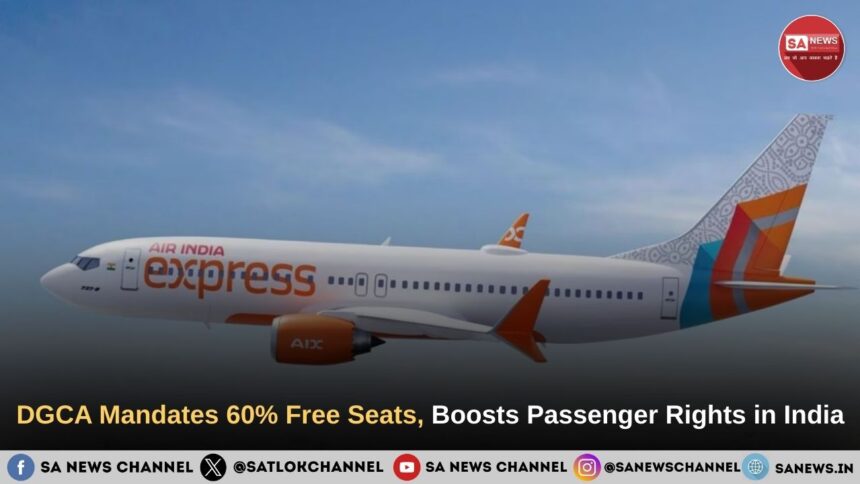
Air Travel Rules: India’s aviation sector is set for a significant shift as the Ministry of Civil Aviation, through the Directorate General of Civil Aviation (DGCA), has introduced new passenger-centric guidelines. Airlines are now required to keep at least 60% of seats free for selection, ensure passengers on the same PNR are seated together, and enhance transparency across services. The move aims to improve affordability, reduce grievances, and strengthen passenger rights amid rising dissatisfaction over additional seat charges.
- Key Takeaways: DGCA 60% Free Seat Rule & Passenger Rights
- Government Push for Fair Access in Air Travel
- Seat Selection Charges Under Scrutiny
- Passenger Dissatisfaction Driving Policy Change
- Mandatory Seating for Same PNR Passengers
- Transparency in Baggage, Pets and Special Items
- Passenger Rights to Be Clearly Displayed
- Airlines’ Ancillary Revenue Model Explained
- Growing Aviation Sector and Passenger-Centric Initiatives
- A Regulatory Shift Towards Passenger-Centric Aviation
- Passenger-Centric Travel and Spiritual Responsibility
- FAQs on DGCA 60% Free Seat Rule
Key Takeaways: DGCA 60% Free Seat Rule & Passenger Rights
- Minimum 60% seats must be free for selection on every flight
- Passengers on the same PNR to be seated together, preferably adjacent
- Airlines must publish clear policies on baggage, pets, and special items
- Passenger rights must be displayed across websites, apps, booking portals, and airports
- Information to be shared in regional languages for wider accessibility
- Move aims to improve affordability, transparency, and passenger experience
- Comes amid 44% passenger dissatisfaction over seat selection charges
Government Push for Fair Access in Air Travel
In a fresh push to improve customer comfort, transparency and consistency in airline operations, the Ministry of Civil Aviation has issued new directions through the Directorate General of Civil Aviation (DGCA).
Under the revised norms, airlines must keep at least 60% of seats on every flight free of charge to ensure equitable access. The directive directly addresses concerns around paid seat selection, a practice that has increasingly added to the cost of air travel.
The government has stated that the move is aimed at enhancing passenger experience, ensuring transparency, reducing grievances and upholding the highest standards of safety across the aviation ecosystem.
Seat Selection Charges Under Scrutiny
Airlines currently treat seat selection as a paid service, where passengers pay an additional fee to choose preferred seats such as window or aisle. These charges are revealed during the booking process and vary depending on the seat.
Also Read: US-Israel-Iran War Live Updates: The Conflict Reshaping the Global Order
While airfares differ across cabin classes like economy, premium economy, business or first, there is no difference in pricing between seat positions within the same class. Despite this, most seats now come with additional charges.
Typical Seat Selection Charges
| Category | Details |
| Price Range | ₹200 to ₹2,000 |
| Share in Airfare | 5% to 40% |
| Free Seats | Limited, usually at the back or cramped areas |
Initially, only a few preferred seats were chargeable. However, the practice has expanded, making most seats paid. In some cases, unsold seats become free shortly before departure.
Passenger Dissatisfaction Driving Policy Change
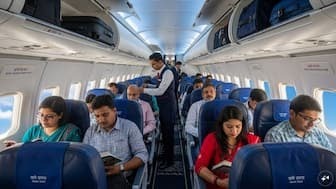
The directive comes in response to growing passenger dissatisfaction. A 2024 survey conducted by LocalCircles found that 44% of respondents were frustrated with having to pay extra for seat allocation.
The survey gathered 41,000 responses from consumers across 339 districts in India. It highlighted that while many passengers are unwilling to pay for seats, they often do so to avoid being assigned uncomfortable ones.
This widespread dissatisfaction has been a key factor behind the government’s intervention to ensure fair access to seating without additional charges.
Mandatory Seating for Same PNR Passengers
To further improve passenger convenience, the DGCA has directed airlines to seat travellers booked under the same PNR together, preferably in adjacent seats.
Also Read: 79% Travellers at Risk: UAE Warns of Rising Data Theft Through Unsafe Charging Ports
This step aims to address common concerns faced by families and groups who are often separated unless they pay extra for seat selection. The new rule ensures that such passengers can travel together without incurring additional costs.
Transparency in Baggage, Pets and Special Items
The regulator has also asked airlines to make the transport of sports equipment and musical instruments more transparent and passenger-friendly, while continuing to follow safety and operational rules.
Additionally, airlines must publish clear and transparent policies governing the carriage of pets. These measures are intended to reduce ambiguity and ensure that passengers are fully informed before travelling.
Passenger Rights to Be Clearly Displayed
Airlines are now required to prominently display passenger rights across all platforms, including:
- Official websites
- Mobile applications
- Booking portals
- Airport counters
The Ministry has emphasised strict compliance with the passenger rights framework, especially in situations involving flight delays, cancellations and denied boarding.
To improve accessibility, airlines must also communicate passenger entitlements in regional languages, ensuring that a wider audience is aware of their rights.
Airlines’ Ancillary Revenue Model Explained
The directive also impacts airlines’ ancillary revenue streams, which include earnings from services beyond ticket sales such as seat selection, baggage, in-flight WiFi, and partner services like hotel bookings and car rentals.
Airports have increasingly evolved into consumer hubs, offering a range of services and luxury shopping options that contribute to this revenue.
Ancillary Revenue Highlights
| Airline | Ancillary Revenue Financial Data |
| IndiGo | ₹7,944 crore in FY2025 (up 20.7%); ₹2141 crore in Q2 FY26 (14.2% YoY growth), surpassing ticket revenue growth (Economic Times report) |
| Air India | Estimated ₹2,500 crore in FY25, up from ₹1,700 crore in FY24 |
These figures underline the growing importance of ancillary income for airline profitability, with seat selection charges forming a significant component.
Growing Aviation Sector and Passenger-Centric Initiatives
India has become the world’s third-largest domestic aviation market, with air travel increasingly accessible due to expanding regional connectivity under the UDAN scheme.
Airports across the country are now handling more than five lakh passengers daily, reflecting the sector’s rapid growth.
To enhance passenger convenience, the Ministry of Civil Aviation has also introduced several initiatives, including:
- UDAN Yatri Cafes offering affordable food
- Flybrary facilities providing free access to books
- Complimentary Wi-Fi services at airports
These measures, along with the new DGCA guidelines, aim to create a smoother and more inclusive travel experience.
A Regulatory Shift Towards Passenger-Centric Aviation
The latest DGCA directives mark a significant regulatory shift towards prioritising passenger convenience and transparency. By mandating free seat access, ensuring group seating, and enforcing clear communication of rights and policies, the government is addressing long-standing concerns in the aviation sector.
As air travel continues to expand in India, these measures are expected to play a crucial role in balancing affordability with operational efficiency while maintaining safety standards.
Passenger-Centric Travel and Spiritual Responsibility
The evolving aviation framework reflects a broader principle of fairness, transparency and collective well-being. Ensuring equitable access, clear communication and reduced grievances aligns with the idea that systems should serve people with honesty and responsibility. Such efforts highlight the importance of ethical conduct in public services.
Tatvdarshi Sant Rampal Ji Maharaj reveals that true honesty stems from “True Worship”, which alone dissolves the karmic bonds of self-interest. Without this knowledge, we remain trapped in the 21 universes ruled by Kaal Brahm, who compels exploitation regardless of the law.
Embrace this divine wisdom to transform your life and achieve lasting justice.
For more information visit our
Website: www.jagatgururampalji.org
YouTube: Sant Rampal Ji Maharaj
Facebook: Spiritual Leader Saint Rampal Ji
X (Twitter): @SaintRampalJiM
FAQs on DGCA 60% Free Seat Rule
1. What is the DGCA 60% free seat rule?
Airlines must keep at least 60% of seats free for selection to ensure fair access for passengers.
2. Will passengers still pay for seat selection?
Yes, but only for seats beyond the 60% free allocation.
3. What is the rule for passengers on the same PNR?
They must be seated together, preferably in adjacent seats.
4. Why has this rule been introduced?
To improve affordability, transparency, and reduce grievances related to seat charges.
5. What other changes are included in the guidelines?
Clear policies on baggage, pets, passenger rights display, and communication in regional languages are mandated.