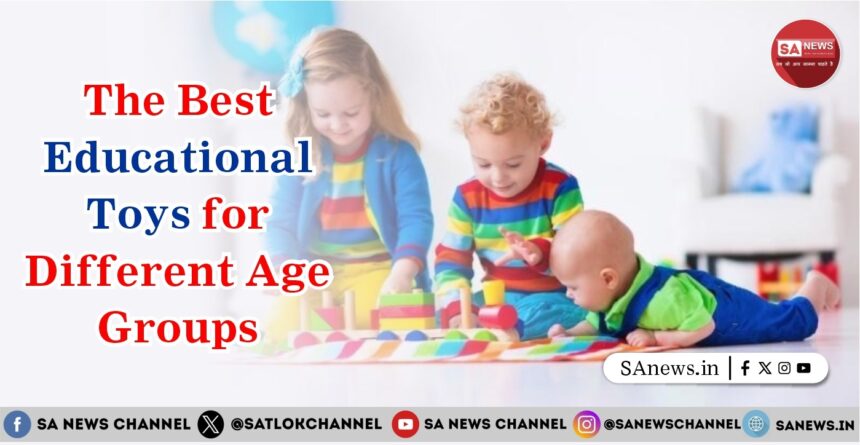
Best Educational Toys: In today’s fast-changing world, childhood is very different from what it was a few decades ago. Children today grow up surrounded by mobile phones, televisions, and digital screens. While technology has many benefits, it has also reduced physical activity, face-to-face interaction, and creative play among children. Because of this, parents are becoming more careful and thoughtful about how their children learn and grow.
- Importance of Educational Toys:
- Educational Toys by Age Group
- Babies (0–12 Months)
- Toddlers (1 – 3 Years)
- Preschoolers (3–5 Years)
- School Children (6–8 Years)
- Pre-Teens (9–12 Years)
- Teenagers (13–18 Years)
- How Parents Should Choose Educational Toys:
- Role of Parents and Environment:
- Outcome / Final Thoughts:
- Role of Sant Rampal Ji Maharaj in smart learning:
- FAQs:
One important realization among parents and educators is that toys are not just for fun anymore. Toys can be powerful learning tools. Educational toys play a very important role in shaping a child’s physical, mental, emotional, and social development. When learning is mixed with play, children learn naturally, without pressure or stress.
Educational toys help children understand the world around them. They encourage curiosity, creativity, imagination, and problem-solving. However, it is also important to understand that not all toys are suitable for every age. A toy that is perfect for a baby may be boring or useless for a teenager. Therefore, choosing the right educational toy according to a child’s age, interest, and ability is very important.
This news article explains the importance of educational toys, how they support child development, and lists the best educational toys for different age groups, from babies to teenagers.
Importance of Educational Toys:
Educational toys are specially designed to help children learn while playing. Unlike traditional learning methods, where children may feel pressure or fear, educational toys make learning fun, relaxed, and enjoyable.
Educational toys help children to:
Learn through play
- Improve memory and concentration
- Develop fine and gross motor skills
- Increase creativity and imagination
- Build self-confidence
Improve communication skills
- Learn patience and problem-solving
- Understand social behavior like sharing and teamwork
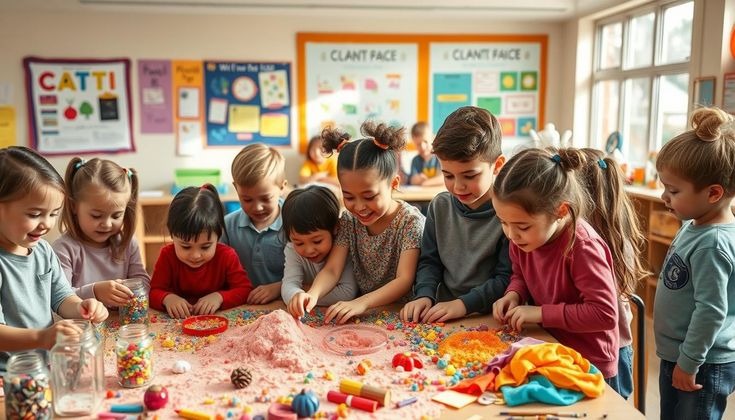
Image: Importance of educational toys
When children play with educational toys, they use their hands, eyes, brain, and emotions together. This helps in overall brain development. Such toys also reduce screen time and encourage active learning.
Another important benefit is that educational toys help children learn at their own speed. Every child is different. Some children learn fast, while others need more time. Toys allow children to explore and learn without comparison or competition.
Educational Toys by Age Group
Children grow and change very quickly. Their needs, interests, and abilities change with age.
Image: Educational toys by age group
That is why educational toys should always be chosen according to the child’s age group.
Babies (0–12 Months)
The first year of a baby’s life is very important for brain development. Babies learn mainly through their senses: touch, sight, sound, and movement. They observe colors, listen to sounds, and feel different textures.
Best Educational Toys for Babies:
- Soft toys
- Rattles
- Activity mats
- High-contrast black and white toys
- Cloth or soft books
- Musical toys with gentle sounds
Benefits for Babies:
- Helps in sensory development
- Improves hand and leg movement
- Strengthens muscles
- Supports early brain growth
- Improves eye-hand coordination
At this stage, toys should be safe, soft, non-toxic, and colorful. There should be no sharp edges or small parts. Simple toys are best for babies.
Toddlers (1 – 3 Years)
Toddlers are full of energy and curiosity. They love to touch, throw, push, pull, and explore everything around them. This is the age when children start walking, talking, and understanding simple instructions.
Best Educational Toys for Toddlers:
- Building blocks
- Shape sorters
- Musical instruments like drums or xylophones
- Push and pull toys
- Pretend play sets (kitchen sets, doctor kits)
- Stacking rings
Benefits for Toddlers:
- Improves motor skills
- Helps in language development
- Teaches shape and color recognition
- Improves balance and coordination
- Encourages imagination and role play
Pretend play toys are very useful at this age. When children pretend to cook or become a doctor, they learn about daily life, communication, and social roles.
Preschoolers (3–5 Years)
Preschool years are the foundation of formal learning. Children at this age start learning numbers, letters, words, and stories. They ask many questions and love to express their thoughts through drawing, coloring, and storytelling.
Best Educational Toys for Preschoolers:
- Alphabet and number toys
- Simple puzzles
- Art and craft kits
- Storybooks with pictures
- Simple board games
- Coloring books and crayons
Benefits for Preschoolers:
- Builds early literacy and numeracy
- Improves creativity and imagination
- Develops problem-solving skills
- Teaches patience and focus
- Encourages social interaction
Puzzles help children think logically, while art and craft toys help them express emotions and ideas. Storybooks improve vocabulary and listening skills.
School Children (6–8 Years)
Children in this age group start school and develop better focus and understanding. They enjoy challenges and like to complete tasks. Learning becomes more structured, but play is still very important.
Best Educational Toys for School Children:
- LEGO and construction sets
- Science experiment kits
- Math and word games
- Reading cards and flashcards
- Beginner coding toys
- Educational board games
Benefits for School Children:
- Improves logical and analytical thinking
- Supports school learning
- Builds confidence
- Encourages curiosity in science and math
- Improves reading and language skills
Construction toys help children understand structure, balance, and design. Science kits make learning exciting and practical.
Pre-Teens (9–12 Years)
Pre-teens become more independent and curious about how things work. They can understand complex ideas and enjoy solving problems. This is the best age to introduce STEM-based learning (Science, Technology, Engineering, Mathematics).
Best Educational Toys for Pre-Teens:
- Robotics kits
- Brain games and logic puzzles
- DIY science kits
- Strategy board games
- Creative design and craft kits
Benefits for Pre-Teens:
- Develops critical thinking
- Improves decision-making skills
- Encourages teamwork
- Builds interest in science and technology
- Boosts creativity and confidence
Robotics and DIY kits help children learn by doing. Strategy games teach planning, patience, and logical thinking.
Teenagers (13–18 Years)
For teenagers, educational toys become more like skill-building tools. At this age, children start thinking about careers, goals, and future opportunities. Learning should support their interests and talents.
Best Educational Tools for Teenagers:
- Coding and programming kits
- Electronics and engineering projects
- Musical instruments
- Creative media tools (design, video editing)
- Advanced logic and strategy games
Benefits for Teenagers:
- Develops career-oriented skills
- Encourages innovation and creativity
- Improves focus and self-discipline
- Builds problem-solving ability
- Helps in personality development
Skill-based toys help teenagers explore their strengths and interests. These tools can guide them toward future careers.
How Parents Should Choose Educational Toys:
Choosing educational toys is more important than buying expensive toys. Parents should focus on quality, usefulness, and learning value.
Parents should consider:
- Age-appropriate toys
- Safe and non-toxic materials
- Skill-building value
- Child’s interest and curiosity
- Durability and long-term use
A simple toy can sometimes teach more than a costly electronic toy. Parents should also encourage children to play creatively rather than controlling every activity.
Role of Parents and Environment:
Educational toys are most effective when parents actively participate. Playing together builds a strong emotional bond and helps children feel supported. A positive and calm learning environment helps children grow confidently.
Parents should also limit screen time and encourage outdoor play along with educational toys.
Outcome / Final Thoughts:
Educational toys are powerful tools that help children grow smarter, more creative, confident, and emotionally strong. When learning is combined with play, children enjoy the process and develop a lifelong love for learning.
Choosing the right educational toy at the right age helps build a strong foundation for the future. Educational toys are not just objects- they are stepping stones toward a better, brighter, and more balanced life for children.
Role of Sant Rampal Ji Maharaj in smart learning:
In the context of smart learning through play, the teachings of Sant Rampal Ji Maharaj emphasize that true education goes beyond rote learning and focuses on developing clear thinking, good values, and stress-free understanding from an early age.
His guidance supports balanced learning, where a child’s intellect grows naturally through curiosity, observation, and practical experiences rather than pressure. Educational toys that encourage problem-solving, creativity, patience, and focus align well with this approach, as they help children learn joyfully while strengthening their mental abilities.
We must encourage reading books like Gyan Ganga and Way of Living, written by Sant Rampal Ji Maharaj, to develop broad thinking, so that the events happening around us can positively nurture both our mind and soul, leading to holistic and thoughtful growth.
FAQs:
Q 1. What are educational toys?
Ans. Educational toys are specially designed play items that help children develop skills such as thinking, problem-solving, creativity, motor coordination, and language while they play and enjoy themselves.
Q 2. Why are educational toys important for different age groups?
Ans. Each age group has different developmental needs. Age-appropriate educational toys support physical, mental, and emotional growth in a natural way, ensuring children learn skills suitable for their stage of development.
Q 3. How do educational toys support smart learning through play?
Ans. Educational toys make learning interactive and enjoyable. They encourage curiosity, experimentation, and independent thinking, which helps children understand concepts easily without stress or pressure.
Q 4. How should parents choose the right educational toy for their child?
Ans. Parents should consider the child’s age, interests, safety, and learning goals. Toys that promote creativity, problem-solving, and imagination are ideal for long-term learning benefits.
Q 5. Can educational toys help in overall personality development?
Ans. Yes, educational toys not only improve academic skills but also help build patience, confidence, teamwork, and decision-making abilities, contributing to the child’s overall personality development.