

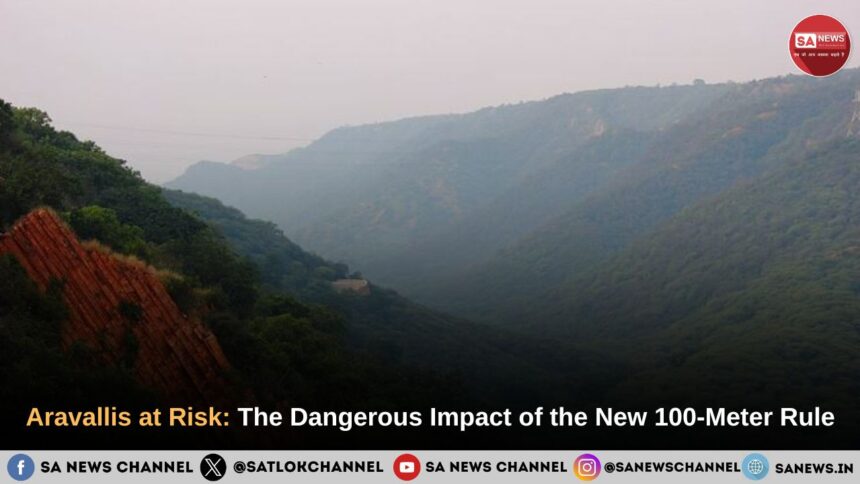
For millions of years, the Aravalli Hills have stood as India’s primary defense against the encroaching Thar Desert, a 700-kilometer shield protecting the northwest from groundwater collapse and choking pollution. But in November 2025, the fate of this ancient barrier came down to a single, arbitrary number: 100 meters.
- What Makes the Aravallis Geographically Critical?
- Groundwater Recharge and Water Security
- The Desert Shield: Wind, Dust, and Climate Control
- Biodiversity Corridors and Wildlife Connectivity
- Mining and Economics: The Government’s Reasoning
- A Step Towards Satyug by Sant Rampal Ji Maharaj
- Quick FAQs on the Aravalli Protection Shift
By accepting a new definition that classifies only hills above this elevation as “Aravalli,” the Supreme Court effectively stripped legal protection from over 90% of the range. This decision doesn’t just redraw the map; it sets the stage for a high-stakes collision between desperate development needs and irreversible ecological loss.
What Makes the Aravallis Geographically Critical?
The Aravalli Hills aren’t just scenic landforms; rather they’re a sophisticated natural engineering system that regulates an entire region. Stretching from Gujarat through Rajasthan, Haryana, and into Delhi, these ancient ridges perform three interconnected but distinct geographic functions that sustain life across northwest India.
Groundwater Recharge and Water Security
The Aravallis function as massive underground storage systems. Let’s dive deeper and understand this in detail:

(Image Courtesy: Shutterstock)
- The Mechanism: Fractured rock formations (quartzite and schist) allow rainwater to percolate underground, recharging ~20 lakh liters per hectare annually.
- The Dependency: Cities like Gurugram and Faridabad depend almost entirely on this supply for drinking water and irrigation.
- The Threat: Groundwater has already dropped to 1,500–2,000 feet below the surface. Mining the lower-lying hills threatens to destroy the specific surface entry points required for recharge, inviting catastrophic water scarcity.
The Desert Shield: Wind, Dust, and Climate Control
Less visible but fundamentally important, the Aravallis form a 2,500-kilometer ecological shield, stopping the Thar Desert from spreading eastward. This mountain range disrupts dust-laden winds, cutting down on the transport of sand, PM10, and fine PM2.5 particles.
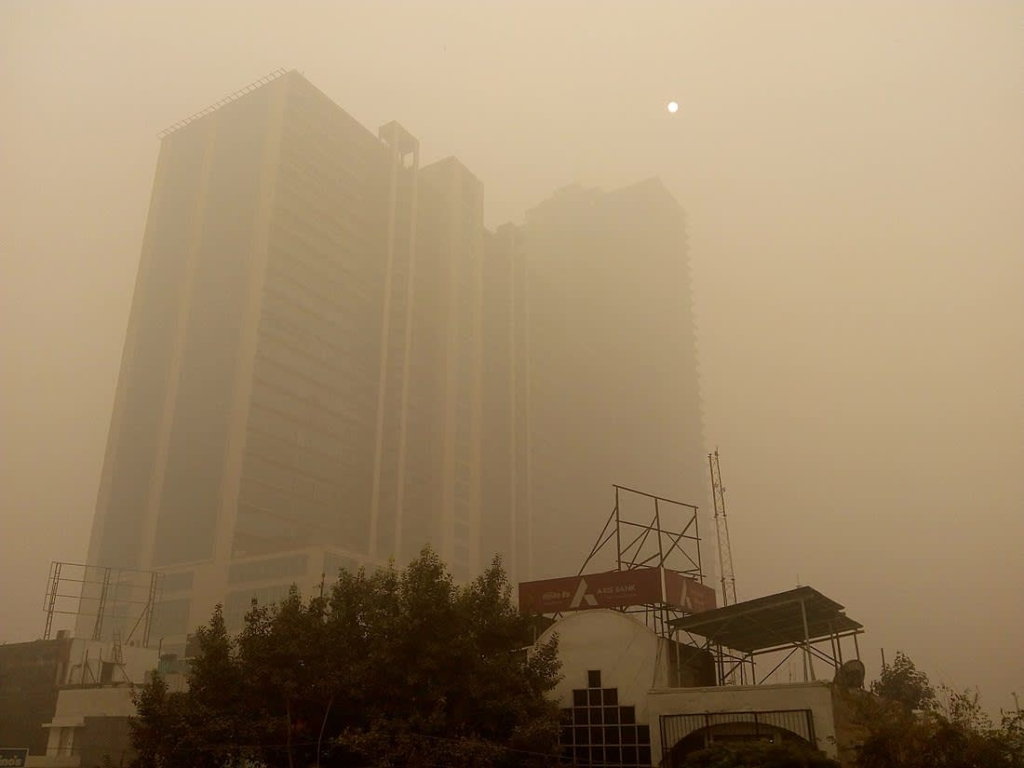
(Image Courtesy: A Glimpse of Pollution in Delhi- Wikiwand)
The crucial role falls to the lower hills. Though tall peaks filter fine pollution, modest hills of just 10–30 meters act as powerful windbreaks against heavier sand and dust. These are the first line of defense.
Unfortunately, the new 100-meter protection criterion specifically excludes these essential formations. Without this barrier, Delhi-NCR faces dramatically increased dust storms, rising temperatures, and severe consequences for public health and urban life.
Also Read: The Silent Brain Killer: Air Pollution’s Catastrophic Link to Dementia & Cognitive Loss
Biodiversity Corridors and Wildlife Connectivity
| Aspect | Current Status in Aravallis | Consequence of Removal |
| Biodiversity | Hosts 15 mammal species (e.g., endangered leopards, hyenas). Densities sometimes exceed formal sanctuaries. | Loss of species viability because animal populations become unable to breed across isolated patches. |
| Connectivity | Forms vital ecological corridors linking major protected areas (Sariska, Ranthambore). | Corridors are broken, isolating animal populations in “habitat islands.” |
| The Threat | Lower hills currently face removal of legal protection. | Intensified human-wildlife conflict as animals are pushed into human settlements while searching for resources and mates. |
Mining and Economics: The Government’s Reasoning
The government assumes that restoration efforts (the Aravalli Green Wall Project and future initiatives) can offset degradation from regulated mining. But experts argue this miscalculates the speed of harm versus recovery.
Once a hill is quarried, vegetation stripped, and aquifer integrity compromised, restoration takes decades while ecological damage is immediate. The Forest Survey of India’s own September 2025 report documented that even modest 10-30 meter hills provide crucial functions yet the new definition excludes them from legal protection.
The Aravalli Hills stand at a crossroads. The geographic functions they perform like ensuring water security, climate stabilization, wildlife habitat are measurable and irreplaceable.
The question before India now is whether short-term mineral extraction justifies the long-term geographic and ecological restructuring of a region on which millions depend. The facts are clear and the decision should belong to informed citizens, policymakers, and guardians of public interest.
A Step Towards Satyug by Sant Rampal Ji Maharaj
Amidst the political and societal tensions, we must prioritize unity and spread harmony, ensuring collective progress rather than societal division. Community and spiritual initiatives also play a crucial role in promoting environmental harmony and public welfare.
Sant Rampal Ji Maharaj has made this come true with several mind-blowing reforms, one of them being the AnnaPurna Muhim, a substantial and continuous flood relief initiative organized by Him. This Muhim, which began as an effort to provide food and shelter, has now evolved into a comprehensive humanitarian aid operation, which has reached over 200 villages.
Also check out the extensive reporting on: Flood Relief by Sant Rampal Ji Maharaj | SA News Channel
Quick FAQs on the Aravalli Protection Shift
1. What is the core change to Aravalli’s legal protection?
The Supreme Court, in November 2025, accepted a new definition classifying only hills higher than 100 meters as “Aravalli,” potentially stripping legal protection from over 90% of the range.
2. Why are the Aravallis geographically critical?
They serve as a 700-kilometer ecological shield that performs three vital functions: groundwater recharge for major cities, acting as a desert windbreak against dust and sand, and providing essential biodiversity corridors.
3. How does the new 100-meter rule impact water security?
The rule threatens to destroy the lower-lying hills which are critical surface entry points for rainwater to percolate and recharge the region’s deep aquifers, inviting catastrophic water scarcity in cities like Gurugram.
4. Which part of the range is most crucial for blocking the Thar Desert?
The lower hills (10–30 meters) are the first line of defense, acting as powerful windbreaks against heavier sand and dust particles, yet they are specifically excluded from protection under the new 100-meter criterion.
5. What is the government’s justification for the regulatory change?
The government assumes that regulated mining coupled with parallel restoration efforts, such as the Aravalli Green Wall Project, can proceed without irreversible ecological damage, offsetting the need for comprehensive protection.