


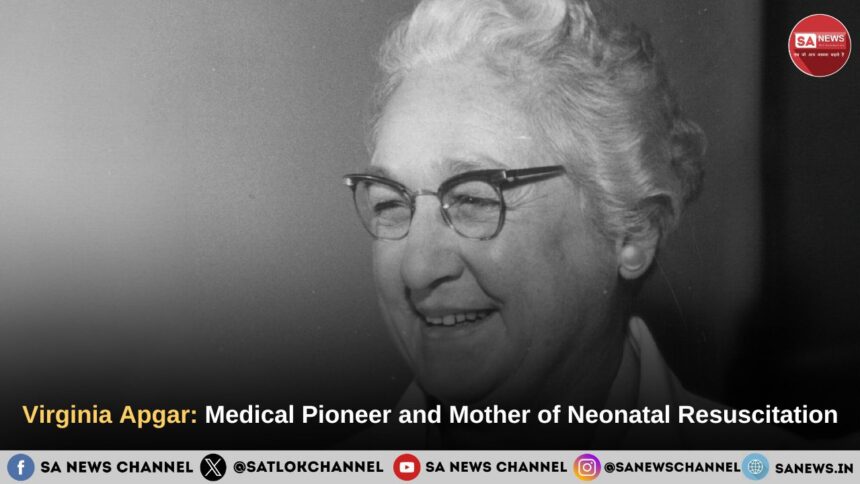
Virginia Apgar (1909–1974) was a true medical innovator and trailblazer. She is celebrated for developing the Apgar Score a simple yet revolutionary 10-point method that has saved millions of newborns around the world by enabling rapid assessments of vital signs at birth.
- Early Life in the Biography of Virginia Apgar: From Westfield to Medical School
- Education Highlights in the Biography of Virginia Apgar: Columbia University Breakthroughs
- Career Milestones in the Biography of Virginia Apgar: Anesthesiology Pioneer
- Invention of the Apgar Score in the Biography of Virginia Apgar: Revolutionizing Newborn Care
- March of Dimes Role in the Biography of Virginia Apgar:
- Final Years and Death in the Biography of Virginia Apgar: Honoring a Medical Icon
- Key Publications in the Biography of Virginia Apgar: Scientific Contributions
- Major Awards in the Biography of Virginia Apgar: Honors and Recognitions
- Saint Rampal Ji is Transforming the Lives of All
Born in Westfield, New Jersey, into a family that encouraged her scientific curiosity, Apgar survived the Great Depression, gender barriers in surgery, and the challenges of pioneering anesthesiology to become the first full-time director of anesthesia at Columbia-Presbyterian Medical Center and later a major leader with the March of Dimes.
This biography reveals her path from zoology student to “mother of neonatology,” covering her education, career milestones, the impact of the Apgar Score, advocacy for infant health, key publications, awards, and enduring legacy.
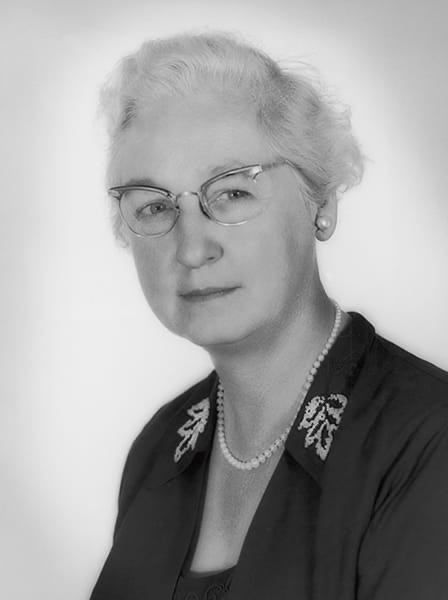
Early Life in the Biography of Virginia Apgar: From Westfield to Medical School
Virginia Apgar was born on June 7, 1909, in Westfield, New Jersey. She was the third child born to Helen May Clarke Apgar (also known as Helen May Apgar) and Charles Emory Apgar. Helen May Clarke Apgar was a homemaker who took care of the family, while Charles Emory Apgar was an insurance executive and businessman with interests in astronomy, inventing, radio, and science projects like building basement labs and a telescope.
Virginia Apgar was an intelligent and hardworking student. She completed her higher secondary education at Westfield High School. She graduated with a bachelor’s degree in zoology from Mount Holyoke College in 1929.
Education Highlights in the Biography of Virginia Apgar: Columbia University Breakthroughs
When the world was fighting the Great Depression, Virginia Apgar had different plans. Determined to pursue her medical career, she enrolled at Columbia University in 1929. She completed her graduation in 1933, finishing fourth in her class of 90 students. She was also one of only nine women to earn membership in the Alpha Omega Alpha honor society, despite accruing significant debt.
As we step into the biography of Virginia Apgar, we learn that she was a practical woman who focused on the needs of the situation rather than chasing unrealistic dreams. Initially pursuing a surgery residency under Dr. Allen Whipple from 1933 to 1937, Virginia switched to anesthesiology on his advice, as surgery offered few opportunities for women at the time.
Under the guidance of Dr. Ralph M. Waters, Virginia completed an anesthesiology residency at the University of Wisconsin in 1937. She later worked at Bellevue Hospital in New York under Emery Rovenstine and became the second woman to be certified by the American Board of Anesthesiology in 1937.
Career Milestones in the Biography of Virginia Apgar: Anesthesiology Pioneer
The biography of Virginia Apgar is incomplete without mention of her career milestones as an anesthesiology pioneer. In 1938, she was appointed the inaugural director of Columbia-Presbyterian Medical Center’s Division of Anesthesia. During this time, she worked hard to transform anesthesiology from a nurse-led service into a robust department focused on residency training and research programs.
During World War II, a new chapter in the biography of Virginia Apgar unfolded as she advanced obstetrical anesthesiology. She is also credited with developing advanced protocols for childbirth anesthesia that led to a decline in newborn respiratory distress.
Also Read: Barbara McClintock Biography: The Trailblazing Geneticist Who Discovered Jumping Genes
Another milestone in the biography of Virginia Apgar was the invention of the Apgar Score, a simple test to assess newborns. This tool boosted neonatal care worldwide, and she was promoted to full professor at Columbia University College of Physicians and Surgeons in 1949.
Invention of the Apgar Score in the Biography of Virginia Apgar: Revolutionizing Newborn Care
While working at the Columbia-Presbyterian Medical Center’s anesthesia division, Virginia Apgar invented the Apgar Score. The Apgar Score is a rapid 10-point assessment tool analyzing newborn Appearance (skin color), Pulse (heart rate), Grimace (reflex irritability), Activity (muscle tone), and Respiration at 1 and 5 minutes post-birth.
This tool allowed physicians to make immediate resuscitation decisions, reducing infant death rates. The score determines whether a newborn needs immediate attention: a score of 7-10 indicates optimal condition, 4-6 suggests distress requiring monitoring, and 0-3 denotes extreme distress needing urgent resuscitation.
First published in 1953 as “A proposal for a new method of evaluation of the newborn infant,” the Apgar Score revolutionized neonatal healthcare, earning her the title of mother of neonatology. This technique developed by Virginia Apgar is still used today.
| APGAR SCORE | |||
| SCORE | 0 POINTS | 1 POINT | 2 POINTS |
| Appearance (Skin Color) | Cyanotic / Pale all over | Peripheral cyanosis only | Pink |
| Pulse (Heart Rate) | 0 | <100 | 100-140 |
| Grimace (Reflex Irritability) | No response to stimulation | Grimace or weak cry when stimulated | Cry when stimulated |
| Activity (Tone) | Floppy | Some flexion | Well flexed and resisting extension |
| Respiration | Apneic | Slow, irregular breathing | Strong cry |
March of Dimes Role in the Biography of Virginia Apgar:
At the March of Dimes from 1959 to 1974 as vice president and director of basic research magnified her commitment to infant health. This shifted the organization’s focus from polio to preventing birth defects after the success of her Apgar Score. Apgar promoted public health programs such as rubella vaccination, acceptance of Rh immune globulin, genetic counseling, and prematurity research.
She also wrote more than 60 publications and the popular book Is My Baby All Right? educating parents about newborn risks, as reflected in the biography of Virginia Apgar. Her advocacy greatly reduced infant mortality in the United States. She became known as a pioneer in neonatology and an advocate for public health who saved the lives of millions of babies worldwide.
Final Years and Death in the Biography of Virginia Apgar: Honoring a Medical Icon
While at the March of Dimes, where she directed research on birth defects while fighting cirrhosis and her chain smoking habits, she also provided lectures until her last time. Virginia passed away at New York at age of 65, in August 7, 1974 due to cirrhosis related issues.
Key Publications in the Biography of Virginia Apgar: Scientific Contributions
Virginia Apgar made major contributions to the field of anesthesiology and obstetrics. Some of them are listed below.
- A proposal for a new method of evaluation of the newborn infant” (Current Researches in Anesthesia & Analgesia, 1953)
- “Further observations on the newborn scoring system” (with L. Stanley James, American Journal of Diseases of Children, 1962)
- Is My Baby All Right? (with Joan Beck, 1972), parent guide on birth defects
- “Infant mortality due to structural malformations” (various journals, 1970s): Analyzed causes and public health interventions for congenital issues.
- Over 60 articles on anesthesiology, newborn resuscitation, teratology, and birth defects in journals like Anesthesiology and JAMA.
Major Awards in the Biography of Virginia Apgar: Honors and Recognitions
For her major contributions to the field of anesthesiology, Virginia Apgar earned various awards and recognitions during her lifetime.
- Distinguished Service Award from the American Society of Anesthesiologists (1961 or 1966)
- Elizabeth Blackwell Award from the American Women’s Medical Association (1966)
- Honorary doctorate from Woman’s Medical College of Pennsylvania (1964)
- Honorary doctorate from Mount Holyoke College (1965)
- Honorary doctorate from New Jersey College of Medicine and Dentistry (1967)
- Alumni Gold Medal for Distinguished Achievement from Columbia University College of Physicians and Surgeons (1973)
- Ralph M. Waters Award from the American Society of Anesthesiologists (1973)
- Woman of the Year in Science from Ladies’ Home Journal (1973)
Posthumous Achievements and Honors
- U.S. Postal Service commemorative stamp (1994)
- Induction into the National Women’s Hall of Fame (1995)
- Inductee into the New Jersey Hall of Fame (2020)
Saint Rampal Ji is Transforming the Lives of All
Sant Rampal Ji Maharaj ji from Haryana is the only Saint in the world who is transforming the lives for the poor and the backward section of the society. Sant Rampal Ji Maharaj through Annapurna Muhim is providing free food, clothes , education , healthcare and housing facilities to all the needy people irrespective of their gender, caste, creed,color or religion.
Also see: Annpurna Muhim
Sant Rampal Ji Maharaj ji is also providing true scripture based worship of the Supreme God Kabir Saheb to all the people. Readers are requested to take initiation from Saint Rampal Ji Maharaj by visiting www.jagatgururampalji.org.
One can also watch the spiritual discourses of Sant Rampal Ji Maharaj on Sant Rampal Ji Maharaj Youtube Channel or Sant Rampal Ji Maharaj Application.






![Understanding Biological Classification A Comprehensive Guide to Organizing Life [2025]](https://santrampalji-files.sgp1.digitaloceanspaces.com/sanews.in/2024/12/30154608/Understanding-Biological-Classification-A-Comprehensive-Guide-to-Organizing-Life-2025-330x220.jpg)