



Have you ever had your child make faces at those veggies on their plate? I am certain you would like an answer to this situation once and for all. If your answer is yes, then let’s explore our topic for today.
Children are generally picky eaters at a young age, and usually this habit tends to diminish as they grow. However, dealing with picky eaters consumes a lot of energy from the parents. Children may become picky eaters due to various reasons such as for sensory sensitivity or maybe a negative experience associated with the food. To handle picky eating, parents can plan strategically by making food pleasing to the eye and rewarding their children for trying new varieties of food. Overall, patience, and consistency are the keys to handle picky eating.
Key Highlights
- Who are picky eaters?
- Signs of picky eaters
- Why are they so picky?
- How to deal with picky eaters?
- Can kids really eat without making a fuss?
Who are picky eaters?
Picky eaters are children who prefer specific foods only. They do not like unfamiliar or strange-looking foods. For example, a nice green broccoli is not as pleasing to look at or eat, relative to a strawberry. Picky eating is very common in children. According to a Dutch study involving 4000 participants, picky eating tends to become less severe as the kid grows. For example, according to the study, picky eating was highest among kids aged 18 months at 26.5% and it reduced to 13.2% amongst kids aged 6 years. Click the link if you want more information about the study. You will get bored to death if I write everything here.
Signs of picky eaters
This is important because you never know if your child is actually a picky eater or just doesn’t like some foods. So here are the signs of picky eaters.
Disapproval of food
The kid tends to disapprove of whole food categories like soups, vegetables, or fruit. They prefer to eat only a small group of foods that they are comfortable with. They also tend to give dramatic reactions to unfamiliar food.
Personal issues with textures
Sometimes the kid thinks food looks weird. They may assume its taste is weird too. They may also only prefer crunchy food or soft or mushy food and so on and so forth.
How they eat
They pick on their food or just abandon the meal completely. Their food needs to be prepared in a certain way each time, or they may throw tantrums or even yell.
Now that you have the checklist, let’s move on.
Why are they so picky?
You may think they are just picky because of their taste buds. That’s true, but that’s not enough information to understand the root cause of your kids’ eating habits.
Negative experiences
One of the reasons could be that in the past, they might have had bad experiences with their food. For instance, they might have experienced a strong dislike for peas, and might have been sick after consuming them. So that leaves a permanent imprint on their minds along with their taste buds. (or temporary, if you can help overcome it).
High taste sensitivity
Another reason is that kids are more sensitive to tastes than adults, and are more reactive to certain flavors. For example, some kids hate sour foods like tomatoes and lemons (and sour candies too!).
Force feeding by parents
The next reason is that some kids are force-fed by their parents, since they’re concerned for their nutrition. But they aren’t aware that it could give the kid negative association with, for example, spinach, and this belief could stay with them for their entire lives.
How to deal with picky eaters?
This is the solution which you have been waiting for. So firstly, I’d like to share a tip: Do NOT force feed the kid. You might think that is the only solution, but you are a little on the wrong side. That solution in fact makes the picky eating worse.
They will be like ‘what’s the point of being force-fed if I have to try a new food?’
It’s the same disgusting, tasteless or overdramatic food for them. Instead try new methods.
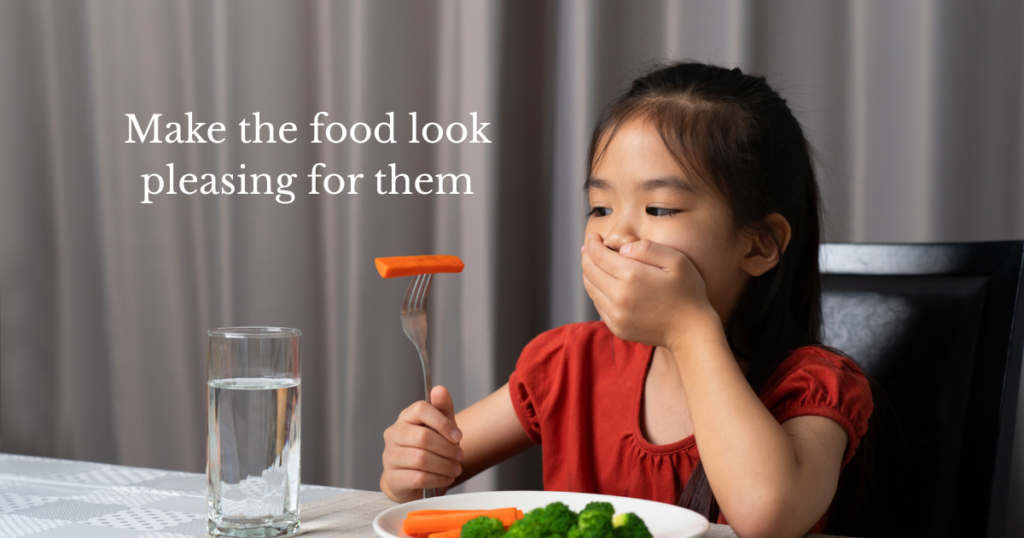
Make the food look pleasing for them
This is a common thing with adults too. Even if food tastes super delicious but if it looks depressing, nobody would eat it. For picky eaters, you can make food visually appealing. For example, you could make the classic swan out of apple slices, make rice look like gourmet food by putting it in a bowl and flipping it on a plate, you could also use broccoli as a tree and lettuce as grass and things like that.
Try sampling with decoration
‘Sample’ or make them try new foods in mini quantities in fun ways, like 3-4 carrot slices with healthy dips if they like fries, cut tomatoes in tiny, fun shapes.
Reward them
If you offer rewards for finishing those veggies, they will automatically eat them, because our brain likes rewards. For example, to make them eat different foods, you can say, “If you eat this (food), I will give you an extra cookie for dessert”. Or for bonus points (for you), you could experiment with different types of decorated foods and make one their favourite and then use THAT as a reward!
Limit the amount of new foods
If you give them too many foods at once, the child may feel overwhelmed and feel like they’re getting attacked by the food and then eventually quit trying new food. So it’s important to give space for their brains to comprehend the taste of the new food before introducing other foods.
Set specific meal times
Make specific timings for meals so that they come to eat when they’re hungry. If they do, present them with a nice looking food.
Also, eat the same food as them so that they get encouraged to eat it.
Dealing with picky eaters can be overwhelming. However, it is crucial for parents to understand the reason why their child behaves like that around certain foods. Parents must make conscious efforts to keep the kids healthy. And they need to remember that it is not permanent and will gradually reduce as they grow. What if I told you that I have seen kids who eat whatever is on their plates without making a fuss? Sounds impossible, right?
Can kids really eat without making a fuss?
Yes, there are children who never fuss about food. These kids are disciples of Saint Rampal Ji Maharaj. According to His teachings, they pray before eating. Their prayer says, “Ann Jal Sahib Roop Hain,” meaning food and water are forms of God and should be consumed with respect. Therefore, they do not fuss over food.
We can deduce that true spiritual knowledge, when imparted to kids, helps them live in harmony with their surroundings and behave well. It also implies that eating-related issues are taken care of.
To know more about Saint Rampal Ji Maharaj and His teachings order your free copy of Gyan Ganga
FAQs
- Is it normal for children to be picky eaters?
Ans: Yes, it is normal for children to be picky eaters. This behaviour diminishes as they grow.
- Are picky eaters born or made?
Ans: Picky eating can be influenced by the genetic framework of the child. However, environmental factors and parenting styles play a major role in shaping the eating behaviours of kids.
- What is the psychology behind picky eaters?
Ans: Kids behave in a certain manner towards specific foods due to genetic factors, high sensitivity towards tastes or negative experience related to food.
- Is a picky eater a red flag?
Ans: Picky eating is a normal behaviour that tends to diminish with growth. However, if there are no signs of diminishing, then it could relate to more serious disorders like paediatric feeding disorder or Avoidant/Restrictive Food Intake Disorder(ARFID).