

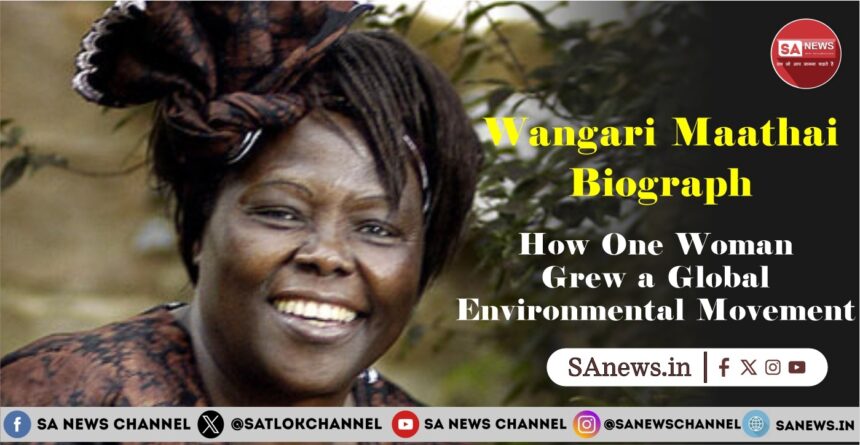
‘Mother of Trees’ Wangari Maathai’s identity is synonymous with the word ‘courage’. The trailblazing Kenyan environmentalist was a human rights advocate, and the first African woman to win the Nobel Peace Prize. Wangari fought the exploitative government fearlessly to stop land-grabbing. This article explores Wangari Maathai’s biography and her impact, while also analysing her motivations and examining her understanding of ‘the real threat to humanity’.
- Who is Wangari Maathai?
- Wangari Maathai’s Childhood and Early Inspiration
- Why Was Wangari Maathai Famous For?
- The Defiant Crusader: Battles Against Tyranny
- The Battle for Uhuru Park (1989)
- The Mothers of Political Prisoners (1992)
- The Karura Forest Confrontation (1999)
- The Green Belt Movement by Wangari Maathai
- Why did Wangari Maathai Win the Nobel Peace Prize?
- Awards and Honours Won by Wangari Maathai
- Famous Quotes by Wangari Maathai
- The Tree Wangari Maathai Never Planted
- Is Saving the Planet Even Possible?
- FAQs on Wangari Maathai
Who is Wangari Maathai?
Wangari Maathai (1940–2011) stands as one of the 20th century’s most profound and courageous figures. Her story transcends the mere act of planting trees. She fought for the environment along with the struggle for democracy, human rights and social justice.
As the first African woman and the first environmentalist to be awarded the Nobel Peace Prize in 2004, Maathai was a fierce activist. She opined that the health of the earth was inseparable from the dignity of its people. Wangari Maathai dedicated her whole life to restore the health of the earth. She famously stated, ‘The environment is the first victim of war and, because it’s the first victim, it’s also the first requirement for peace’.
It is important to ask at this point – to what extent did Wangari Maathai succeed? Is it humanly possible to restore the health of earth? We will be exploring the real-life impact of activists like Wangari Maathai versus the innate self-destructive nature of earth later in this article.
Wangari Maathai’s Childhood and Early Inspiration
Wangari Muta Maathai was born in the small village nestled within the lush central highlands of Nyeri, Kenya, in 1940. In this section, we will analyse the seeds of inspiration for Wangari Maathai to pursue the cause of the environment in life.
The Bucolic Genesis
Growing up surrounded by fertile soil, flowing streams and vibrant forests, Wangari developed an early love and respect for nature.
- Her childhood was deeply connected to the land where she fetched water from clean rivers, played beneath tall fig trees and witnessed her community’s reliance on healthy ecosystems for food and livelihood.
- She always recalled her childhood vividly – the clean, bubbling streams, the immense, sacred fig trees and the air rich with the scent of fertile earth.
- This ‘bucolic beginning’ ingrained in her a deep, personal understanding of a functioning, healthy ecosystem – an ideal she would later sacrifice everything in a bid to restore it.
- However, as she grew older, Maathai saw the rapid destruction of the forests she had once cherished. Expanding farms, deforestation and soil erosion began to strip away Kenya’s natural beauty and harm rural communities. These painful changes sparked her determination to protect the environment.
- Her education, both in Kenya and later in the United States, strengthened her belief that caring for the Earth was inseparable from improving people’s lives.
This understanding became the foundation for her life’s work which also involved empowering women and communities to restore the environment through action, education and unity.
Education and the Birth of an Environmental Vision Wangari Maathai
Wangari Maathai’s journey from a rural village in Kenya to global recognition began with her passion for learning.
- Maathai defied traditional limitations on girls’ education. She excelled, attending a Catholic mission boarding school, which sheltered her from the worst violence of the Mau Mau Uprising.
- Her academic performance was stellar, culminating in her receiving one of the prestigious Kennedy Airlift scholarships in 1960. This programme was designed to educate future leaders of newly independent African nations.
- She pursued biological sciences at Mount St. Scholastica College in Kansas, later earning a master’s degree from the University of Pittsburgh, where she was first exposed to environmental restoration projects.
- Witnessing the effectiveness of community-based conservation in America deeply influenced her perspective. Her studies in veterinary anatomy and biological science gave her a scientific understanding of ecology, while her experiences abroad taught her the power of civic engagement and grassroots organisation.
- This blend of scientific knowledge and social awareness became the foundation of her activism. She felt that protecting Kenya’s environment required not only planting trees but also addressing poverty, inequality and women’s empowerment. These insights eventually led her to establish the Green Belt Movement.
- When she returned to Kenya, she became the first woman in East and Central Africa to earn a PhD., awarded by the University of Nairobi in 1971.
- However, the land she returned to was tragically altered. The rapid, often illegal, conversion of forests to commercial farms and private land under the post-colonial regime had wrought devastation. The streams of her childhood were dry and the soil was exhausted.
- This profound, visual shock of environmental degradation provided the spark. She believed the ecological collapse she was witnessing was not just a scientific problem, but ‘the root cause of widespread human suffering’.
It is important to pause and note the phrase ‘root cause of widespread human suffering’. Is environmental degradation truly the ‘root cause’ of human suffering? We will pursue this question in-depth towards the end of this article.
Why Was Wangari Maathai Famous For?
Wangari Maathai’s work extends far beyond the awards and honours she received. Her life’s work transformed environmental activism into a global movement. Here are some moments that have etched Wangari Maathai’s efforts in public memory:
- By founding the Green Belt Movement in 1977, she made efforts to demonstrate how local action, such as planting trees, could address some of the world’s most pressing challenges, including deforestation, poverty and gender inequality. Whether challenges like gender inequality and poverty can be tackled by planting trees alone is debatable though.
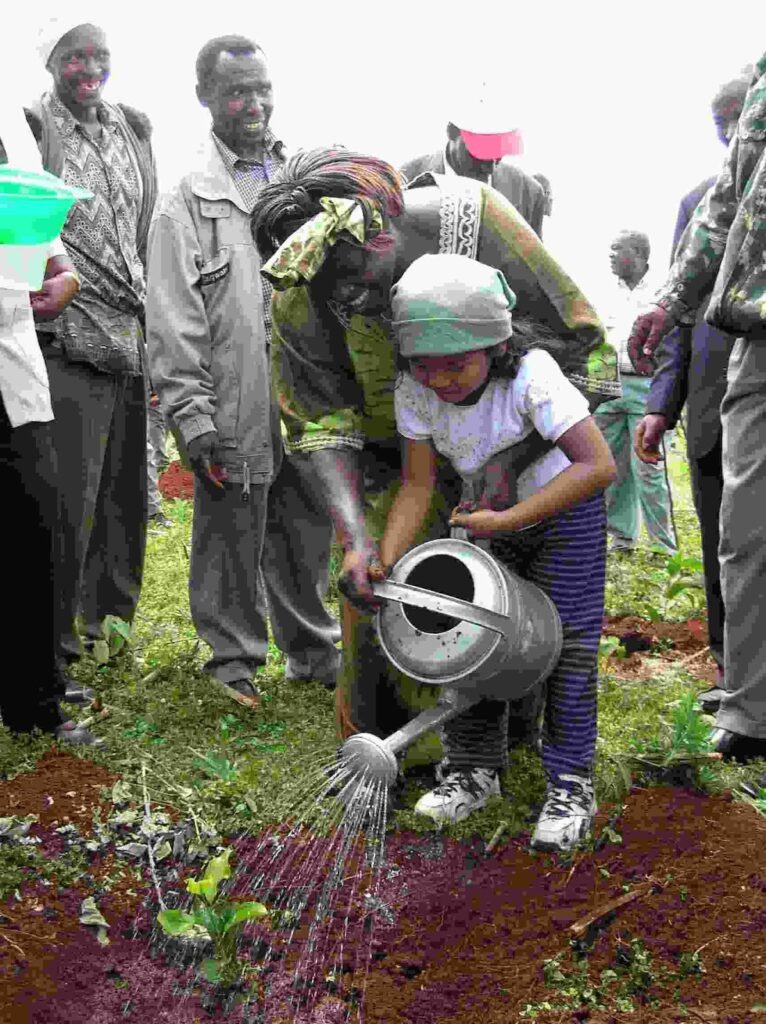
Image Title: Wangari Maathai in Aberdare Forest, Kenya (Photo Courtesy: Lisa Merton)
- Wangari’s approach linked the health of the environment with the well-being of people, especially women in rural Kenya, who became central to her reforestation campaigns. Through these efforts, Maathai helped plant millions of trees, improving ecosystems and providing countless families with sources of income, food and stability.
- Beyond environmental work, she also batted for democracy and human rights, standing firm against political oppression and corruption in Kenya. Her resilience in the face of intimidation and imprisonment inspired activists worldwide and earned her admiration as a symbol of integrity and perseverance.
- Wangari Maathai’s philosophy continues to guide global sustainability efforts even today. Her belief that ‘the environment and development are two sides of the same coin’ inspires organisations like The United Nations and countless grassroots organisations to draw upon her model of combining environmental care with social empowerment.
- Educational institutions, research centres and conservation programmes around the world now bear her name, ensuring that her vision of a greener, fairer planet endures.
Wangari Maathai’s courage and conviction continues to inspire environmentalists even today.
The Defiant Crusader: Battles Against Tyranny
The one word that has stood strong while defining Wangari Maathai’s personality is ‘courage’. Maathai was fearless when dealing with authorities.
Also Read: The Woman Who Transformed Modern Medicine: Gerty Cori’s Journey to Greatness
Maathai’s commitment to the environment inevitably led her into direct conflict with Kenya’s repressive, autocratic regime under President Daniel arap Moi. She realised that environmental protection was impossible without good governance and democracy, as corrupt officials were the very people destroying public forests and selling off land for private profit.
This shift elevated her activism from conservation to direct political confrontation.
The Battle for Uhuru Park (1989)
The most iconic confrontation was Wangari Maathai’s successful campaign to save Nairobi’s largest public green space, Uhuru Park.
- In 1989, the government announced plans to build a colossal 60-storey skyscraper complex, the Kenya Times Media Trust, in Uhuru park.
- Maathai’s response was immediate and fierce. She launched a tireless, high-profile campaign, writing letters to international media, the British High Commissioner, foreign investors and the World Bank.
- She publicly denounced the project as corrupt and a blatant seizure of public land.
- The regime retaliated with public ridicule, calling her ‘mad’ and ‘a threat’. Her office was closed and she was subjected to extreme personal attacks.
- Yet, her global lobbying was effective. International donors withdrew funding for the project and the government was humiliatingly forced to cancel the project in 1990.
This was Wangari Maathai’s first monumental public victory as an environmentalist. Her courage continued to define her work, often at immense personal risk.
The Mothers of Political Prisoners (1992)
Maathai joined a hunger strike in Uhuru Park, advocating for the release of political prisoners.
- The police violently dispersed the protesters and Wangari Maathai was beaten unconscious.
- Unbowed, she persevered, sheltering in the nearby All Saints Cathedral until sustained international pressure forced the government to release the prisoners.
The Karura Forest Confrontation (1999)
Wangari Maathai repeatedly protested the illegal allocation of forestland to developers.
- During one such protest in Karura Forest, she and other GBM members were brutally attacked and beaten by hired security guards.
- Her willingness to put her own body on the line against the axes of the powerful served as a powerful symbol of resistance.
The Green Belt Movement by Wangari Maathai
The final, crucial step into full-scale activism came when Wangari Maathai linked her scientific observations to the practical hardships faced by the poor, particularly rural women.
The ‘Wanjiku’ Complaint
Through her involvement with the National Council of Women of Kenya (NCWK) in the mid-1970s, Maathai began to hear the relentless complaints of the common woman (or Wanjiku):
- They had to walk for hours to find firewood for cooking, streams were failing and nutritious food was scarce.
- As a trained biologist, Maathai immediately translated these social symptoms into one core environmental diagnosis – massive, uncontrolled deforestation.
- This realisation led to the birth of the Green Belt Movement (GBM) in 1977.
The concept was one of the most successful examples of grassroots organising in African history.
The Green Belt Movement (GBM)
The GBM was a multi-faceted solution designed to empower women and regenerate the land simultaneously. Wangari Maathai’s idea was making the women the primary agents of change:
- Ecological Restoration: Women were encouraged to collect indigenous seeds and establish tree nurseries or ‘green belts’.
- Economic Upliftment: They received a modest stipend for each seedling that survived planting, providing them with a crucial, independent source of income.
- Civic Education: The act of planting became a lesson in conservation, self-reliance, and democratic participation. Maathai stressed that by taking control of their local environment, women were also claiming agency over their futures.
- From those initial seven seedlings planted on World Environment Day in 1977, the movement grew into a pan-African force, responsible for the planting of over 51 million trees across Kenya.
Wangari Maathai was thus titled the ‘Mother of Trees’ for transforming degraded land into sources of livelihood and dignity.
Why did Wangari Maathai Win the Nobel Peace Prize?
Maathai’s unrelenting struggle against corruption, land-grabbing and human rights abuses earned her global acclaim, and also reflected her commitment to the environment.
- After the end of the single-party regime, Maathai was triumphantly elected to the Kenyan Parliament in 2002 with an overwhelming 98% of the vote.
- She subsequently served as the Assistant Minister for Environment, Natural Resources and Wildlife (2003–2005).
- In 2004, the Nobel Peace Prize was bestowed upon her.
The Nobel Committee recognised her ‘holistic approach to sustainable development that embraces democracy, human rights and women’s rights in particular’.
Also Read: Who Is Greta Thunberg? How One Voice Challenged The World On Climate Crisis
Awards and Honours Won by Wangari Maathai
Throughout her remarkable career, Professor Wangari Maathai received global recognition for her work in environmental conservation, sustainable development and women’s empowerment.
- Her achievements earned her more than forty prestigious awards and honours from institutions and governments across the world.
- In 2004, she made history as the first African woman to be awarded the Nobel Peace Prize.
- Among her other major accolades was the Goldman Environmental Prize (1991), often regarded as the world’s foremost award for grassroots environmental activists.
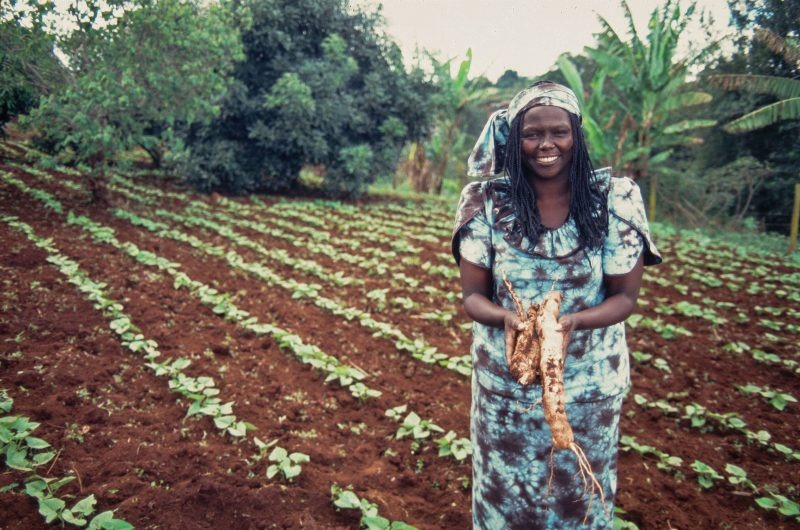
- The same year, she received The Hunger Project’s Africa Prize for Leadership, recognising her exceptional efforts to restore degraded landscapes while uplifting rural communities.
- Her global influence continued to be celebrated through numerous distinctions, including the United Nations Environment Programme’s Global 500 Award (1987) and the Indira Gandhi Prize for Peace, Disarmament and Development (2006).
- France honoured her with the Legion of Honour in 2006, and she later received the Nelson Mandela Award for Health and Human Rights (2007) for her unwavering advocacy of equitable, sustainable living.
- In addition to these, universities around the world conferred upon her over fifteen honorary doctorates, acknowledging her contributions to environmental science, education and human rights.
Famous Quotes by Wangari Maathai
Here are some famous quotes by Wangari Maathai:
- ‘It’s the little things citizens do. That’s what will make the difference. My little thing is planting trees.’
- ‘The generation that destroys the environment is not the generation that pays the price. That is the problem.’
- ‘I’m very conscious of the fact that you can’t do it all by yourself. You need a critical mass of people who share your values.’
- ‘You have to know yourself, and you have to be confident in yourself.’
- ‘I will be a hummingbird. I will do the best I can.’
The Tree Wangari Maathai Never Planted
Wangari Maathai’s life is a profound example of bravery for modern activism. She devoted herself to the belief that protecting human dignity and protecting the Earth were inseparable missions. However, in truth, the two battles are not the same, and this is where Wangari, like most of humanity, fell short despite her extraordinary accomplishments.
Celebrated worldwide as the ‘Mother of Trees’, Wangari helped millions reconnect with nature by planting forests of hope across Kenya. But she, too, missed nurturing the most vital tree in human life – the tree of true worship (bhakti roopi paudha), the foundation through which all suffering can genuinely be understood and overcome.
Human beings, even with brilliant scientific minds and the best intentions, often fail to recognise the ‘root cause of human suffering’. Many attribute misery to deforestation, pollution, corrupt systems or oppressive governments. Few realise that there is a deeper, unseen governance – a singular, tyrannical force shaping the cycle of sorrow across lifetimes.
The reason even the bravest individuals, including Wangari Maathai, could not uncover this profound truth is simple: Without the refuge and guidance of a Tatvdarshi Sant (Complete Saint), the ultimate reality remains hidden. Only such a realised Saint reveals the spiritual laws that govern human life, the true cause of suffering, and the path to lasting liberation.
Is Saving the Planet Even Possible?
Jagatguru Tatvdarshi Sant Rampal Ji Maharaj, the solitary Complete and Enlightened Saint of the present age, offers a perspective that awakens humanity from the deepest layers of ignorance. Through His guidance, He inspires a form of activism that goes beyond social and environmental reform – an activism that begins with inner awakening and the search for ultimate truth.
He reveals that the human struggle is not limited to protecting nature or improving worldly systems. Instead, the deeper battle is to recognise the grand illusion in which all living beings exist. In this view, the Earth, the very planet that dedicated activists like Wangari Maathai spent their lives defending, is actually a part of the domain ruled by Kaal Brahm, identified in many traditions with the deceptive, suffering-ridden force known as Satan.
Sant Rampal Ji Maharaj explains that all twenty-one universes under Kaal Brahm’s influence are inherently perishable. They deteriorate, collapse and begin anew, cycling endlessly through Satyug, Treta, Dwapar, Kalyug, and ultimately destruction. This cosmic cycle mirrors the continuous birth and death experienced by every soul, a loop of sorrow from which escape seems impossible.
He teaches that liberation from this cycle can occur only through authentic devotion to the Supreme God Kabir, a form of worship said to be granted solely by a Tatvdarshi Saint (one Who knows every element of this universe along with its divisions).
Sant Rampal Ji Maharaj is God Kabir Himself, manifested on earth to sow the seeds of true worship in all humans. The prime duty of each human being is to nurture these seeds of true worship until it blossoms completely. Without the refuge of a Tatvdarshi Sant, it is impossible to succeed in worship and gain salvation.
It is deeply unfortunate that a determined and courageous woman like Wangari Maathai missed this rarest-of-the-rarest opportunity in life when Supreme God Kabir Himself has taken a human form on earth as Sant Rampal Ji Maharaj. Yet, those who are living today have the chance to explore these teachings, reflect upon them, and engage with the enlightening discourses of Sant Rampal Ji Maharaj through:
- Website: www.jagatgururampalji.org
- YouTube: Sant Rampal Ji Maharaj
- Facebook: Spiritual Leader Saint Rampal Ji
- ‘X’ handle: @SaintRampalJiM
FAQs on Wangari Maathai
Q1. Who was Wangari Maathai?
Answer: Wangari Maathai was a pioneering Kenyan environmental leader who founded the Green Belt Movement and became the first African woman to win the Nobel Peace Prize.
Q2. Why is Wangari Maathai celebrated worldwide?
Answer: She is celebrated for championing tree-planting, defending democracy and inspiring global action for a healthier planet.