

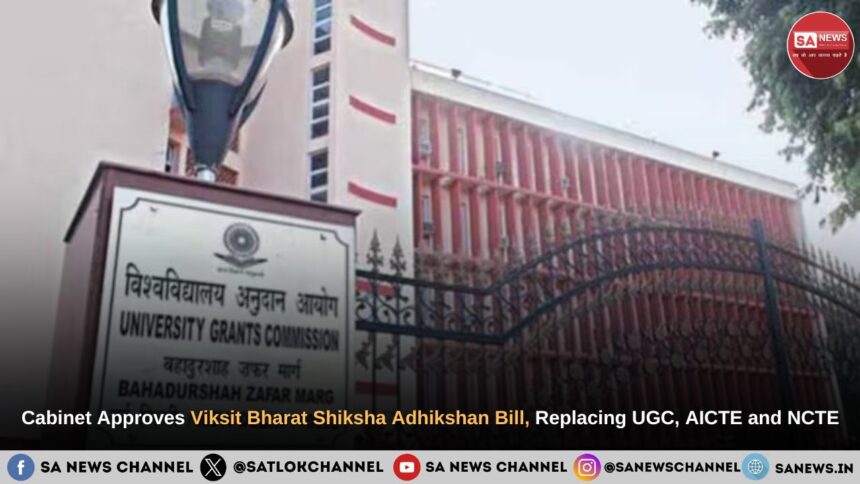
India is set to witness one of the most significant reforms in higher education governance with the Union Cabinet approving the Viksit Bharat Shiksha Adhikshan Bill. The proposed legislation aims to replace three existing statutory bodies: the University Grants Commission (UGC), the All India Council for Technical Education (AICTE) and the National Council for Teacher Education (NCTE) with a single, unified regulator.
- Key Takeaways on Viksit Bharat Shiksha Adhikshan Bill
- A Major Overhaul of India’s Higher Education Regulation
- From UGC to VBSA: Why the Change Was Considered Necessary
- What Is the Viksit Bharat Shiksha Adhikshan Bill?
- Key Roles and Functions of the New Regulator
- Four Functional Verticals Under the New Framework
- Alignment With National Education Policy 2020
- What Remains Outside the New Regulatory Framework
- Impact on Students and Examinations
- Evolving Systems, Enduring Spiritual Inquiry
- FAQs on Viksit Bharat Shiksha Adhikshan Bill
Aligned with the National Education Policy (NEP) 2020, the move seeks to streamline regulation, accreditation and academic standards across non-medical and non-law higher education institutions, while keeping funding responsibilities separate. The Bill, earlier known as the Higher Education Commission of India (HECI) Bill, is expected to be introduced in Parliament during the Winter Session.
Key Takeaways on Viksit Bharat Shiksha Adhikshan Bill
- Union Cabinet approves Viksit Bharat Shiksha Adhikshan Bill
- UGC, AICTE and NCTE to be replaced by a single regulator
- Reform aligns with National Education Policy 2020
- Medical and legal education excluded from the new framework
- Regulation, accreditation and academic standards separated from funding
- Bill to be introduced in the Winter Session of Parliament
A Major Overhaul of India’s Higher Education Regulation
The Union Cabinet has cleared the Viksit Bharat Shiksha Adhikshan Bill, paving the way for a unified regulatory structure for higher education in India. The decision marks a historic shift in how universities and colleges are governed, replacing a multi-regulator system with a single overarching body.
The Bill proposes doing away with the University Grants Commission (UGC), which regulates non-technical higher education, the All India Council for Technical Education (AICTE), which oversees technical education, and the National Council for Teacher Education (NCTE), responsible for teacher education. All these bodies will be subsumed under the new framework.
The move is part of a broader reform agenda under the National Education Policy 2020, which called for a complete overhaul of the regulatory system to enable the higher education sector to function more efficiently and transparently.
From UGC to VBSA: Why the Change Was Considered Necessary
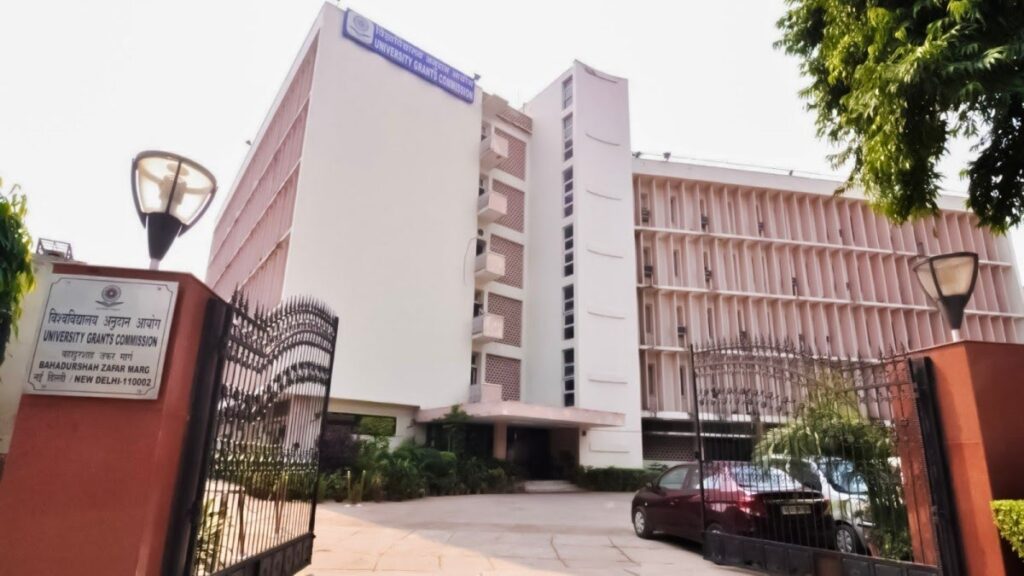
The UGC was established in 1953 and became a statutory body under an Act of Parliament in 1956. Over the decades, the number of universities and colleges in India increased rapidly. At present, the country has more than 1,200 universities and around 1,500 colleges.
However, the expansion also led to regulatory complexity. Institutions offering multiple courses often had to approach different regulators for approvals. According to former UGC chairman Professor Jagdish Kumar, the existing system resulted in overlapping rules, delays and operational difficulties, as a single institution had to comply with multiple regulatory authorities.
Read More: UGC Bans Online and Distance Psychology Degrees from 2025-26, Sparking Student Concerns
The government cited these challenges as a key reason for proposing a unified regulator, aimed at reducing duplication, easing compliance pressure and ensuring uniform standards across institutions.
What Is the Viksit Bharat Shiksha Adhikshan Bill?
Earlier known as the Higher Education Commission of India (HECI) Bill, the legislation has now been renamed the Viksit Bharat Shiksha Adhikshan Bill. The renaming reflects the government’s emphasis on aligning higher education governance with the vision of a developed India.
The Bill seeks to establish a single higher education regulator for all non-medical and non-law institutions in the country. It clearly defines the scope of the regulator’s authority, focusing on regulation, accreditation and academic standards, while keeping funding decisions outside its purview.
The Cabinet’s approval clears the way for the Bill to be introduced in the Winter Session of Parliament.
Key Roles and Functions of the New Regulator
Under the proposed framework, the new regulator will have three primary roles:
- Regulation of higher education institutions
- Accreditation and quality assurance
- Setting and maintaining academic and professional standards
Importantly, the body will not handle funding. Financial responsibilities will remain with the Department of Higher Education under the Ministry of Education, ensuring a clear separation between regulation and funding.
The regulator will also not supervise medical and law colleges, which will continue to be governed by their respective professional councils, recognising the specialised nature of these fields.
Four Functional Verticals Under the New Framework
In line with the NEP 2020 vision, the regulatory structure will operate through four distinct verticals, each with clearly defined responsibilities:
- National Higher Education Regulatory Council
Responsible for regulation of higher education institutions - National Accreditation Council
Responsible for accreditation and quality assurance - General Education Council
Responsible for setting academic standards and learning outcomes - Higher Education Grants Council
Responsible for funding-related decisions
This separation is intended to ensure transparency, accountability and independence in decision-making.
Alignment With National Education Policy 2020
The National Education Policy 2020 explicitly highlighted the need for a single higher education regulator. The policy stated that the regulatory system required a “complete overhaul” to re-energise the sector and enable it to thrive.
Read More: संसद का शीतकालीन सत्र: 10 बड़े विधेयक, परमाणु क्षेत्र सुधार और नई शिक्षा व्यवस्था की तैयारी
NEP 2020 recommended that the distinct functions of regulation, accreditation, funding and academic standard-setting should be performed by independent and empowered bodies, a principle that forms the backbone of the Viksit Bharat Shiksha Adhikshan Bill.
Efforts to operationalise the unified regulator gained momentum after Dharmendra Pradhan took charge as Union Education Minister in July 2021.
What Remains Outside the New Regulatory Framework
The new regulator will not cover medical and legal education. These sectors will continue to be regulated by their existing professional councils. The government has stated that this exclusion recognises the specialised regulatory needs of these disciplines.
All other non-medical and non-law higher education institutions will fall under the purview of the new body.
Impact on Students and Examinations
Following the Cabinet’s approval, concerns were raised regarding the UGC NET December 2025 examination. However, the reform does not affect the exam in any manner.
- There is no change in the exam schedule or syllabus
- The exam remains valid for eligibility purposes
- The National Testing Agency (NTA) will continue to conduct the examination
- NET certificates remain fully valid
The policy reform focuses solely on regulatory restructuring and does not impact ongoing examination systems.
Evolving Systems, Enduring Spiritual Inquiry
While systems of education and governance continue to evolve with time, a parallel question arises in the spiritual sphere. For generations, people have continued the same forms of worship without examining whether their practices are clearly described in their own scriptures. The absence of questioning often stems from not studying sacred texts directly and relying entirely on fake gurus.
Spiritual traditions themselves emphasise that knowledge does not arise without a Guru. Historical figures such as Shri Ram, Lord Krishna also accepted a Guru, underscoring that guidance is essential even for everyone. Tatvdarshi Sant Rampal Ji Maharajstates that under the guidance of a true Saint, individuals gain scriptural understanding and recognise practices that are not supported by sacred texts, despite being widely promoted by self-styled spiritual leaders. This perspective encourages informed inquiry rather than unquestioned continuation.
For more information visit our
Website:www.jagatgururampalji.org
YouTube: Sant Rampal Ji Maharaj
Facebook: Spiritual Leader Saint Rampal Ji
X (Twitter): @SaintRampalJiM
FAQs on Viksit Bharat Shiksha Adhikshan Bill
Q1. What is the Viksit Bharat Shiksha Adhikshan Bill?
It is a proposed law to create a single regulator replacing UGC, AICTE and NCTE for higher education.
Q2. Which bodies will be replaced under the new Bill?
The Bill replaces the University Grants Commission, AICTE and the National Council for Teacher Education.
Q3. Which institutions are excluded from the new regulator?
Medical and legal education institutions are excluded from the new regulatory framework.
Q4. Does the new regulator control funding for universities?
No. Funding responsibilities remain with the Department of Higher Education under the Ministry of Education.
Q5. Will the Viksit Bharat Shiksha Adhikshan Bill affect UGC NET exams?
No. UGC NET December 2025 and its validity remain unaffected.