



You are trying to sleep and suddenly you feel like you just fell from a building. You walk into a new place and feel like you have been there before. You look at a shirt on a chair at night and for a second you think someone is sitting there. You check your phone because you felt it buzz, but there is no notification.
- The Falling Feeling Just Before You Sleep
- That Feeling That You Have Seen This Place Before
- When Something Familiar Suddenly Feels Completely New
- When a Song Refuses to Leave Your Mind
- Colors and Shapes You See When You Close Your Eyes
- Objects Looks Like a Person at Night
- You Hear a Pop in Your Ear When You Yawn
- Your Body Refuses to Wake Up Properly
- Waking Up from an Afternoon Nap and Not Knowing If It Is Morning or Night
- Your Phone Buzzed. But It Did Not.
- Your Brain Has Been Doing All of This Your Whole Life
These things happen to almost every person in the world. But most people never ask why. They just think “that was weird” and move on.
The truth is, every one of these moments has a clear reason behind it. Your brain is doing something very specific each time. And once you understand what is happening, these small strange experiences start to make a lot of sense.
This article covers the most common strange human experiences that almost everyone has but very few people understand.
The Falling Feeling Just Before You Sleep
You are lying in bed. Your eyes are closed. You are almost asleep. And then your whole body suddenly jumps. It feels like you just fell off a tall building or stepped off a stair that was not there. Your heart beats fast for a second. You are wide awake again.
This happens to almost everyone. Almost 9 out of 10 people have felt this at least once in their life. It is called a hypnic jerk, and it is completely normal.

Why does it happen? When your body starts to fall asleep, your muscles relax very fast. Your brain sees this sudden muscle relaxation and gets confused. It thinks your body is physically falling. So it sends a fast signal to your muscles to catch yourself. That signal is what causes the body to jump.
There is also a very old reason behind this. Scientists believe this reflex comes from a time long ago when early humans used to sleep in trees. A sudden body movement at the wrong time could mean falling from the tree. So the brain developed a quick “catch yourself” system. That same old system is still running inside your brain today, even though you are sleeping in a bed.
Stress, too much coffee, and not sleeping enough can make this happen more often.
That Feeling That You Have Seen This Place Before
You go to a new restaurant, a new city, or a new building. You have never been there before. But something about the moment feels very familiar. The table, the light, the way people around you are talking, it all feels like you have been here and seen this exact situation before.
This feeling is called déjà vu. It is a French word that means “already seen.” Around 68% of people have felt this at some point in their life.
What is actually happening is this: your brain has two separate systems working at the same time. One system recognises familiar things. Another system checks if that familiarity is real. Déjà vu happens when the first system fires by mistake and says “you know this place,” and the second system immediately says “wait, that is not right.” Both signals happen at the same time, and that creates the strange feeling of something being familiar but also not quite real.
The good news is that déjà vu actually means your brain is working correctly. It caught an error and noticed it. It did not just let you believe something that was not true.
When Something Familiar Suddenly Feels Completely New
You look at a simple word you have written hundreds of times before. Suddenly it starts feeling wrong. The spelling looks strange. For a brief moment it feels like you have never seen that word before, even though you clearly know it.
This strange mental glitch is called Jamais Vu, literally meaning “never seen”.
It is the opposite of déjà vu. Instead of something new feeling familiar, something extremely familiar suddenly feels unfamiliar.
A common example occurs when someone repeatedly writes or reads a simple word such as “door” or “table”. After many repetitions, the word suddenly looks wrong or meaningless, even though the person clearly knows it is correct. The brain temporarily loses the sense of familiarity attached to that information.
Neurologically this happens when memory recognition circuits become momentarily fatigued. The brain still knows the information, but the “familiarity signal” produced by the temporal lobe becomes disrupted. This causes the strange sensation that something well known suddenly feels unknown.
When a Song Refuses to Leave Your Mind
A small part of a song suddenly starts playing in your mind. A single line of lyrics or a short melody keeps repeating again and again. Even when you try to ignore it, the tune keeps looping in the background of your thoughts.
This phenomenon is known as an Earworm, scientifically called Involuntary Musical Imagery.
The brain contains specialised auditory circuits that process and store music. When a melody with a strong rhythm or catchy structure is heard, it can activate a small memory loop inside the auditory cortex.
If the musical sequence feels incomplete, the brain attempts to resolve it by replaying the segment repeatedly. Songs with simple melodies, repetitive beats, and strong hooks are especially effective at triggering this loop.
Colors and Shapes You See When You Close Your Eyes
Close your eyes right now in a dark room. After a few seconds, you might start to see small dots, moving colors, soft patterns, or faint shapes. They shift and change. Nobody is shining anything at you. The room is dark. But something is clearly there.
These are called phosphenes, and they are completely normal.
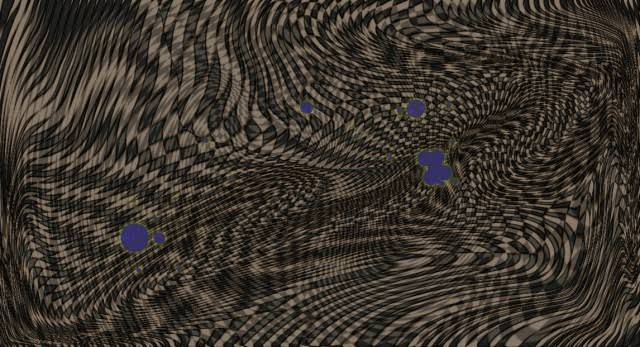
Your eyes do not turn off in the dark. Instead they create very weak internal signals that copy light. These signals are constantly being made by the cells at the back of your eyes. The swirls and shapes you see are made by changes in activity from these cells.
Your brain does not know these signals were not produced by real light, so it interprets this random activity as colored lights and patterns. It is a kind of illusion.
You can also make this happen on purpose. When you rub your closed eyes gently, you put slight pressure on your eyeballs. This physical pressure is applied to the light detectors at the back of your eyes and that force creates phosphenes, which is why you might see a dark circle surrounded by a ring of light where you pressed.
Objects Looks Like a Person at Night
It is night. The room is not fully lit. You look toward a chair and your heart skips a beat. There is a shirt hanging on it, or a bag on a hook, or a coat on a door. But for just one second, your brain was absolutely sure that it was a person standing there. Sometimes it feels as if an object in your room is gazing at you.
You look more carefully. You see what it actually is. You feel a little silly. But that moment of fear was very real.

This is called pareidolia. It is when your brain sees a human shape, a face, or a person in something that is not a person at all. This is not a problem with your eyes. It is your brain doing exactly what it was built to do.

Your brain is always watching out for people and threats around you. It developed a system that looks for human shapes as fast as possible. In low light, with less visual detail, this system becomes more active because it cannot clearly see what is there. So it makes a quick guess. And the guess is often “that looks like a person.”
Read More : The Psychology of Don’t: Why We Crave What We’re Told To Avoid
This type of experience is related to the brain’s signal detection system, where factors such as experiences, expectations, and the state you are in can influence what your brain decides it is seeing.
You Hear a Pop in Your Ear When You Yawn
You yawn. You hear or feel a small bump or pop sound deep inside your ear. Right after that, the sounds around you seem a little sharper or clearer than before. Like something opened up.
This happens because of a small tube inside your head called the Eustachian tube. This tube connects your middle ear to the back of your throat. Most of the time it stays closed.
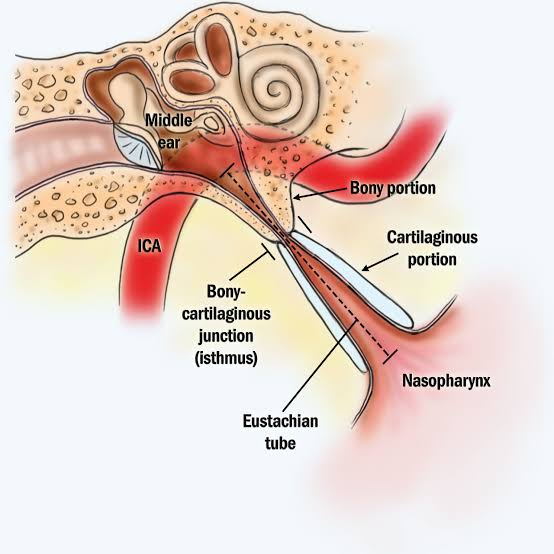
When you yawn or swallow, the muscles in your throat pull on this tube and open it for a short moment. This lets a small amount of air move through. That quick movement of air is what creates the pop sound you hear and feel.
Before the pop happened, there was a small difference in air pressure on the two sides of your eardrum. That small pressure difference was making sounds slightly muffled. When the tube opens and the pressure becomes equal again, your eardrum can work properly. That is why sounds feel clearer right after the pop.
This happens more strongly when you have a cold, when you are on an airplane, or when you travel on a mountain road. In normal daily life it happens quietly many times without you even noticing.
Your Body Refuses to Wake Up Properly
Your alarm goes off. You hear it. You know it is time to wake up. You decide to get up. Somehow, 30 or 40 minutes later, you are still in bed with no memory of deciding to sleep again.
Or you are in that half-awake state where you know you are awake, you are trying to open your eyes, you are trying to move, but your body just will not respond the way you want it to.
This is called sleep inertia. It has nothing to do with being lazy. It is a brain blood flow problem.
When you are in deep sleep, the blood flow to the front part of your brain, which is the part that controls decisions, movements, and thinking, becomes lower. When your alarm wakes you up suddenly, your brain needs time to bring that blood flow back to normal. Studies show that it can take up to 30 minutes for blood flow to fully return to waking levels after you get up from deep sleep.
During that time, your body is technically awake but your decision-making brain is still slow. That is why you say “just five more minutes” and cannot actually follow through on getting up. The part of your brain that needed to make that decision was not yet fully working.
Waking Up from an Afternoon Nap and Not Knowing If It Is Morning or Night
You take a short nap at 4 PM. You wake up. The room looks different. The light outside is confusing. You stare at the wall and try to answer one simple question: is it morning or is it evening? You genuinely cannot tell for a full minute.

This happens because your body has an internal clock called the circadian rhythm. This clock tracks time of day using light from outside. Morning light and late afternoon light look very similar to this internal system. When you wake from a deep afternoon nap as the light is changing, your internal clock gets confused and cannot quickly decide what time it is.
The longer and deeper you slept, the stronger this confusion. Short naps of 15 to 20 minutes usually do not cause this because they do not pull you into the deeper stages of sleep. Longer naps bring this time confusion almost every time.
Your Phone Buzzed. But It Did Not.
You feel your phone vibrate in your pocket. You take it out. No call, no message, no notification. The phone did not move at all.
This is called phantom phone vibration, and it is very common. In one study, 89% of people said they had felt phantom phone vibrations at least once. Almost 87% experienced it weekly and 13% felt it every single day.
What is happening is simple: your brain has been trained by your phone. After months and years of waiting for buzzes and notifications, your brain becomes very sensitive to any small feeling near where you keep your phone. A small muscle movement, your clothing touching your skin, even a tiny vibration from a nearby object, your brain reads all of these as “phone buzz.”
Preliminary research suggests phantom vibrations are related to over-involvement with one’s phone, and it has been suggested that when a person is anticipating a phone call, the brain may misinterpret other sensory input such as muscle contractions or pressure from clothing as a phone vibration.
The more you check your phone and the more anxious you are about missing a message, the more often this happens. People who use their phones more tend to experience it more frequently.
| Experience | How Many People Have It |
| Falling feeling before sleep (Hypnic Jerk) | Around 70% of all people |
| Déjà vu | Around 60 to 68% of people |
| Seeing shapes in dark objects (Pareidolia) | Almost everyone |
| Phantom phone vibration | 68% to 89% of smartphone users |
| Body refuses to wake up (Sleep Inertia) | Almost everyone |
| Afternoon nap disorientation | Very common, especially with long naps |
Read More : Popcorn Brain Syndrome: How Constant Screen Time Is Silently Rewiring
More Small Things Your Brain Does That Nobody Talks About
You walk into a room and forget why you went there. You had a clear reason. You walked through the door and the reason completely disappeared. This is called the Doorway effect. Scientists at the University of Notre Dame found that walking through a physical door signals your brain to close one mental chapter and start a new one. The thought you were carrying gets stored under “previous room.” Walking back through the same door often brings it back.
A word is right there but will not come out. You are trying to remember a name or a word. You know it. You can almost feel its first letter. But it will not arrive. This is called the tip-of-the-tongue effect. Different parts of a word, its sound, its meaning, its spelling, are stored separately in your brain. Sometimes two parts load quickly but the third takes longer. The word is there. The search is just still running.
You hear your own name in a noisy crowd, even when no one calls you. Your brain has a special alert for your own name. It scans background sounds all the time just looking for this one signal. When a sound in the environment is close enough to the rhythm or sound of your name, your brain flags it as a match even when it was not.
You feel like someone is watching you, look up, and they are. This is not luck. Your eyes take in a large amount of information in your side vision that you never consciously notice. Small changes in how people nearby are positioned, a stillness in the crowd, someone’s face turning toward you, these all get processed by your brain below your awareness. By the time you feel the sensation, your brain already registered the signal several seconds ago.
Your Brain Has Been Doing All of This Your Whole Life
Every one of these experiences has been happening to you since childhood. You just never knew why. They always felt like small strange moments with no explanation.
But they all make complete sense. Your brain is always scanning for threats, checking memories, managing sleep, tracking time, and processing thousands of small signals from your environment. These experiences are the moments when you can actually notice it working.
The human brain is doing something incredible every single second. Most of it happens without you ever knowing. And beyond what science can explain about the brain, there are still deeper questions worth thinking about: what is the awareness that notices all of this? What is the self that sits inside all this biology and experiences these moments? These are questions that science alone may not fully answer. For those who want to think deeply about the self, consciousness, and the real purpose of human life, the books “Gyan Ganga“ and “Way of Living” by Saint Rampal Ji Maharaj offer clear and meaningful answers worth reading.