


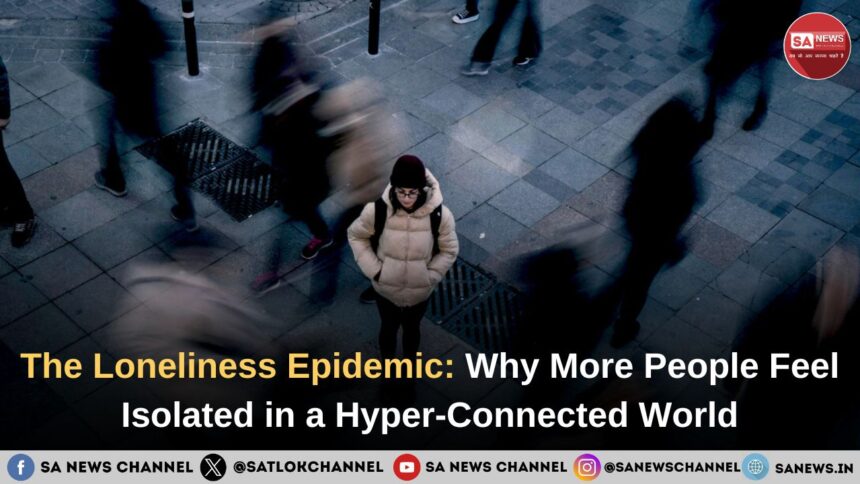
Loneliness Epidemic: It seems strange: we live in the most digitally connected era of human history, yet more people than ever report feeling alone and isolated. Smartphones, social media platforms, instant messaging, and video calls were supposed to bring us closer-but in many cases they’ve created an illusion of connection rather than genuine bonds. Recent global health reports now describe loneliness not as a fleeting emotional state but as a public-health crisis with deep psychological and physical consequences.
- What Is the Loneliness Epidemic?
- Why Loneliness Is Rising in a Hyper-Connected World
- The Health Consequences of Loneliness
- Who Is Most Affected?
- Latest Verified News on the Loneliness Epidemic
- Solutions to Combat Loneliness
- The Role of Emotional Awareness
- Spiritual Solution of the Loneliness
- FAQs on Loneliness Epidemic:
Whether it’s adolescents who scroll endlessly yet feel unseen, adults who achieve online popularity without meaningful relationships, or the elderly who lack real-world support, loneliness crosses generations and borders. Behind the screens, individuals may exchange messages, but they often lack the depth and emotional satisfaction that real connections bring.
In this blog, we explore the loneliness epidemic: its causes, health impacts, societal roots, possible solutions, and how spiritual insights can help us reconnect in a genuinely human way.
What Is the Loneliness Epidemic?
The term loneliness epidemic refers to the widespread feeling of social disconnection in societies worldwide-even as technology makes communication easier than ever. It’s not simply being alone; it’s the painful sense of lacking meaningful relationships. Globally, about 1 in 6 people today report feeling lonely, and loneliness has been linked to serious health risks, such as heart disease, depression, and increased mortality.
Why Loneliness Is Rising in a Hyper-Connected World
Digital “Connection” vs True Human Bond
Our digital platforms promise constant contact-text messages, voice notes, emojis, and video calls-but quantitative connections do not guarantee emotional fulfilment. Most online interactions are shallow and lack the warmth and intimacy of face-to-face conversations. This gap between quantity and quality is a key reason people feel lonely despite having hundreds or thousands of online connections.
Social Media’s Hidden Effects
Mental health professionals explain how social media habits can create superficial engagements. Notifications and likes trigger brief dopamine responses, training our brains to seek quick rewards instead of genuine interaction. This can make deep, real-world conversations feel less satisfying by comparison.
Broken Social Structures
Traditional communities-close-knit families, neighbourhood groups, extended social circles-have weakened in many modern societies. Urbanisation, mobility, career pressures, and cultural values that prize independence often reduce opportunities for meaningful social contact. All these factors contribute to higher isolation rates among young adults, middle-agers, and seniors alike.
The Health Consequences of Loneliness
Loneliness carries real physical and mental health impacts. Global research has shown that strong social connections can improve overall health and reduce the risk of early death, while loneliness increases physical risks similar to smoking and obesity. Chronic social disconnection is associated with:
- Increased risk of heart disease and stroke
- Higher rates of depression, anxiety, and cognitive decline
- Weakened immune response and inflammation
- Elevated risk of premature mortality
Studies suggest these effects are so significant that some public-health agencies now call loneliness a risk factor comparable to major chronic diseases.
Who Is Most Affected?
While loneliness can affect anyone, data suggests young people and adolescents often report higher levels of emotional isolation than older age groups. Teens and young adults can be especially vulnerable, juggling identity formation, social pressures, and heavy digital engagement that may not satisfy deeper emotional needs. Meanwhile, older adults often face physical isolation due to health, mobility, and changes in family structures.
Also Read: Can Technology Really Solve Loneliness?
Latest Verified News on the Loneliness Epidemic
Recent global reports show the seriousness and urgency of this issue:
- The World Health Organization (WHO) warns that loneliness is a growing global health crisis, contributing to over 871,000 deaths annually, and urges policies to strengthen social connections across communities.
- New studies show social isolation threatens health and societal cohesion, and nearly 1 in 6 people worldwide feel lonely.
- In the United States, community-level efforts are being launched to counteract historic levels of social isolation, emphasising shared spaces and relationships.
- These developments underline loneliness as not just an emotional problem but a societal challenge requiring systemic solutions.
Solutions to Combat Loneliness
Loneliness isn’t inevitable. Many experts and communities are developing approaches to rebuild human connection:

Strengthening Local Communities
Local clubs, shared interest groups, art classes, and collective initiatives help restore social support networks. Grassroots examples in cities like Baltimore and Pittsburgh show how people are reclaiming connection through community efforts.
Redesigning Digital Habits
Rebalancing screen time with real-world interaction, using technology mindfully, and prioritising deep conversations over surface engagement can make digital tools more supportive of emotional health.
Workplace and Policy Initiatives
Employers can foster better team cohesion through group activities, meaningful collaboration, and open communication norms that help reduce professional isolation.
The Role of Emotional Awareness
Developing emotional intelligence-such as empathy, active listening, and self-reflection-helps individuals recognise feelings of loneliness and seek support. Emotional skills strengthen bonds by enabling authentic, caring interactions.
Spiritual Solution of the Loneliness
In today’s era, loneliness is not merely a result of physical distance but a deep spiritual and emotional void. According to the spiritual wisdom of Sant Rampal Ji Maharaj, as long as a person seeks happiness in outward appearances, social media validation, and material connections, they will continue to feel a sense of incompleteness.
True connection begins from within. When an individual connects with the true worship of Supreme God and authentic spiritual knowledge (Satgyaan), it fosters compassion, patience, and inner peace within them. Sant Rampal Ji explains that when we connect with our inner self, the loneliness of the digital world vanishes, leading us toward genuine, meaningful, and selfless human relationships that are far deeper than any screen or “like.”
FAQs on Loneliness Epidemic:
Q1. What exactly is the loneliness epidemic?
The loneliness epidemic refers to a global trend where increasing numbers of people feel socially isolated despite being digitally connected, affecting mental and physical health.
Q2. Why do people feel more isolated in a hyper-connected world?
Because digital connections often replace deeper, face-to-face bonds, leading to superficial interaction and emotional disconnection.
Q3. Who is most affected by loneliness today?
Studies show adolescents and young adults often report higher levels of loneliness, though it affects all ages.
Q4. Can loneliness really harm physical health?
Yes-research links loneliness to higher risks of heart disease, stroke, depression, and premature death.
Q5. What can I do to feel more connected?
Engage in community groups, nurture
real-world relationships, limit shallow social media use, and practice emotional awareness.