
In today’s fast-changing world, success is no longer determined by talent or intelligence alone. What truly sets successful people apart is their mindset. A growth mindset is the belief that abilities, intelligence, and skills can be developed through effort, learning, and persistence. Whether it’s personal growth, career success, or emotional well-being, developing a growth mindset helps individuals face challenges with confidence instead of fear. This blog explores how to develop a growth mindset using practical techniques, real-life examples, and deeper wisdom, enabling you to unlock your true potential and live a more fulfilling life.
- What Is a Growth Mindset?
- The Science: Neuroplasticity Explained
- Fixed Mindset vs. Growth Mindset: A Comparison
- Why Developing a Growth Mindset Is Important
- Career Growth: Helps You Learn New Skills and Adapt to Change
- Personal Growth: Builds Confidence and Self-Belief
- Mental Health: Reduces Fear of Failure and Perfectionism
- Relationships: Encourages Empathy and Understanding
- Overall Impact of a Growth Mindset
- Signs You May Have a Fixed Mindset
- How to Develop a Growth Mindset (Step-by-Step)
- 1. Embrace Challenges
- 2. Reframe Failure as Learning
- 3. Replace Negative Self-Talk
- 4. Focus on Effort, Not Just Results
- 5. Learn from Feedback
- 6. Stay Curious and Keep Learning
- 7. Surround Yourself with Growth-Oriented People
- 8. Set Process-Based Goals
- 9. Practice Patience and Self-Compassion
- 10. Reflect Regularly
- Growth Mindset in Daily Life
- Common Myths About Growth Mindset
- The Mind is the Barrier, The Soul is the Learner
- FAQ on How to Develop a Growth Mindset
What Is a Growth Mindset?
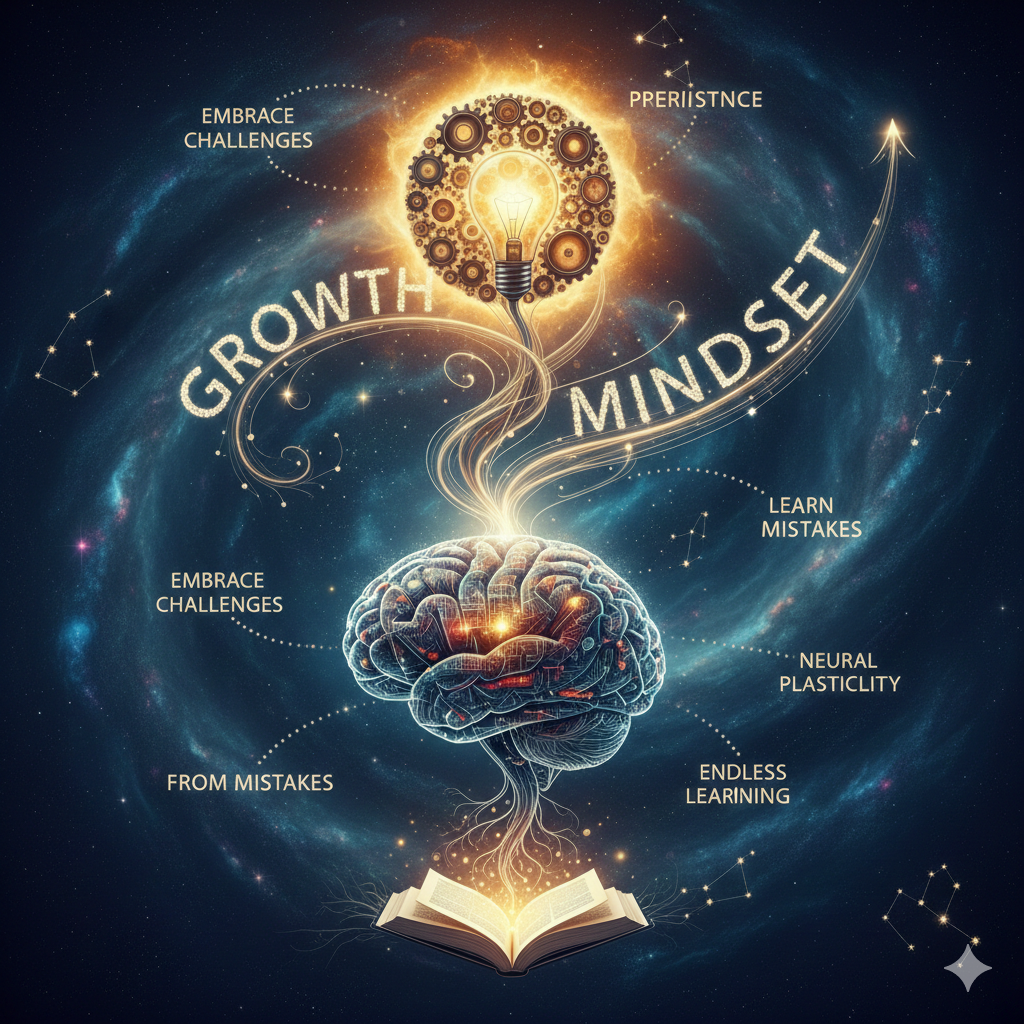
A growth mindset is the belief that your
abilities are not fixed at birth. Instead, they can be improved through dedication, practice, and continuous learning. This concept, popularized by psychologist Dr. Carol Dweck, contrasts with a fixed mindset, where people believe their intelligence or talents are unchangeable.
Crucial Insight: People with a growth mindset do not believe that everyone is the same or that anyone can be Einstein. However, they believe that a person’s true potential is unknown (and unknowable); that it’s impossible to foresee what can be accomplished with years of passion, toil, and training.
People with a growth mindset see challenges as opportunities, failure as feedback, and effort as the path to mastery. This mindset encourages curiosity, resilience, and lifelong learning.
The Science: Neuroplasticity Explained
The biological basis of the growth mindset is Neuroplasticity. This is the brain’s ability to reorganize itself by forming new neural connections throughout life.
- The “Muscle” Analogy: Just as weightlifting tears muscle fibers to rebuild them stronger, struggling with a new concept triggers neurons in the brain to form new connections.
- The Role of Myelin: Practice increases the layer of myelin around your neurons. Thicker myelin allows nerve impulses to travel faster, effectively making your brain “faster” and more efficient at that specific task.
- Age is Just a Number: Contrary to old myths, neuroplasticity does not stop in childhood. Research confirms that adults can rewire their brains well into old age, provided they remain intellectually challenged.
Fixed Mindset vs. Growth Mindset: A Comparison
To develop a growth mindset, one must first identify where they hold fixed beliefs. This table breaks down the fundamental differences.
| Feature | Fixed Mindset | Growth Mindset |
| Desire | Desire to look smart at all times. | Desire to learn and improve. |
| Challenges | Avoids them to prevent failure. | Embraces them as a path to mastery. |
| Obstacles | Gives up easily; gets defensive. | Persists in the face of setbacks. |
| Effort | Sees effort as fruitless (if you were smart, you wouldn’t need it). | Sees effort as the path to mastery. |
| Criticism | Ignores useful negative feedback. | Learns from criticism. |
| Success of Others | Feels threatened; gets jealous. | Finds |
The mindset you adopt shapes your decisions, habits, and ultimately your future.
Why Developing a Growth Mindset Is Important
A growth mindset plays a powerful role in shaping how we think, act, and respond to life’s challenges. It influences our success, happiness, and overall well-being by helping us view difficulties as opportunities rather than obstacles.
Career Growth: Helps You Learn New Skills and Adapt to Change
In today’s fast-evolving professional world, change is constant. A growth mindset allows individuals to continuously learn new skills, upgrade their knowledge, and stay relevant in their careers.
Instead of fearing new responsibilities or technologies, growth-minded people see them as opportunities to improve. They are more willing to accept feedback, learn from mistakes, and explore different career paths. This adaptability not only improves job performance but also opens doors to long-term career success.
Personal Growth: Builds Confidence and Self-Belief
A growth mindset strengthens personal development by building confidence from within. When people believe they can improve through effort, they stop limiting themselves with self-doubt. They become more willing to try new things, set meaningful goals, and work toward self-improvement. Over time, small wins and lessons learned from failures boost self-belief. This mindset helps individuals trust their ability to grow, no matter where they start.
Mental Health: Reduces Fear of Failure and Perfectionism
A growth mindset has a positive impact on mental health by changing how failure is perceived. Instead of seeing mistakes as personal flaws, they are viewed as part of the learning process. This reduces anxiety, stress, and the pressure to be perfect. People become kinder to themselves and more accepting of imperfections. As a result, they experience better emotional balance, lower fear of failure, and stronger mental resilience.
Relationships: Encourages Empathy and Understanding
In relationships, a growth mindset encourages patience, empathy, and open communication. People with this mindset are more willing to listen, understand different perspectives, and work through conflicts. They believe relationships can grow and improve over time with effort and understanding. Rather than blaming or giving up, they focus on learning from misunderstandings. This leads to healthier personal and professional relationships.
Overall Impact of a Growth Mindset
People who develop a growth mindset tend to be more resilient, motivated, and open to improvement. They bounce back from setbacks more quickly and stay focused on long-term goals. By embracing learning and self-reflection, they continuously evolve in all areas of life.
Signs You May Have a Fixed Mindset
You might unknowingly have a fixed mindset if you:
- Avoid trying new things
- Feel embarrassed by mistakes
- Believe “I’m just not good at this”
- Give up quickly when things get hard
Recognizing these patterns is the first step toward positive change.
How to Develop a Growth Mindset (Step-by-Step)
1. Embrace Challenges
Challenges stretch your abilities. Instead of avoiding difficult tasks, approach them with curiosity. Growth happens outside the comfort zone.
Tip: Ask yourself, “What can I learn from this?”
2. Reframe Failure as Learning
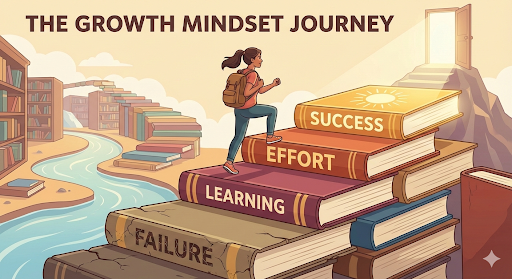
Failure is not the opposite of success; it’s part of it. Every mistake provides valuable feedback.
Example: Many successful entrepreneurs failed multiple times before succeeding.
3. Replace Negative Self-Talk
Your inner dialogue shapes your reality. Replace statements like:
“I can’t do this” → “I can’t do this yet”
“I failed” → “I learned something”
Small language changes make a big impact.
4. Focus on Effort, Not Just Results
Success is built on consistent effort. Praise yourself for hard work, persistence, and improvement rather than just outcomes.
5. Learn from Feedback
Constructive criticism is a gift. Instead of taking feedback personally, use it as a tool for growth.
Ask:
What can I improve?
How can I do better next time?
6. Stay Curious and Keep Learning
A growth mindset thrives on curiosity. Read
books, attend workshops, learn new skills, and stay open to new ideas.
7. Surround Yourself with Growth-Oriented People
Mindsets are contagious. Spend time with people who inspire growth, positivity, and learning.
8. Set Process-Based Goals
Instead of only focusing on results, set goals around habits and actions, such as:
Practicing daily
Learning one new thing a week
9. Practice Patience and Self-Compassion
Growth takes time. Be kind to yourself during setbacks and remember that progress is not linear.
Also Read: The Power of Mindfulness: Simple Practices for Everyday Mental Health
10. Reflect Regularly
Reflection strengthens awareness. Journaling about your challenges, lessons, and progress reinforces a growth mindset.
Growth Mindset in Daily Life
A growth mindset is not just a theory-it is something that can be practiced every day. When applied consistently, it positively transforms work, education, and personal life by encouraging learning, patience, and continuous improvement.
Growth Mindset at Work
Learn New Technologies
In a fast-changing work environment, learning new technologies is essential. A growth mindset encourages employees to stay curious and open to upskilling rather than feeling intimidated by change. Instead of saying, “This is too difficult,” they focus on learning step by step. This mindset increases adaptability and professional value.
Accept Feedback Positively
Feedback is a powerful tool for improvement when received with the right mindset. Growth-minded individuals view feedback as guidance, not criticism. They listen carefully, reflect on suggestions, and apply them to improve performance. This approach builds trust, teamwork, and career growth.
Take Ownership of Mistakes
Mistakes are inevitable at work, but how you respond to them matters. A growth mindset encourages accountability instead of blame. By owning mistakes, individuals learn valuable lessons and prevent future errors. This attitude fosters professionalism, responsibility, and continuous improvement.
Growth Mindset in Education
Focus on Understanding, Not Just Grades
A growth mindset shifts the focus from memorizing for grades to truly understanding concepts. Students who value learning over scores develop deeper knowledge and long-term skills. They enjoy the learning process and feel less pressure to be perfect. This leads to meaningful academic growth.
Ask Questions Freely
Asking questions is a sign of curiosity, not weakness. A growth mindset empowers students to seek clarity without fear of judgment. Questions help deepen understanding and build confidence. This habit strengthens critical thinking and active participation in learning.
Practice Consistently
Consistency is key to improvement. Growth-minded learners understand that mastery comes with regular practice. Even small daily efforts lead to progress over time. This discipline builds patience, confidence, and long-term success in education.
Also Read: The Two-Day Rule: How to Build Consistent Habits That Finally Stick
Growth Mindset in Personal Life
Improve Emotional Intelligence
A growth mindset helps individuals become more aware of their emotions and reactions. They learn to manage stress, respond calmly, and understand others’ feelings. This emotional awareness improves decision-making and personal well-being. Over time, emotional intelligence strengthens both self-control and empathy.
Build Healthier Habits
Developing healthy habits requires patience and persistence. A growth mindset encourages gradual improvement instead of instant perfection. People become more consistent with habits like exercise, mindfulness, or healthy eating. Small changes lead to lasting positive results.
Strengthen Relationships
In personal relationships, a growth mindset promotes understanding and effort. Individuals believe that relationships can improve through communication and patience. They work through conflicts rather than avoiding them. This mindset creates deeper connections, trust, and long-lasting bonds.
Common Myths About Growth Mindset
Myth: Growth mindset means ignoring failure
Truth: It means learning from failure
Myth: Effort alone guarantees success
Truth: Effort + strategy + learning lead to growth
The Mind is the Barrier, The Soul is the Learner
While psychology teaches us to expand the mind’s capabilities, true spiritual knowledge teaches us that the mind (Mann) itself is often the greatest obstacle to the soul’s liberation.
The Nature of the Mind (Mann):
According to our holy scriptures, the human mind is influenced by Kaal (Brahm). It is designed to keep the soul trapped in the web of worldly desires, ego, and temporary achievements. A “Fixed Mindset” in spirituality is the ignorance that “I am this body, and this world is real.”
Spiritual Growth Mindset:
True growth is not just about learning a new skill for a job; it is about recognizing the potential of the soul to break free from the cycle of birth and death.
- Karma and Effort: Just as neuroplasticity requires effort to rewire the brain, clearing the burden of past Karmas requires the “effort” of adhering to the rules of worship (Maryada) set by a True Guru (Tatvadarshi Sant).
- The Ultimate Potential: The soul has the same qualities as the Supreme God (Kabir Sahib)-it is immortal and blissful. However, the mind creates a “fixed” illusion of mortality.
The Solution:
To develop the ultimate growth mindset, one must transcend the mind. This is achieved through Sat-Bhakti (True Worship). When a devotee chants the true mantras given by a Complete Saint, the mind is purified, and the soul’s dormant powers are awakened. As God Kabir Ji says:
“Mann ke mate na chaliye, Mann ke mate anek |
Jo Mann par aswaar hai, so sadhu koi ek ||”
Translation: Do not follow the dictates of the mind; it has endless tricks. Rare is the saint who rides (controls) the mind.
Therefore, while you develop a growth mindset for worldly success, remember that the highest success is the salvation of the soul.
FAQ on How to Develop a Growth Mindset
1. What is a growth mindset in simple terms?
A growth mindset is the belief that abilities and intelligence can be developed through effort, learning, and persistence.
2. How long does it take to develop a growth mindset?
Developing a growth mindset is a gradual process and depends on consistent practice, self-awareness, and learning habits.
3. Can anyone develop a growth mindset?
Yes, anyone can develop a growth mindset regardless of age, background, or current abilities.
4. What are the benefits of a growth mindset?
It improves resilience, confidence, learning ability, mental health, and long-term success.