

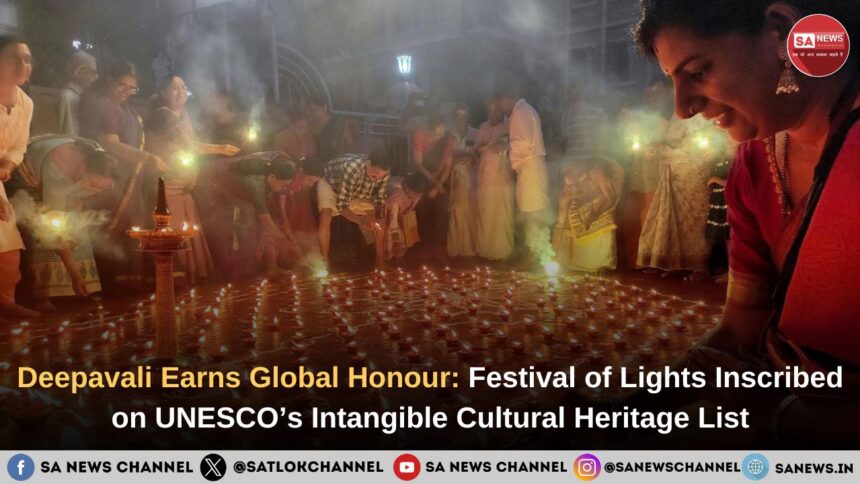
Deepavali, one of India’s most cherished and widely celebrated festivals, has received global recognition with its inscription on UNESCO’s Representative List of the Intangible Cultural Heritage of Humanity. The announcement was made during a key session of the Intergovernmental Committee for the Safeguarding of the Intangible Cultural Heritage (ICH), hosted at the historic Red Fort complex in Delhi.
- Key Points: Deepavali’s Inscription in UNESCO’s Intangible Cultural Heritage of Humanity
- Deepavali’s Inclusion Marks a Historic Cultural Moment
- PM Modi & Others Welcomed The Decision
- India’s 16th Inscription on the UNESCO Intangible Cultural Heritage List
- Deepavali as a Living Heritage: Rituals, Beliefs and Regional Traditions
- UNESCO Tag Brings Pride — and Responsibility
- International Recognition and Participation
- The Cultural Glory and the Missing Spiritual Light
- The Eternal Light of Sant Rampal Ji Maharaj’s True Spiritual Knowledge
- FAQs on Deepavali’s Inscription on UNESCO’s Intangible Cultural Heritage List
- Why was Deepavali added to UNESCO’s Intangible Cultural Heritage list?
- When was Deepavali officially inscribed on the UNESCO heritage list?
- How many Indian elements are now on UNESCO’s Intangible Cultural Heritage list?
- Who welcomed Deepavali’s UNESCO recognition from India?
- What makes Deepavali significant for UNESCO’s heritage criteria?
The decision sparked nationwide happiness and international appreciation, with world leaders, diplomats, and cultural bodies acknowledging the festival’s profound cultural, spiritual, and communal significance. The inscription marks a milestone moment for India, giving the nation an unique international presence and recognition.
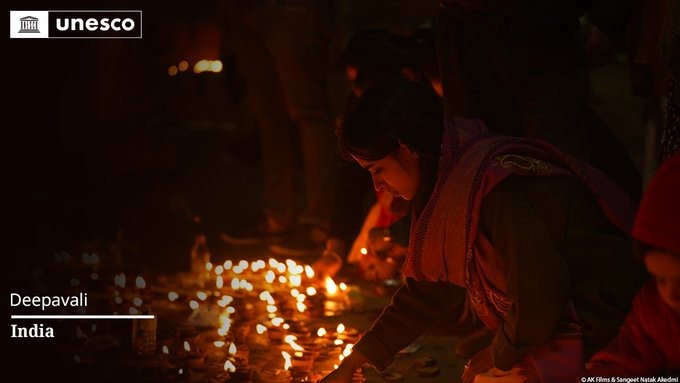
(Image Credits: UNESCO)
Key Points: Deepavali’s Inscription in UNESCO’s Intangible Cultural Heritage of Humanity
- Deepavali was added to UNESCO’s prestigious Representative List during the 20th ICH session at Delhi’s Red Fort.
- PM Narendra Modi, Union Culture Minister Gajendra Singh Shekhawat, and External Affairs Minister S. Jaishankar welcomed the recognition.
- This becomes the 16th Indian element inscribed on the UNESCO Intangible Cultural Heritage list.
- UNESCO highlighted Deepavali as a living cultural tradition observed with community participation across the world.
- Chants of ‘Jai Hind’ and ‘Bharat Mata ki Jai’ filled the venue as the announcement was made.
- India first submitted the Deepavali nomination dossier to UNESCO in 2023 for the 2024–25 cycle.
- Pakistan also congratulated India on the festival’s inscription during the ongoing session.
Deepavali’s Inclusion Marks a Historic Cultural Moment
Deepavali’s inscription on December 10, 2025, was met with great enthusiasm across the Red Fort as UNESCO announced its addition to the Representative List. Artists dressed in traditional attire performed before the main stage, while large screens showcased visuals of Deepavali observance. The festival, widely known as the ‘festival of lights,’ is observed in India and in many other parts of the world with lamps, diya decorations, prayers, sweets, fireworks, and community gatherings.
PM Modi & Others Welcomed The Decision
Prime Minister Narendra Modi welcomed the UNESCO decision, noting that people in India and across the world were thrilled. He said the festival represents India’s culture and ethos, describing Deepavali as “the soul of our civilisation.” PM Modi added that this global recognition will further enhance Deepavali’s worldwide popularity, emphasising its message of righteousness and illumination.
External Affairs Minister S. Jaishankar echoed these sentiments, calling the inscription a recognition of Deepavali’s immense importance. He stated that the festival plays a powerful role in bringing communities together across borders and generations.
India’s 16th Inscription on the UNESCO Intangible Cultural Heritage List
Following the announcement, Union Culture Minister Gajendra Singh Shekhawat delivered India’s official statement at the session. He emphasised that Deepavali is deeply emotional for every Indian and that it is a heritage lived and absorbed across generations. This inscription marks India’s 16th entry on UNESCO’s Representative List of the Intangible Cultural Heritage of Humanity.
The previously listed 15 Indian elements include:
- Kumbh Mela (2017)
- Durga Puja of Kolkata (2021)
- Garba of Gujarat (2023)
- Yoga (2016)
- Vedic chanting traditions (2008)
- Ramlila (2008)
- Kalbelia folk songs and dances (2010)
- Kutiyattam (2008)
- Chhau dance (2010)
- Mudiyettu (2010)
- Brass and copper utensil-making traditions of Jandiala Guru (2014)
- Sankirtana of Manipur (2013)
- Buddhist chanting of Ladakh (2012)
- Ramman festival (2009)
- Navrouz (2024)
Each represents India’s rich cultural diversity, echoing the secular identity of the nation.
During the session, members of the Indian delegation wore traditional headgear to commemorate the occasion.
Also Read: Maratha Military Forts Now Part of UNESCO World Heritage – A Moment of Great Pride for India
Deepavali as a Living Heritage: Rituals, Beliefs and Regional Traditions
Deepavali, also known as Diwali, is a traditional festival rooted in Indian civilisation. Homes, temples, and streets are illuminated with rows of lamps, symbolising the victory of light over darkness and good over evil. Potters, artisans, and millions of individuals contribute to keeping this vibrant cultural tradition alive every year.
North India’s Traditions
In North India, Deepawali marks the return of Lord Rama to Ayodhya after defeating Ravana. Homes glow with lamps, devotees perform Lakshmi Puja, and families celebrate over five days including Dhanteras, Naraka Chaturdashi, Diwali, Govardhan Puja, and Bhai Dooj.
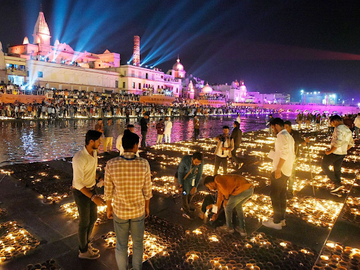
Image : Bhaskar English
South India’s Observance
In South India, the festival is more closely associated with Lord Krishna’s victory over Narakasura. Families begin festivities earlier with oil baths, special prayers, kolam decorations, early morning firecrackers, and elaborate meals, marking the triumph of good over evil.
The festival’s ability to unite diverse linguistic, cultural, and regional identities is one of the major reasons behind its inscription on the UNESCO heritage list. However, despite their cultural grandeur and emotional significance, these festivals and Puja are not mentioned in any of our holy scriptures, which means they cannot grant us any spiritual benefit or lead us toward true salvation.
UNESCO Tag Brings Pride — and Responsibility
Union Culture Minister Shekhawat emphasised that this global recognition is also a responsibility. He urged citizens to ensure that Deepavali remains a living, thriving heritage. Highlighting the Sanskrit verse “Tamso Maa Jyotirgamaya,” he encouraged people to light extra lamps symbolising gratitude, peace, shared humanity, and good governance.
He concluded his address with resonating chants of “Jai Hind, Bharat Mata ki Jai, Raja Ram Chandra Ji ki Jai,” marking the cultural and emotional depth associated with the festival.
Despite their motivational guidance, the truth about the festival remains the same. The rituals and the observance associated with them hold no scriptural relevance.
International Recognition and Participation
Pakistan also extended its congratulations to India. Shoaib Sarwar Sandhu, a diplomat at the Pakistani High Commission, acknowledged India’s achievement during his interaction with PTI.
The ongoing ICH session is examining 67 nominations submitted by nearly 80 countries. Among recent inscriptions announced were Bangladesh’s Tangail saree weaving, Afghanistan’s Behzad miniature painting style, and the transnational craft of making the Bisht. Countries such as Iraq, Jordan, and Kuwait also had cultural elements inscribed this week.
This is the first time India is hosting the ICH session, making Deepavali’s inclusion especially meaningful.
Also Read: लखनऊ को मिला UNESCO का “रचनात्मक गैस्ट्रोनॉमी शहर” टैग: अवधी व्यंजनों की वैश्विक स्वीकृति
The Cultural Glory and the Missing Spiritual Light
The global honour for Deepavali from UNESCO celebrates its profound cultural and historical significance, symbolising the triumph of light over darkness and hope over despair. Deepavali is often celebrated because Lord Shri Ram freed Mata Sita Ji from Ravan’s captivity. Yet, years later, due to a washerman’s ridicule, Shri Ram sent Mata Sita Ji away, causing immense sorrow among the people of Ayodhya, and the festival ceased from then.
We celebrate with external rituals like lighting lamps and feasting. But have we ever truly paused to ask: If this festival represents the triumph of light, why does the darkness of fear, sorrow, and the cycle of death still pervade our lives every single day? Our beautiful traditions, while important, only offer temporary relief.
The Eternal Light of Sant Rampal Ji Maharaj’s True Spiritual Knowledge
Jagatguru Tatvdarshi Sant Rampal Ji Maharaj guides us to understand who the Supreme God truly is. He reveals that the deepest, most enduring darkness is karmic, enforced by Kaal Brahm (Satan), the ruler of these 21 universes.
No amount of physical light can burn away the sins accumulated over countless lifetimes. Sant Rampal Ji Maharaj, the only Complete Saint today, imparts the true, scripture-based worship that cuts the roots of all sin and guides the soul back to Satlok, the eternal, undying light of Supreme God Kabir. Embrace this true path for eternal peace and salvation.
- Website: www.jagatgururampalji.org
- YouTube: Sant Rampal Ji Maharaj
- Facebook: Spiritual Leader Saint Rampal Ji
- ‘X’ handle: @SaintRampalJiM
FAQs on Deepavali’s Inscription on UNESCO’s Intangible Cultural Heritage List
Why was Deepavali added to UNESCO’s Intangible Cultural Heritage list?
Deepavali was added for its rich cultural diversity and global recognition.
When was Deepavali officially inscribed on the UNESCO heritage list?
Deepavali was officially inscribed on December 10, 2025, during the 20th session of UNESCO’s Intangible Cultural Heritage Committee in Delhi.
How many Indian elements are now on UNESCO’s Intangible Cultural Heritage list?
Deepavali became India’s 16th element on UNESCO’s Representative List of the Intangible Cultural Heritage of Humanity.
Who welcomed Deepavali’s UNESCO recognition from India?
Prime Minister Narendra Modi, External Affairs Minister S. Jaishankar, and Culture Minister Gajendra Singh Shekhawat welcomed and celebrated the global recognition.
What makes Deepavali significant for UNESCO’s heritage criteria?
Deepavali represents global unity in diversity, making it unique and appropriate for UNESCO’s heritage criteria.