


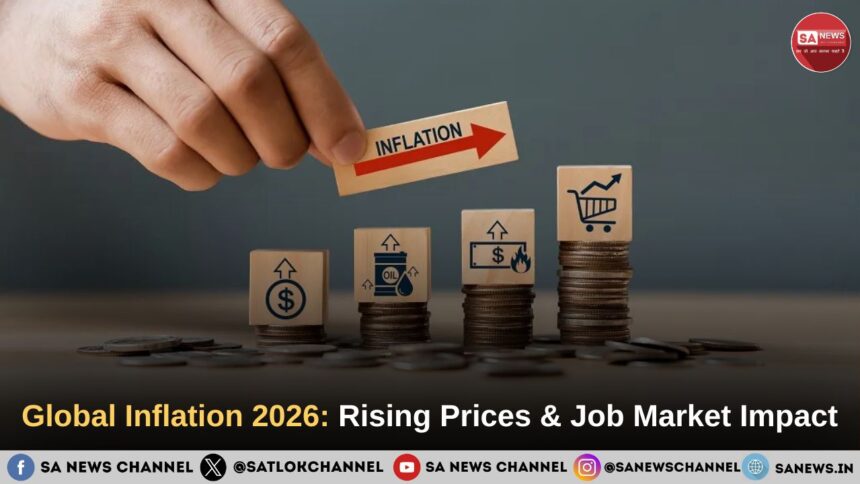
Global Inflation 2026: Global inflation continues to be one of the most significant economic challenges in 2026. Rising prices for food, fuel, housing, healthcare, and essential services are putting pressure on households across the world. At the same time, changing job markets, technological advancements, and economic uncertainty are making it harder for many people to plan for the future. Whether you are a student, employee, business owner, or retiree, inflation affects your purchasing power and financial security. Understanding why prices are increasing and how employment trends are changing can help you make smarter financial decisions and prepare for an increasingly uncertain global economy.
What Is Global Inflation?
Global inflation refers to the sustained increase in the prices of goods and services across many countries. When inflation rises, the purchasing power of money falls, meaning people can buy fewer products with the same income.
Inflation is a normal part of economic growth, but when prices rise rapidly, families and businesses face financial stress.
Why Is Inflation Still a Concern in 2026?
Several factors continue to influence inflation around the world,
including:
- Higher energy prices
- Supply chain disruptions
- Rising transportation costs
- Increased food prices
- Geopolitical conflicts
- Labor shortages
- Climate-related disruptions
- Government spending
- Interest rate policies
- Growing demand for essential goods
These factors often combine to push prices higher across multiple industries.
How Rising Prices Affect Everyday People
Food and Grocery Costs
One of the first places families notice inflation is at the grocery store. Basic necessities such as vegetables, dairy products, grains, cooking oil, and packaged foods often become more expensive.
Households may need to adjust budgets or reduce discretionary spending.
Also Read: The Invisible Tax: How Corruption Fuels Inflation and Public Suffering?
Housing and Rent
Housing costs continue to rise in many cities. Rent, home prices, maintenance expenses, and utility bills consume a larger share of household income.
Young professionals and first-time homebuyers often find it more difficult to enter the housing market.
Transportation Expenses
Fuel prices influence transportation costs for both individuals and businesses. Higher fuel prices can also increase the cost of delivering goods, leading to higher prices in stores.
Healthcare Costs
Medical treatments, health insurance premiums, and prescription medicines may become more expensive during periods of inflation, creating additional financial pressure for families.

How Inflation Impacts the Job Market
Inflation and employment are closely connected. Some industries experience strong hiring due to increased demand, while others reduce hiring because of higher operating costs. Workers may experience:
Wage Pressure
Employees often expect higher salaries to keep pace with rising living costs. However, wage growth does not always match inflation, reducing real purchasing power.
Changing Skill Requirements
Companies increasingly seek workers with digital, technical, and AI-related skills. Upskilling has become essential for long-term career growth.
Business Hiring Decisions
Higher business expenses sometimes cause employers to delay recruitment or reduce expansion plans.
Practical Ways to Manage Inflation
Although inflation cannot be controlled by individuals, smart financial habits can reduce its impact. Consider these strategies:
- Create a realistic monthly budget.
- Build an emergency savings fund.
- Reduce unnecessary expenses.
- Avoid high-interest debt.
- Improve professional skills.
- Diversify income sources.
- Invest carefully according to your financial goals and risk tolerance.
- Compare prices before making purchases.
- Focused on long-term financial planning.
Small financial decisions made consistently can help families remain more resilient during uncertain economic conditions.
Also Read: India’s Inflation Rate Drops Amid Decrease in Food Prices: A Positive Sign for the Economy
Economic Outlook for 2026
Many economists believe inflation could gradually stabilize in some regions, although uncertainty remains due to energy prices, geopolitical tensions, and supply chain challenges. Governments and central banks continue working to balance inflation control with economic growth and employment.
For individuals, financial awareness and careful planning remain the best tools for adapting to changing economic conditions.
True Wealth Lies Beyond Material Possessions
In a world where economic stability constantly fluctuates and material wealth is ultimately temporary, true peace can only be found in the eternal promise of spiritual salvation (Moksh). This profound reality is central to the Satgyaan (true knowledge) imparted by Sant Rampal Ji Maharaj, Who guides humanity toward lasting spiritual liberation.
His teachings remind us that while we must navigate our worldly financial responsibilities, our ultimate focus should remain on achieving eternal freedom. To explore these timeless truths and discover the definitive path to true happiness, seekers are encouraged to delve deeper into his profound literature. You can begin this transformative journey today by ordering your completely free copy of the highly revealing Gyan Ganga book directly from this link.
FAQs on Global Inflation
Q1. What is Global Inflation 2026?
Global Inflation 2026 refers to the continued rise in prices of goods and services across many countries, affecting the cost of living and purchasing power.
Q2. How does inflation affect everyday life?
Inflation increases the cost of food, housing, transportation, healthcare, and other essential expenses, making daily living more expensive.
Q3. Why does inflation impact jobs?
Businesses facing higher costs may slow hiring, while workers often seek higher wages to keep up with rising living expenses.
Q4. How can families protect themselves from inflation?
Families can manage inflation by budgeting carefully, reducing unnecessary spending, building emergency savings, improving job skills, and making informed financial decisions.
Q5. Will global inflation decrease in the future?
Inflation may gradually stabilize depending on government policies, global energy prices, supply chains, and overall economic conditions. However, future trends remain uncertain.