



We live in a world that constantly demands our attention, leaving our brains running hot and our nervous systems perpetually on high alert. When we feel overwhelmed, unfocused, or emotionally reactive, it is easy to assume that fixing it requires a radical life overhaul. Fortunately, neuroscience tells a different story.
To build a sharper brain and a calmer mind, we must look at the body as an interconnected system. The most direct path to rewiring your brain starts in a place you might not expect: your kitchen.
The Kitchen: Feeding the Mind-Gut Connection
It sounds like a cliche, but your diet is the literal raw material your brain uses to construct its architecture. Your brain consumes about 20% of your body’s total energy, making it highly sensitive to the quality of fuel you provide.
To understand why food impacts our mood so rapidly, we have to look at the gut-brain axis,a bidirectional communication highway running between your central nervous system and your gastrointestinal tract.
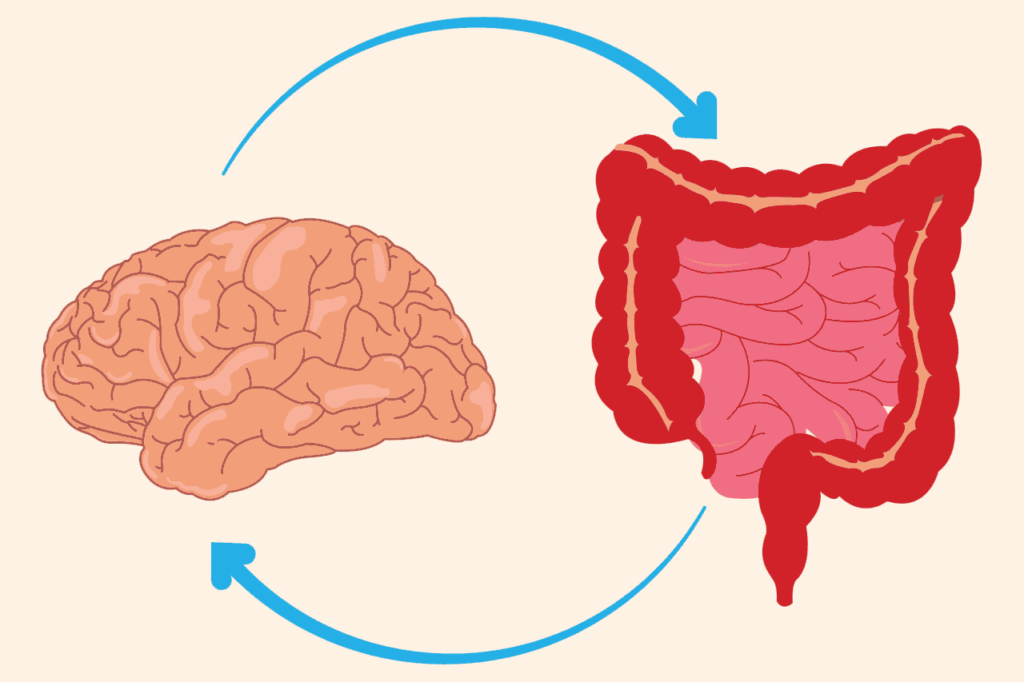
(Image Source: Stanford Education)
Your gut is lined with millions of neurons, earning it the nickname “the second brain.” It is also home to trillions of microbes that produce roughly 90% of your body’s serotonin, a key neurotransmitter responsible for regulating mood and emotional stability.
When your diet causes inflammation in the gut, it signals the brain to produce pro-inflammatory molecules, which can manifest as brain fog, anxiety, and low energy.
The Power of the MIND Diet
When it comes to protecting cognitive function and lowering stress, the scientific consensus points directly to a hybrid approach known as the MIND Diet (Mediterranean-DASH Intervention for Neurodegenerative Delay).
A landmark study published in Alzheimer’s & Dementia (Morris et al., 2015) found that rigorous adherence to the MIND diet lowered the risk of cognitive decline by up to 53%. Even those who followed it moderately saw a 35% reduction in risk.
To implement this practically, prioritize these core nutrient groups:
- Omega-3 Fatty Acids (DHA and EPA): These healthy fats are the structural building blocks of brain cell membranes. Found abundantly in walnuts, and chia seeds, omega-3s reduce neuroinflammation and promote synaptic plasticity, the brain’s ability to adapt and learn.
- Polyphenols and Flavonoids: These vibrant pigments give berries, dark leafy greens, and high-quality dark chocolate their color. They act as local antioxidants in the brain, sweeping away oxidative stress.
- Fermented Foods: Kimchi, kefir, sauerkraut, and unsweetened yogurt introduce beneficial bacteria to your microbiome. These bacteria produce short-chain fatty acids (SCFAs), which protect the blood-brain barrier and soothe systemic inflammation.
| Brain-Boosting Superfoods | Foods that Drain Brain Function |
| Leafy Greens & Berries (Daily) | Ultra-Processed Foods (Chips, pre-packaged meals) |
| Walnuts, Chia Seeds | Refined Sugars & High-Fructose Syrups |
| Extra Virgin Olive Oil (Primary cooking fat) | Trans Fats & Hydrogenated Oils (Margarine, fried foods) |
| Fermented Foods & Fiber (For the microbiome) | Excessive Alcohol (Disrupts sleep architecture) |
The SMILES Trial Takeaway
In a groundbreaking clinical trial published in BMC Medicine (Jacka et al., 2017), researchers found that individuals with moderate-to-severe depression who switched to a modified Mediterranean diet for 12 weeks experienced a 32% remission rate, compared to just 8% in the social-support control group. What you eat directly dictates how you feel.
Also Read: The Architecture of Potential: How Early Shared Reading Builds the Human Brain | SA News
The Body: Movement as Neural Fertilizer
Once you have optimized your chemical baseline in the kitchen, the next step is leveraging physical movement to alter your brain structure.
Many people view exercise strictly as a tool for physical aesthetics or cardiovascular health. In reality, your brain treats movement as a necessity for growth.
The Miracle-Gro Molecule: BDNF
When you engage in cardiovascular exercise, your brain releases a protein called Brain-Derived Neurotrophic Factor (BDNF).
Neuroscientists frequently refer to BDNF as “Miracle-Gro for the brain.” It stimulates neurogenesis, the birth of brand-new neurons particularly in the hippocampus, which is the epicenter of learning, memory, and emotional regulation.

A study published in Proceedings of the National Academy of Sciences (Erickson et al., 2011) demonstrated that adults who participated in moderate-intensity aerobic exercise three times a week for a year actually increased the volume of their hippocampus by 2%.
This effectively reversed age-related brain shrinkage by one to two years. To reap these rewards, you do not need to train for a marathon. The sweet spot for cognitive optimization is:
- 150 minutes per week of moderate aerobic activity (like brisk walking, cycling, or swimming).
- Aiming to stay within Zone 2 heart rate (where you can talk but cannot comfortably sing) for at least 30 minutes per session to maximize BDNF production.
The Nightly Brain Wash: Sleep and the Glymphatic System
Movement acts as a positive stressor, but the actual repair work happens while you sleep. For decades, scientists wondered how the brain cleared out cellular debris, given that it is isolated from the body’s lymphatic system.
The answer was discovered by Dr. Maiken Nedergaard: the glymphatic system.
- During deep, slow-wave sleep, your brain cells literally shrink by about 60%.
- This contraction allows cerebrospinal fluid to rush through the tissue like a dishwasher, flushing away metabolic waste products. This includes beta-amyloid plaques, the toxic proteins associated with cognitive decline.
- Lifestyle Change: Prioritize a consistent sleep window. Going to bed and waking up at the exact same time every day stabilizes your circadian rhythm, maximizing the percentage of time your brain spends in deep, restorative slow-wave sleep.
The Mind: Regulating Your Internal Alarm
If nutrition and lifestyle construct the hardware of a healthy brain, mindfulness and breathwork are the software that runs it. To transition from a state of hyper-reactivity to grounded calm, we must learn to soothe the autonomic nervous system.
Shrinking the Amygdala
When you experience chronic daily stress, a region of your brain called the amygdala, your survival-driven fear center becomes enlarged and hyperactive.
A hyperactive amygdala hijacks the prefrontal cortex (the seat of logic, planning, and emotional control), making you easily rattled, anxious, and impulsive.

(Image Source: SimplyPsychology)
Neuroimaging studies from Harvard University (Hölzel et al., 2011) revealed that individuals who practiced Mindfulness-Based Stress Reduction (MBSR) for just 8 weeks showed a visible decrease in gray matter density within the amygdala, alongside an increase in gray matter within the hippocampus.
The Nervous System Override: The Physiological Sigh
If you find yourself in a moment of acute anxiety or cognitive overload, you do not have to wait 8 weeks for structural changes.
You can trigger an immediate shift from the sympathetic nervous system (“fight or flight”) to the parasympathetic nervous system (“rest and digest”) using your breath.
Research out of Stanford University (Balban et al., 2023) highlights the clinical efficacy of the physiological sigh. This is a specific breathing pattern used naturally by mammals when stressed:
- Take two quick inhales through your nose (one deep inhale, followed immediately by a sharp top-off inhale to fully inflate the lungs).
- Follow it with a long, slow, audible exhale through your mouth.
Repeating this pattern just three to five times instantly signals the vagus nerve to slow your heart rate down, lowering blood pressure and returning your mind to a centered, calm baseline.
The Nutrition for Soul
By systematically addressing your nutrition, movement, and mental patterns, you give your brain exactly what it needs to thrive.
Similarly, it’s very important to address the needs of your soul and find answers to the questions humanity has been pondering over, and over for years on the purpose of this human life.
Sant Rampal Ji unfolds this mystery for us by providing us with the answers to these controversial questions while citing evidence from our very own holy books!
FAQs
Q: How does diet affect my cognitive and emotional health?
A: Your diet influences your mind through the gut-brain axis. The gut contains millions of neurons and produces roughly 90% of your body’s serotonin. Eating an anti-inflammatory diet, like the MIND diet, promotes healthy gut microbes that stabilize mood and protect against brain fog.
Q: What is the best exercise to improve brain function?
A: Moderate-intensity aerobic exercise (Zone 2 cardio) is best for brain health. Aiming for 150 minutes per week triggers the release of BDNF (Brain-Derived Neurotrophic Factor), a protein that stimulates the growth of new brain cells and expands the memory center of the brain.
Q: How does sleep physically detoxify the brain?
A: During deep sleep, the brain’s glymphatic system activates. Brain cells shrink by roughly 60%, allowing cerebrospinal fluid to rush through like a dishwasher. This process flushes out harmful metabolic waste and toxic proteins associated with cognitive decline.
Q: Can mindfulness physically alter brain structure?
A: Yes. Neuroimaging studies show that practicing mindfulness for just 8 weeks can physically shrink the amygdala, the brain’s overactive fear and stress center. Simultaneously, it increases gray matter in the hippocampus, which improves emotional regulation and memory.
Q: What is the fastest way to instantly calm anxiety?
A: The fastest method is the “physiological sigh.” Take two quick inhales through your nose (one deep breath followed by a sharp top-off inhale), then execute a long, slow exhale through your mouth. Repeating this 3 to 5 times instantly signals the vagus nerve to lower your heart rate.