



Every day, thousands of crimes occur around the world. Some are petty thefts driven by hunger. Others are cold, calculated acts of violence with no obvious motive. The question that haunts law enforcement, psychologists, and society alike is deceptively simple: why?
- The Criminal Mind: What Psychology Actually Studies
- The Biological Roots: Is Crime Written in the Brain?
- Childhood Trauma: The Wound That Keeps Offending
- Mental Illness and the Criminal Justice System
- Social Learning Theory: Crime as Learned Behaviour
- Cognitive Distortions: The Inner Logic of the Criminal Mind
- Statistical Overview: Psychology of Crime at a Glance
- Why Some People Resist: Protective Factors
- Key Psychological Theories: A Comparison
- The Role of Rehabilitation Over Punishment
- Conclusion: Looking Beyond the Crime, Into the Human
What separates a person who commits a crime from one who does not? Two siblings grow up in the same household, face the same hardships, and yet one builds a lawful life while the other descends into crime. Two neighbours share the same poverty, the same neighbourhood, the same broken streets, and yet only one turns to robbery. Understanding the psychology of a criminal does not mean excusing harmful behaviour. It means examining the layered, interconnected web of biology, experience, environment, and thought that shapes a person’s relationship with right and wrong.
This is not a simple story. There is no single gene that creates a criminal, no single trauma that guarantees a life of offending. Modern criminology and forensic psychology agree on one fundamental truth: crime is the product of cumulative and interconnected factors. This article unpacks every major one of them.
The Criminal Mind: What Psychology Actually Studies
Criminal psychology, a specialised branch of forensic psychology, examines the intentions, motivations, thought patterns, and behaviours of individuals who plan and carry out criminal acts. It looks beyond the act itself and into the mind that produced it.
The field draws from neuroscience, psychoanalysis, cognitive-behavioural theory, developmental psychology, and sociology. No single discipline owns the explanation.
What makes criminal psychology particularly valuable is its practical application. In courtrooms, forensic psychologists help judges and lawyers understand a defendant’s mental state at the time of the offence. In prisons, correctional psychologists design rehabilitation programmes. In schools and communities, behavioural scientists identify at-risk youth before a first offence ever occurs.
The goal is not just to understand crime after it happens, but to prevent it before it does.
The Biological Roots: Is Crime Written in the Brain?
The idea that criminal behaviour has biological underpinnings is not new. Early criminologist Cesare Lombroso notoriously claimed in the 19th century that criminals could be identified by physical features. That theory was debunked long ago. However, modern neuroscience has revealed something more nuanced and far more credible.
The Prefrontal Cortex and Impulse Control
The prefrontal cortex is the brain’s reasoning and decision-making centre. It governs impulse control, long-term planning, and the ability to weigh consequences. Research consistently shows that individuals who engage in antisocial behaviour often have an underdeveloped or damaged prefrontal cortex.
Crucially, the prefrontal cortex does not fully develop until the mid-20s. This biological fact helps explain the disproportionate rate of delinquent behaviour in adolescents and young adults. Their brains, quite literally, are not yet equipped to fully calculate consequences.
The Amygdala and Aggression
The amygdala, a small almond-shaped structure deep in the brain, regulates fear, aggression, and emotional response. Studies on violent offenders consistently show amygdala abnormalities. When the amygdala is overactive, it can generate disproportionate fear and aggression responses to neutral stimuli. When underactive, it can produce the emotional blunting associated with psychopathy.
Neurochemical Imbalances
Imbalanced levels of neurotransmitters and hormones play a measurable role in criminal behaviour. Elevated testosterone correlates with increased aggression. Low serotonin levels are linked to impulsive violence and hostility. Dopamine dysregulation feeds risk-seeking and reward-seeking behaviour that can manifest as thrill crimes or addiction-fuelled offending.
The anterior cingulate cortex (ACC), heavily involved in behaviour regulation and impulse control, has also been identified as a contributing factor in offenders with poor self-regulation.
Childhood Trauma: The Wound That Keeps Offending
If there is one factor that appears again and again in the psychology of criminal behaviour, it is childhood trauma. The evidence is both consistent and sobering.
A history of maltreatment is found in 80 to 90 percent of young offenders, according to studies published in peer-reviewed psychiatric journals in 2025. Research from the FBI’s Law Enforcement Bulletin noted that approximately 90 percent of juvenile offenders in the United States had experienced some form of traumatic event in childhood.
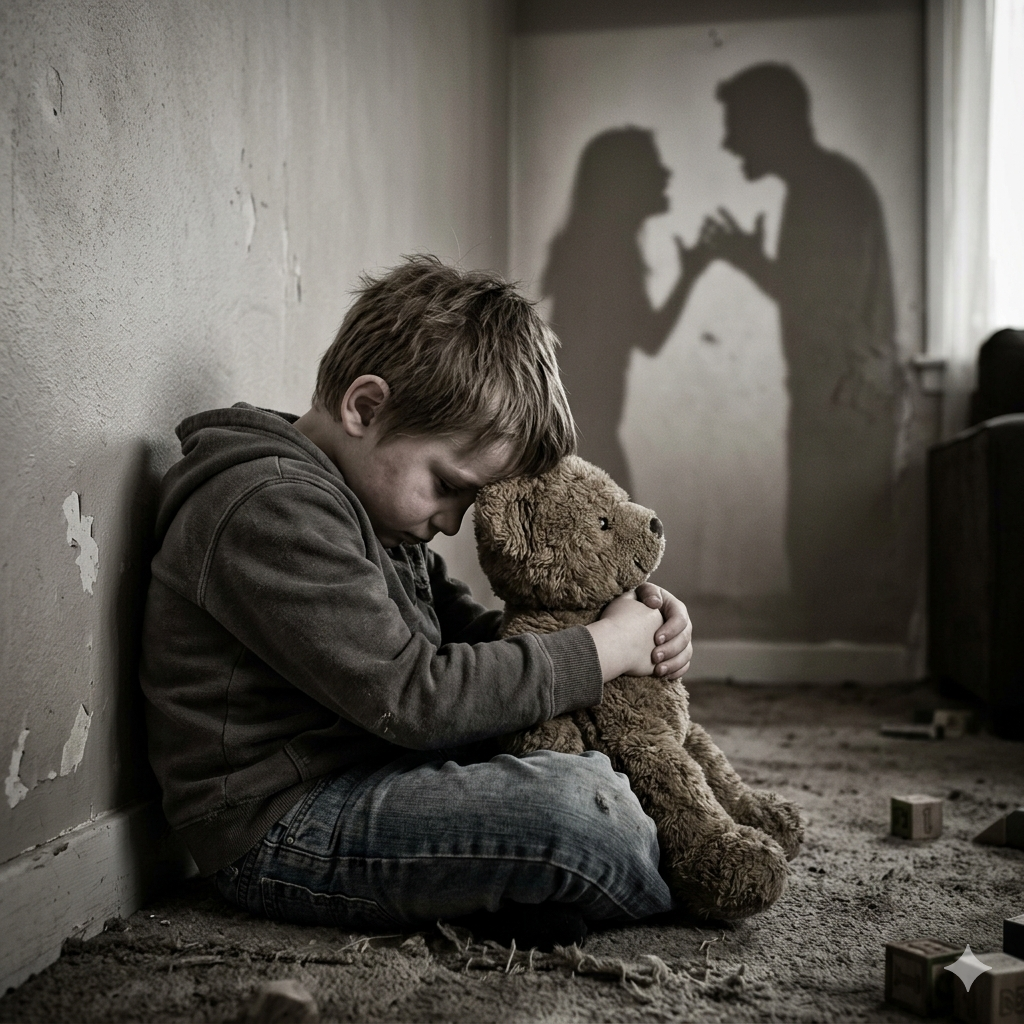
These adverse childhood experiences, known as ACEs, include physical and sexual abuse, emotional neglect, witnessing domestic violence, growing up with a parent who has a substance use disorder, and exposure to community violence. The more ACEs a child accumulates, the greater their risk of criminal involvement in later life.
How Trauma Reshapes the Brain
Trauma does not just leave emotional scars. It physically alters the developing brain. Prolonged childhood stress floods the brain with cortisol, which disrupts the development of the prefrontal cortex and hippocampus. This impairs emotional regulation, memory, and the ability to learn from consequences, all capacities that directly govern law-abiding behaviour.
Children who grow up in environments of chronic fear and instability learn to operate in survival mode. They develop hypervigilance, distrust of authority, and difficulty managing emotions. Without intervention, these adaptations carry into adulthood as the very psychological features associated with offending.
Also Read :The Psychology of Don’t: Why We Crave What We’re Told To Avoid – SA News
Poverty, Inequality, and the Strain Theory
Sociologist Robert K. Merton’s strain theory offers one of the most widely cited explanations for economically motivated crime. It argues that crime occurs when there is a gap between the goals society promotes (wealth, success, status) and the legitimate means available to achieve them.
When individuals lack access to education, employment, or social mobility, some turn to illegitimate means to achieve the same socially valued goals. This is not a moral failing. It is, in Merton’s framework, a predictable structural outcome of systemic inequality.
Substantial data confirms the correlation. Low socioeconomic standing, including poverty, poor financial literacy, and chronic unemployment, is strongly linked to higher rates of incarceration. This does not mean poor people are inherently criminal. It means that poverty, without adequate social support, creates conditions under which crime becomes a rational, if destructive, survival strategy.
Neighbourhoods with high poverty concentrations also tend to have reduced community cohesion, weaker social oversight, and lower trust in institutions. This erosion of informal social control, what criminologists call social disorganisation, makes crime more likely at both the individual and community level.
Mental Illness and the Criminal Justice System
The relationship between mental illness and criminal behaviour is one of the most misunderstood in public discourse. Mental illness does not make a person dangerous by default. The vast majority of people living with mental health conditions never commit a crime. However, the statistical overlap between untreated mental illness and criminal behaviour is impossible to ignore.
According to 2024 data from the Substance Abuse and Mental Health Services Administration (SAMHSA), 44 percent of those in jail and 37 percent of those in prison have a diagnosable mental illness. American prisons currently house three times as many people with mental illness as psychiatric hospitals. Approximately two million people with mental illnesses are arrested each year in the United States alone.
The key word is untreated. When access to mental health care is inadequate, symptoms escalate. Psychosis, severe depression, bipolar disorder, and personality disorders, when untreated, impair judgement, perception, and impulse control in ways that can lead to law-breaking.
A 2017 study of 228 prisoners found that 87.3 percent of women and 83.3 percent of men had a personality disorder at the time they committed their crime. Antisocial personality disorder, borderline personality disorder, and narcissistic personality disorder appear with particular frequency in criminal populations.
Psychopathy: The Most Studied Criminal Personality
Psychopathy represents an extreme constellation of personality traits including lack of empathy, superficial charm, manipulativeness, emotional shallowness, and persistent antisocial behaviour. Estimates suggest psychopathic individuals make up roughly 1 percent of the general population but approximately 25 percent of incarcerated populations.
Psychopaths do not commit crimes out of passion or poverty. They commit crimes as calculated decisions, often with minimal emotional cost to themselves. Understanding psychopathy has transformed how forensic psychologists assess risk, design rehabilitation programmes, and advise parole boards.
Social Learning Theory: Crime as Learned Behaviour
Not all criminal behaviour originates in trauma or biology. Psychologist Albert Bandura’s social learning theory proposes that people learn behaviours, including antisocial ones, through observation and modelling. If the most prominent figures in a child’s environment model criminal behaviour as normal, effective, or rewarding, the child learns to see it as such.
Gang membership is one of the clearest illustrations of this principle. Research shows that gang members are dramatically more likely to suffer from antisocial personality disorder, substance dependence, psychosis, and anxiety disorders compared to non-gang members. But they also demonstrate that peer influence, group identity, and social reinforcement can sustain criminal behaviour even in individuals who might not have offended independently.
The family environment is equally powerful. Children raised in households where aggression, rule-breaking, or substance abuse are normalised learn a distorted moral framework. Without exposure to counter-models and corrective experiences, this framework persists into adulthood.
Also Read : Positive Thinking: Is It Enough To Change Your Life?
Substance Abuse: The Accelerant of Crime
The link between substance abuse and criminal behaviour is both direct and indirect. An estimated 65 percent of incarcerated people in the United States suffer from a substance use disorder, with another 20 percent reporting they were under the influence at the time of their offence.
Addiction fundamentally alters brain structure and function. It hijacks the dopamine reward system, compresses decision-making into a narrow tunnel focused on obtaining the next dose, and steadily degrades impulse control and moral reasoning. People under the influence of substances may commit crimes they would never contemplate sober. People in active addiction may commit crimes, including theft, fraud, and violence, to fund their dependency.
However, substance abuse does not exist in isolation. It is almost always intertwined with trauma, poverty, mental illness, and social marginalisation. Treating it as a standalone cause misses the deeper architecture of vulnerability beneath it.
Cognitive Distortions: The Inner Logic of the Criminal Mind
Criminal psychologists have identified a set of cognitive distortions, flawed thinking patterns, that are strikingly common among chronic offenders. These are not lies people tell others. They are lies people tell themselves.
Common distortions include:
- Minimisation: “It wasn’t that serious.” Downplaying the harm caused to victims.
- Victimisation thinking: “Everyone is against me.” Framing criminal acts as justified responses to persecution.
- Entitlement: “I deserve this.” Believing one has the right to take or harm.
- Blame externalisation: “They made me do it.” Refusing to accept personal responsibility.
- Short-term focus: Prioritising immediate reward while discounting future consequences.
These distortions do not excuse criminal behaviour. But they explain how intelligent, otherwise functional individuals can sustain a pattern of offending without experiencing debilitating guilt. Rehabilitative programmes like Cognitive Behavioural Therapy (CBT) specifically target these distortions, and the evidence for their effectiveness in reducing reoffending is among the strongest in correctional psychology.
Statistical Overview: Psychology of Crime at a Glance
| Factor | Research Finding | Source / Year |
| Childhood trauma in juvenile offenders | 80 to 90% report traumatic childhood events | FBI Law Enforcement Bulletin / 2019 |
| Mental illness in jail populations | 44% of jail inmates have a diagnosed mental illness | SAMHSA / 2024 |
| Personality disorders in prisoners | 87.3% (women) and 83.3% (men) at time of offence | Study of 228 prisoners / 2017 |
| Substance use disorders in prison | 65% of incarcerated individuals meet criteria | National Institute on Drug Abuse / 2020 |
| Psychopathy in prisons vs. general public | ~25% of prisoners vs ~1% of general population | Forensic Psychology Research Consensus |
| Youth criminal justice system trauma | Up to 90% of justice-involved youth have significant trauma history | Frontiers in Psychiatry / 2024 |
These numbers tell a consistent story: crime is rarely random or morally disconnected from suffering. It is almost always traceable to a combination of neurological vulnerability, developmental injury, social disadvantage, and failed institutional support.
Why Some People Resist: Protective Factors
An equally important question in criminal psychology is why most people in high-risk environments do not commit crimes. The answer lies in protective factors: elements that buffer against criminal pathways.
Strong and consistent parental attachment in early childhood is perhaps the single most powerful protective factor. Children who feel securely bonded to at least one stable, caring adult develop better emotional regulation, higher empathy, and stronger internal moral frameworks.
Other protective factors include:
- Access to quality education and economic opportunity
- Positive peer groups and community mentorship
- Early identification and treatment of mental health disorders
- Stable housing and freedom from chronic environmental stress
- Strong cultural or spiritual identity that provides purpose and boundaries
Understanding protective factors shifts the conversation from punishment to prevention, which is where the real leverage lies.
Key Psychological Theories: A Comparison
| Theory | Core Claim | Key Figure |
| Psychoanalytic Theory | Unresolved inner conflicts drive antisocial behaviour | Sigmund Freud |
| Strain Theory | Crime results from a gap between social goals and means | Robert K. Merton |
| Social Learning Theory | Criminal behaviour is learned through observation | Albert Bandura |
| Cognitive-Behavioural Theory | Distorted thinking patterns produce criminal decisions | Aaron Beck / CBT tradition |
| Neurobiological Theory | Brain abnormalities and neurochemistry shape criminal behaviour | Modern neuroscience |
| Integrated Theory | Crime results from a combination of all the above | Contemporary criminology |
Modern criminology has moved decisively toward the integrated model. No single theory adequately explains the full spectrum of criminal behaviour. The most effective crime prevention and rehabilitation programmes are those that address multiple domains simultaneously: neurological, psychological, social, and environmental.
The Role of Rehabilitation Over Punishment
One of the most significant shifts in criminal psychology over the past three decades has been the growing recognition that punishment alone does not reduce crime. Incarceration, without therapeutic intervention, often deepens the very psychological wounds that produced offending in the first place.
Prisons are especially harmful for people with mental illness. Isolation, violence, and institutional dehumanisation worsen psychiatric symptoms, increase trauma exposure, and reduce the likelihood of successful reintegration. Recidivism rates in purely punitive systems remain stubbornly high.
Evidence-based rehabilitation programmes, including trauma-informed care, cognitive behavioural therapy, substance use treatment, vocational training, and family reconnection, consistently produce better outcomes. When criminal justice systems treat offenders as damaged people in need of repair rather than simply bad people deserving of pain, society benefits.
Conclusion: Looking Beyond the Crime, Into the Human
The psychology of a criminal is not a portrait of monsters. It is a portrait of fractured human beings shaped by forces many of them never chose: the brain they were born with, the home they were raised in, the neighbourhood that surrounded them, the trauma they absorbed before they could name it.
Understanding why crimes happen is not the same as excusing them. Victims deserve justice, and society deserves safety. But prevention, rehabilitation, and compassion rooted in genuine understanding are far more powerful tools than fear alone.
The deepest prevention lies in addressing what makes a human being turned against others and themselves. Spiritual wisdom, particularly in the teachings found in “Gyan Ganga” and “Way of Living”by Saint Rampal Ji Maharaj, points toward the root of all destructive behaviour: a soul disconnected from its true purpose. When a person finds meaning, direction, and inner peace, the allure of crime loses its power entirely.