

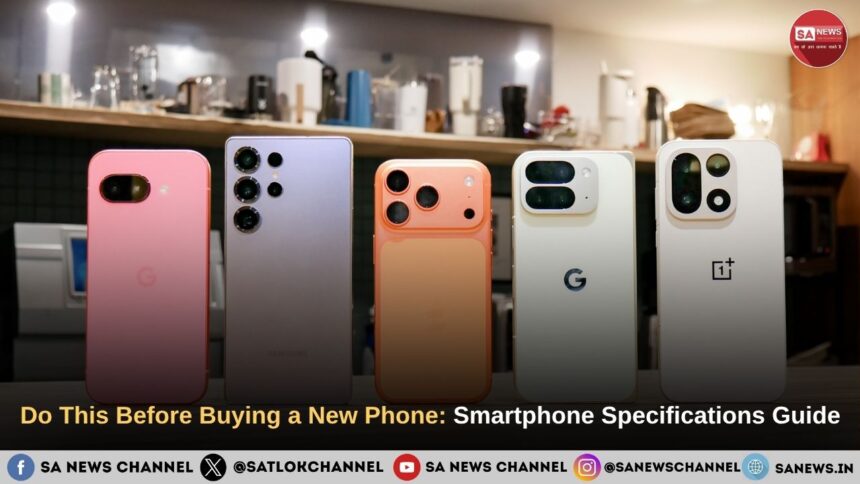
Smartphone Specifications Guide 2026: Over 150 million smartphones are sold in India every year. Yet most buyers still pick a phone based on brand name, colour, or a discount tag. Three months later, the phone heats up, freezes, or runs out of storage. That frustration is almost always avoidable.
- 1. Performance: The Engine That Runs Everything
- RAM: Your Phone’s Multitasking Memory
- Storage: How Much Your Phone Can Hold
- Processor: The Brain Behind Every Action
- 2. Display: What You Look at Every Waking Hour
- 3. Camera: The Truth Behind Megapixels
- 4. Audio: What You Hear When You Watch and Play
- 5. Build Quality: Materials That Define Durability and Feel
- 6. Durability: Understanding IP Ratings
- 7. Battery and Charging: What Keeps the Lights On
- 8. Connectivity and Additional Features
- The India Price-Wise Buying Guide
- Make a Decision That Actually Serves You
This guide explains every important smartphone specification in plain, everyday language. No technical jargon, no guesswork. For each spec, you will understand what it means, why it matters in real life, and exactly what to choose. A price-wise buying table for the Indian market is included at the end, so you can match your budget to the right set of expectations.
1. Performance: The Engine That Runs Everything
RAM: Your Phone’s Multitasking Memory
RAM (Random Access Memory) is the temporary workspace your phone uses while you are actively using it. When you switch from Instagram to Chrome and back without the app reloading, that is RAM keeping it alive. Low RAM means constant app refreshes, slow switching, and a sluggish feel within a year.
Modern phones use LPDDR RAM. The version matters:
- LPDDR4X: Found in budget phones. Handles basic tasks but struggles with multiple apps open simultaneously.
- LPDDR5: Standard in mid-range phones. Faster and more energy-efficient.
- LPDDR5X: Present in flagships. Optimised for AI features, gaming, and heavy multitasking.
What to choose: 6GB RAM is a bare minimum. 8GB is the sweet spot for most users. Gamers and multitaskers should target 12GB or more. In 2026, on-device AI features require more RAM headroom, so going higher future-proofs your investment.
Storage: How Much Your Phone Can Hold
Storage (also called ROM or internal memory) stores everything permanently: apps, photos, videos, and files. Unlike RAM, it does not clear when you restart. Storage speed is equally important because it determines how fast apps load and files transfer. Modern phones use UFS (Universal Flash Storage):
- UFS 2.2: Adequate for basic usage. Common in budget phones.
- UFS 3.1: Noticeably faster app loading and game installs. Found in mid-range devices.
- UFS 4.0: The fastest available. Found in flagships. Makes a visible difference for large games and file-heavy workflows.
What to choose: 128GB is the absolute minimum to buy in 2026. If you shoot videos or install many games, choose 256GB. Always check if the phone supports expandable storage via microSD.
Processor: The Brain Behind Every Action
The processor (also called chipset or CPU) handles every single calculation your phone performs. It determines app speed, gaming performance, camera processing quality, and battery efficiency. Several key terms matter here.
Cores refer to processing units inside the chip. More cores allow the phone to handle multiple tasks simultaneously. However, more cores also means higher power consumption, and phones with many high-performance cores can drain battery faster during heavy tasks. Modern chips balance this with a mix of performance cores (fast but power-hungry) and efficiency cores (slower but gentle on battery).
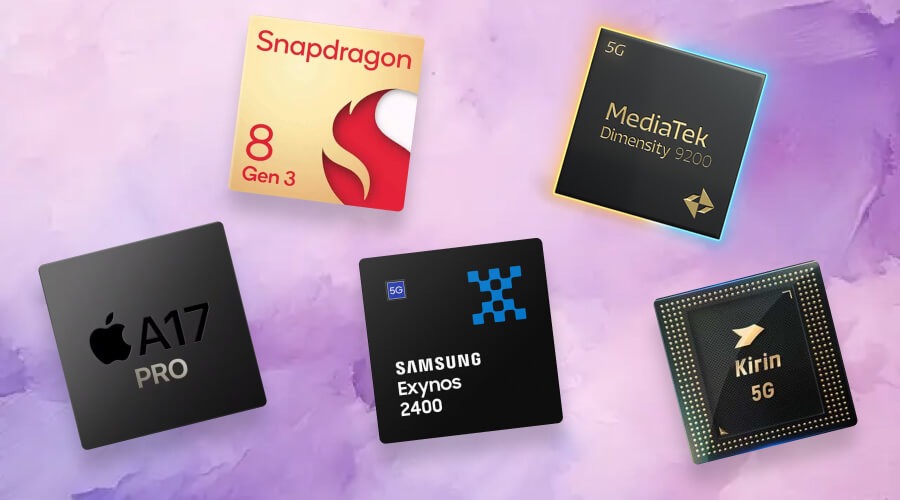
nm (nanometer) is the size of the transistors inside the chip. A smaller number means more transistors fit in less space, making the chip faster, cooler, and more efficient. A 4nm chip is significantly better than a 7nm chip. A 3nm chip, found in Apple A17 Pro and Snapdragon 8 Elite, represents the current pinnacle.
Clock speed (GHz) tells you how fast each core runs per second. Higher GHz generally means faster processing, but chip architecture matters just as much. A well-designed 3GHz chip can outperform a poorly designed 3.5GHz chip.
AnTuTu score is a benchmark number that gives a comparable performance rating across phones. It tests CPU, GPU, memory, and storage together.
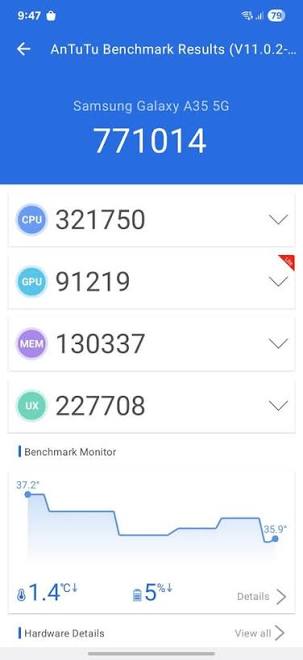
| AnTuTu Score | Performance Tier |
| Below 300,000 | Basic tasks only, noticeable lag |
| 300,000 to 600,000 | Smooth everyday use, light gaming |
| 600,000 to 1,000,000 | Strong mid-range, good gaming |
| 1,000,000 to 1,500,000 | Upper mid-range, heavy gaming ready |
| 1,500,000 to 2,000,000 | Near-flagship, handles everything |
| Above 2,000,000 | Flagship, top-tier performance |
Major processor brands and what phones they power:
- Qualcomm Snapdragon: Used in Samsung, OnePlus, Xiaomi, iQOO, Motorola. The industry leader in performance and connectivity.
- MediaTek Dimensity: Used in Realme, Vivo, Oppo, Poco, Redmi. Excellent value, strong gaming performance in upper variants.
- Apple A-series: Exclusive to iPhones. Consistently the fastest mobile chips globally.
- Samsung Exynos: Used in select Samsung Galaxy models. Competitive but runs warmer than Snapdragon equivalents.
- Google Tensor: Exclusive to Pixel phones. Optimised for Google’s AI and photography features.
What to choose: For everyday use, Snapdragon 7s Gen 3 or Dimensity 8300 gives excellent value. For gaming or heavy usage, target Snapdragon 8 Elite or Dimensity 9400. Avoid chips more than three generations old.
Read More : Samsung S26 Series: The Most Advanced Galaxy AI Flagship Launched
2. Display: What You Look at Every Waking Hour
Screen Types: From Basic to Best
The display type determines how colours look, how deep blacks appear, and how much battery the screen consumes.
- TFT LCD: The most basic screen technology. Colours are washed out and blacks look grey. Found only in very entry-level phones. Avoid it if possible.
- IPS LCD: A substantial improvement over TFT. Good colour accuracy, comfortable for reading, and reliable outdoor visibility. No true blacks, but an honest performer.
- AMOLED: Each pixel lights itself individually. When something is black on screen, those pixels turn off entirely, resulting in perfect blacks, vivid colours, and lower battery usage in dark mode. The preferred choice for media and gaming.
- OLED / P-OLED / LTPO OLED: The underlying technology family behind AMOLED. LTPO displays dynamically adjust refresh rate from 1Hz to 120Hz, saving battery intelligently.
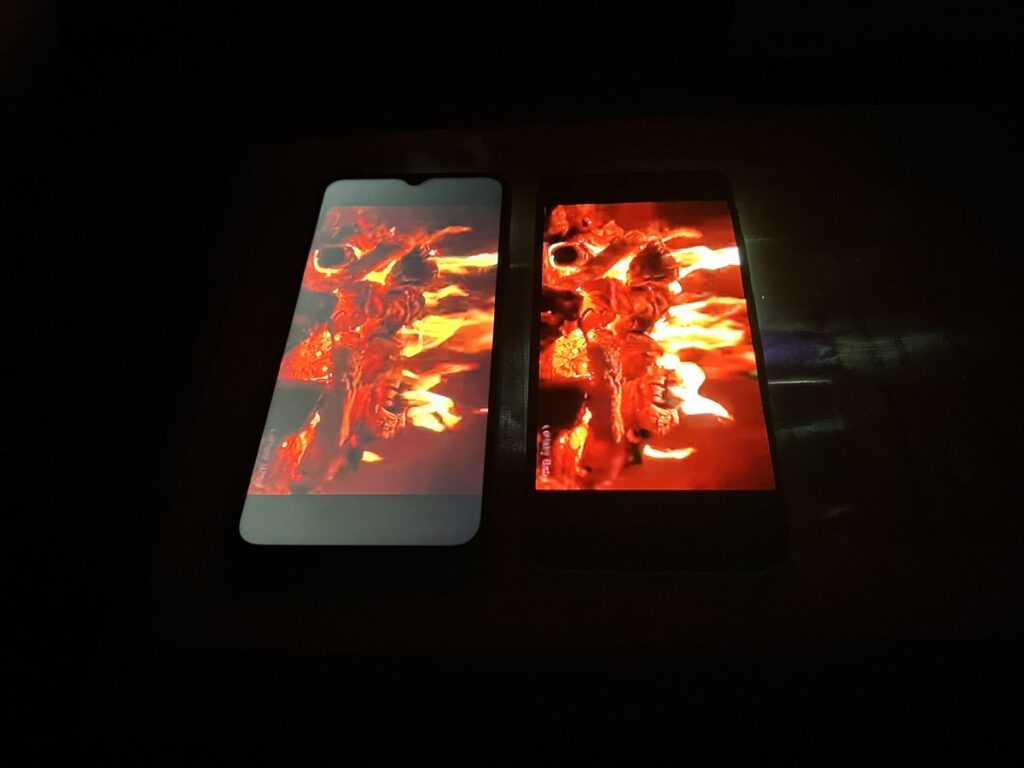
IPS vs Amoled(OLED) Display
What to choose: For any phone above ₹15,000, insist on AMOLED or OLED. IPS LCD is acceptable under that price point. Avoid TFT screens in any budget.
Refresh Rate: The Feel of Smoothness
Refresh rate measures how many times the screen updates per second. A 120Hz display redraws the screen 120 times per second compared to 60Hz, making scrolling and animations feel dramatically smoother.
- 60Hz: Functional but noticeably choppy compared to higher rates. Acceptable only on tight budgets.
- 90Hz: A visible step up for daily scrolling.
- 120Hz: The current standard. Smooth, responsive, and satisfying to use.
- 144Hz: Found in gaming phones. The real-world difference over 120Hz is minimal for most users.
What to choose: 120Hz should be a firm requirement for any phone bought in 2026. Adaptive refresh rate (LTPO) is a bonus: the display drops to 1Hz during static content to conserve battery.
Resolution and Brightness
Full HD+ (1080 x 2400 pixels) is sharp enough for screens up to 6.7 inches and is the standard in most mid-range phones. QHD+ (1440 x 3200) looks sharper but consumes more battery.
Brightness determines outdoor readability. Look for at least 1000 nits for comfortable use in sunlight. Flagships now reach 2000 to 3000 nits peak brightness, which makes a real difference when using maps or reading outside.
3. Camera: The Truth Behind Megapixels
What Megapixels Really Mean
Megapixels (MP) count how many tiny dots make up a photo. More megapixels means more detail, but megapixels are not the same as photo quality. A 12MP phone with a large sensor will consistently outperform a 108MP phone with a tiny sensor, especially in low-light conditions.
This happens because:
- A larger sensor captures more light per pixel, reducing noise and improving clarity in dim environments.
- Pixel binning technology combines multiple small pixels into one larger effective pixel, boosting light sensitivity on high-MP cameras.
- Computational photography (software processing) adds sharpening, dynamic range, and colour accuracy on top of hardware.
What to choose: Look at camera samples in reviews rather than megapixel counts. A 50MP main sensor with OIS (Optical Image Stabilisation) and a wide aperture like f/1.8 is the right target. OIS physically stabilises the lens to reduce blur from hand movement, which is far more effective than digital zoom or cropping.
Camera Sensor and Module Brands
The sensor is the component that captures light. The leading sensor makers are Sony IMX series (used in most premium phones), Samsung ISOCELL (excellent value in mid-range), and OmniVision (budget segment). On the lens module side, Largan Precision and Sunny Optical supply most high-end phone manufacturers.
Phones using Sony sensors generally deliver better low-light and skin-tone performance. Samsung ISOCELL has significantly closed the gap in recent generations.
Front vs. Rear Camera
The rear camera handles all primary photography and videography. Most phones above ₹20,000 now offer a multi-lens system: a main wide lens, an ultra-wide lens for landscapes and architecture, and a telephoto lens for zoom. The main lens quality matters most. An impressive ultra-wide or telephoto lens cannot compensate for a weak primary sensor.
The front camera handles selfies and video calls. 16MP to 32MP with autofocus is more than sufficient. Content creators should confirm 4K video recording support on both cameras.
Read More : Smartphones: Latest Reviews and News
4. Audio: What You Hear When You Watch and Play
Mono vs. Stereo Speakers
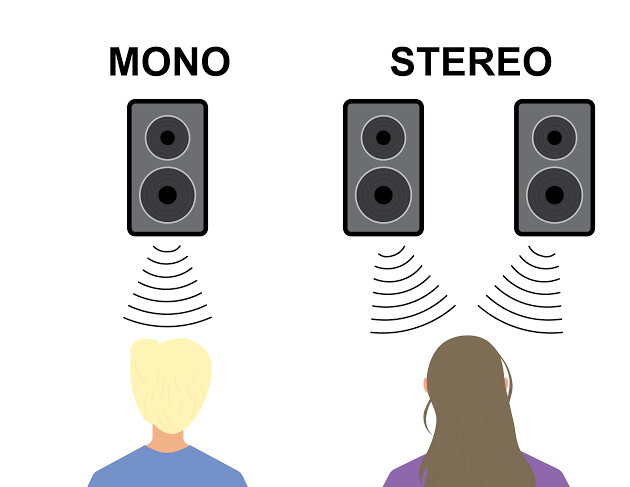
A mono speaker outputs sound from a single driver, usually at the bottom of the phone. The sound is directional and limited.
Stereo speakers use two drivers, typically one at the top and one at the bottom, creating a wide and immersive audio experience. For watching videos, playing games, or listening to music without headphones, the difference is immediately noticeable.
What to choose: Stereo speakers are non-negotiable for media-heavy users. Check for Dolby Atmos or Hi-Res Audio certification for better tuned output. If you rely on wired headphones, verify the presence of a 3.5mm headphone jack before purchasing, as it has disappeared from most mid-range and flagship phones.
5. Build Quality: Materials That Define Durability and Feel
Frame Materials
The frame runs along the edges of the phone and determines structural rigidity. Plastic frames are lightweight and absorb minor impacts without denting, but feel less premium. Aluminium alloy frames offer strength and a premium feel, and are standard in mid-range phones. Titanium frames appear only in ultra-premium flagships: extremely strong, light, and resistant to bending.
The frame material also directly affects heat dissipation. Metal frames conduct heat away from the processor fastest. Glass frames trap more heat, and plastic insulates it further. Gamers and heavy users should strongly prefer metal-framed phones.
Back Panel Materials
Plastic backs are durable and affordable. Glass backs look and feel premium, and they support wireless charging, but they are fragile without a case. Matte or frosted glass strikes a balance: premium appearance with better grip and fingerprint resistance. A few phones use leather or vegan leather back panels for a distinctive, comfortable feel.
Screen Protection: Gorilla Glass Variants
Corning Gorilla Glass protects the display from everyday scratches and short drops. The version determines how much protection you get:
| Gorilla Glass Version | Protection Level |
| Gorilla Glass 5 | Good impact resistance |
| Gorilla Glass 6 | Improved scratch resistance |
| Gorilla Glass 7i | Budget-optimised durability |
| Gorilla Glass Victus | Excellent scratch and drop protection |
| Gorilla Glass Victus 2 | Best available, surface-level military-grade |
What to choose: Gorilla Glass Victus or Victus 2 is the standard to target. Any phone without a named screen protection rating offers no guarantee against scratches from keys and coins.
6. Durability: Understanding IP Ratings
An IP rating (Ingress Protection) tells you how well a phone resists water and dust. It has two digits. The first digit (0 to 6) rates dust resistance: IP6X means completely dust-tight. The second digit (0 to 9) rates water resistance: IPX8 means the phone can survive submersion up to 1.5 metres for 30 minutes under controlled conditions.
Common ratings you will see:
- IP53: Splash resistant. Safe in light rain but not submersion.
- IP67: Dust-tight, survives 1 metre of water for 30 minutes.
- IP68: Dust-tight, survives 1.5 metres or deeper depending on the manufacturer’s certification.
- IP69K: The highest rating, resists high-pressure water jets. Rare in consumer phones.
What to choose: IP67 is acceptable. IP68 is the standard for mid-range and above. Many budget phones carry no IP rating, meaning even a spilled drink could damage them. If your lifestyle involves outdoor exposure, water, or dusty environments, IP68 is non-negotiable.
7. Battery and Charging: What Keeps the Lights On
Battery Capacity in mAh
Battery capacity is measured in milliamp-hours (mAh). Higher mAh stores more energy, but real-world battery life depends on screen type, refresh rate, processor efficiency, and usage intensity.
- 4000 mAh: Manageable for light users but typically needs a top-up by evening.
- 5000 mAh: The current standard for all-day battery life with moderate use.
- 6000 mAh or more: Ideal for heavy users, travellers, and those away from chargers for extended periods.
An AMOLED phone with 120Hz refresh rate and a powerful processor will drain a 5000 mAh battery faster than a basic IPS phone with a budget chip. Consider usage intensity alongside capacity numbers.
Charging Speeds
Charging speed is measured in watts (W). Higher wattage means faster charging:
- 18W to 33W: Standard. Adequate for overnight charging.
- 45W to 67W: Fast mid-range charging. A 5000 mAh battery charges in 60 to 75 minutes.
- 80W to 120W: High-speed charging from Realme, Vivo, and Xiaomi. Full charge in 20 to 35 minutes.
- Above 120W: Found in select Chinese brands. Extremely fast but generates significant heat.
Wireless charging is convenient but typically slower than wired. Most flagships support 15W to 50W wireless. Reverse wireless charging allows the phone to charge accessories like earbuds. Fast charging only works with the manufacturer’s original charger in most cases.
8. Connectivity and Additional Features
5G, Wi-Fi, and Bluetooth
5G delivers significantly faster download speeds and lower latency than 4G LTE. India’s 5G rollout is expanding rapidly across cities and towns. Buying a 5G phone in 2026 future-proofs your investment even if local coverage has not yet reached your area.
Wi-Fi 6 (802.11ax) offers faster speeds and better performance in crowded environments compared to older Wi-Fi 5. Target Wi-Fi 6 for any phone above ₹20,000. Bluetooth 5.0 or higher ensures stable pairing with earbuds and speakers at longer range and lower power consumption.
SIM Card and Other Practical Features
Nano SIM is standard across all current phones. Dual SIM support lets you use two numbers, which is practical for separating personal and work calls.
eSIM is a built-in digital SIM activated remotely, supported by most flagships and increasingly mid-range phones, and is ideal for international travel.
NFC enables contactless payments via Google Pay or PhonePe and fast pairing with accessories. It is now available in most mid-range phones and is worth having.
In-display fingerprint sensors come in two types: optical (fast and common in mid-range) and ultrasonic (more secure and accurate, found in Samsung flagships).
USB Type-C is universal across Android phones; USB 3.2 on higher-end devices supports faster file transfers.
The India Price-Wise Buying Guide
This table summarises the realistic minimum specifications to expect, and what you should not compromise on, at each price point in the Indian market in 2026.
| Budget (INR) | Display | Processor/AnTuTu | RAM / Storage | Camera | Battery / Charging | Build / Other |
| ₹10,000 to ₹15,000 | IPS LCD, 90Hz, HD+ | Dimensity 700 / ~300K–450K | 4–6GB / 64–128GB UFS 2.2 | 50MP main, no OIS | 5000 mAh / 18W | Plastic, no IP rating |
| ₹15,000 to ₹25,000 | AMOLED, 120Hz, FHD+ | Dimensity 7300 or Snapdragon 6 Gen 1 / ~500K–800K | 6–8GB LPDDR4X / 128GB UFS 2.2 | 50MP main, OIS unlikely | 5000 mAh / 33W–45W | Plastic or glass back, IP53 possible |
| ₹25,000 to ₹35,000 | AMOLED, 120Hz, FHD+ | Snapdragon 7s Gen 3 or Dimensity 8300 / ~800K–1.5M | 8GB LPDDR5 / 128–256GB UFS 3.1 | 50MP Sony/ISOCELL, OIS, ultrawide | 5000 mAh / 45W–67W | Aluminium frame, Gorilla Glass Victus, IP67 |
| ₹35,000 to ₹45,000 | AMOLED, 120Hz, FHD+/1.5K | Snapdragon 8 Gen 3 or Dimensity 9300 / ~1.5M–1.8M | 8–12GB LPDDR5 / 256GB UFS 3.1–4.0 | 50MP OIS + periscope zoom option | 5000–5500 mAh / 67W–80W | Metal frame, Victus, IP68, stereo, NFC |
| ₹45,000 to ₹60,000 | LTPO AMOLED, 1–120Hz adaptive, QHD+ | Snapdragon 8 Elite / Dimensity 9400 / ~1.8M–2.2M | 12GB LPDDR5X / 256GB UFS 4.0 | Multi-lens, periscope zoom, 4K OIS | 5000 mAh / 80W–120W wireless | Metal/titanium, Victus 2, IP68, stereo Dolby |
| Above ₹60,000 | LTPO OLED, QHD+, 2000+ nits | Apple A18 Pro / Snapdragon 8 Elite top-tier / 2M+ | 12–16GB LPDDR5X / 256–512GB UFS 4.0 | Flagship multi-cam, variable aperture, 8K video | 5000+ mAh / 80W–120W + wireless | Titanium or premium aluminium, Victus 2, IP68–IP69 |
Make a Decision That Actually Serves You
Choosing the right smartphone is not about the highest AnTuTu score or the most cameras on the back. It is about understanding which specifications directly affect how you use your phone daily: whether you multitask heavily, play games, shoot videos, or simply need a reliable device that lasts all day without reaching for a charger.
Match your budget to realistic expectations using the table above. Do not pay for flagship camera hardware if you only photograph family events. Do not accept a low-refresh-rate screen if you scroll and play for hours. Let your actual habits guide the decision.
Just as technology equips us to make smarter choices in the outer world, true clarity comes from within. Why is this technology provided to us? Know the real use of technology in your life. The holy books Gyan Ganga and Way of Living by Saint Rampal Ji Maharaj offer timeless wisdom for navigating life with purpose and discernment. For those who seek depth beyond specifications and screens, these works are a worthy companion to any smart device.