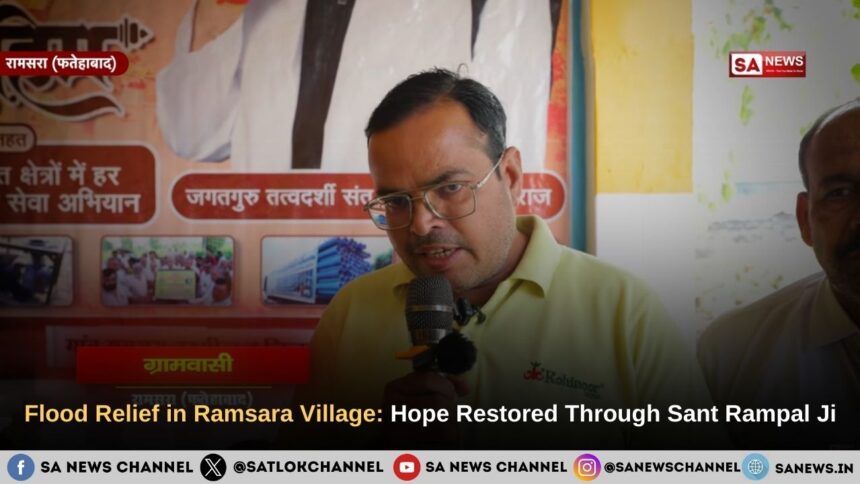
Ramsara is a village located in Fatehabad tehsil of Haryana’s Fatehabad district—surrounded by fields and inhabited by hardworking farmers, where agriculture is not merely an occupation but a way of life. However, when nature turns hostile, this very life is the first to collapse. This time, Ramsara faced exactly that.
- When Floodwaters Paralyzed the Village: Rising Distress and Suicides
- Administrative Efforts and the Role of the Panchayat
- An Appeal at the Darbar and a Response Within Three Days
- The Relief Convoy Entered the Village Like a Celebration
- Voices of Farmers, Women, and Youth
- A Technical and Practical Relief Solution
- The Letter Read Aloud in the Village: Responsibility and Accountability
- Sant Rampal Ji Maharaj as an Incarnation of God Kabir
- A Story Beyond Pipes and Motors
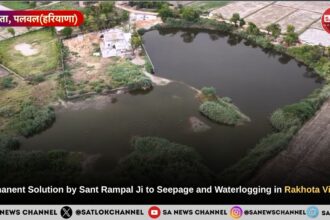
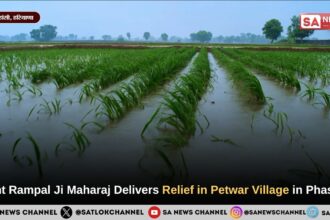
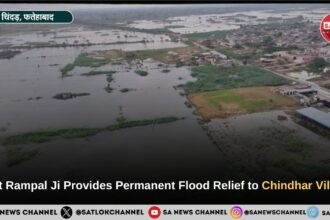
Continuous rainfall and floods surrounded the village from all sides. Fields were submerged, waterlogging caused salinity problems that rotted crop roots, wheat sowing came to a halt, fodder for livestock began to run out, and water entered schools and village lanes. Elders of the village said, “We have seen this much water for the first time in our lives.”
This is the background from which the story of Ramsara begins—a story not only of flood devastation, but of hope rebuilt after shattered trust.
When Floodwaters Paralyzed the Village: Rising Distress and Suicides
The impact of flooding in Ramsara was not limited to farmland alone. Due to the absence of a proper drainage system, water remained stagnant in fields for weeks. Farmers were helpless. Reports of suicides began to rise. Many households were gripped by fear—if crops could not be sown again this season, how would the year pass?
Elders’ eyes reflected helplessness, women worried about household survival, and youth faced an uncertain future regarding employment. The panchayat was approached repeatedly, memorandums were submitted to the administration, but no real relief appeared on the ground.
One farmer said plainly, “When we went to the government, we received only assurances. The water remained standing in the fields.”
Administrative Efforts and the Role of the Panchayat
It would be incorrect to say that the administration did nothing. Drain cleaning and inspections were carried out at their level. However, the volume of water and the geographical conditions were such that without a permanent solution, relief was impossible. The panchayat held meetings and consulted villagers.
It was then that some villagers suggested, “Let us appeal at the Darbar of Sant Rampal Ji Maharaj.” This suggestion reached the panchayat. Sarpanch Monu and panchayat members documented the village’s suffering in a written appeal.
An Appeal at the Darbar and a Response Within Three Days
A brief appeal from Gram Panchayat Ramsara was submitted at the Darbar of Sant Rampal Ji Maharaj through advocates. The village’s condition, waterlogged fields, and the sowing crisis were clearly explained. Expectations were low, but trust remained.
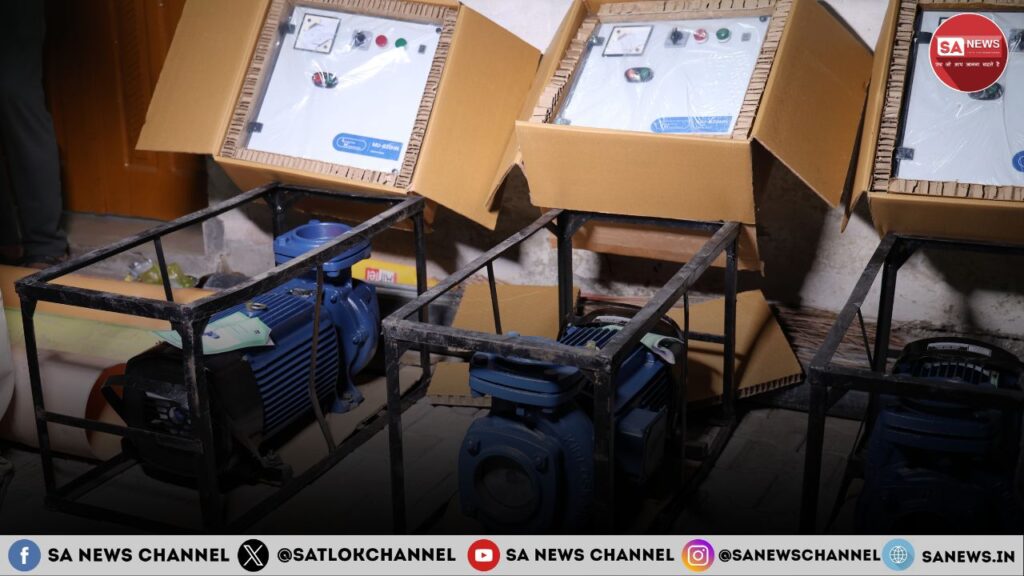
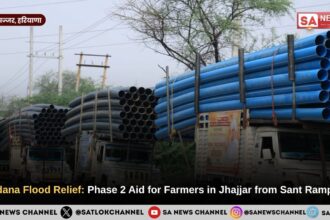
What followed was nothing short of a miracle for Ramsara. Within just three days, orders were issued to provide the village with complete drainage equipment. Four large 15 HP motors, 5,000 feet of 8-inch pipeline, starters, nuts and bolts, adhesives—everything required was arranged.
The Relief Convoy Entered the Village Like a Celebration
The day relief reached Ramsara, the entire atmosphere of the village transformed. Devotional songs played on DJs at the village entrance. Youth, elders, and women walked alongside the convoy. This was not a political rally, nor the reception of a leader—it was the joy of farmers who finally felt heard.
Trucks loaded with pipelines and motors, followed by villagers walking together, created a rare and emotional sight. An elderly villager said, “I am 80 years old, and this is the first time I have seen a saint arrive with arrangements to drain water from fields.”
Voices of Farmers, Women, and Youth
Farmers spoke from their hearts:
“We were helpless. Crops were destroyed, water stood everywhere. Today, Sant Rampal Ji Maharaj has wiped away our tears.”
Women expressed relief, saying, “Now we will be able to sow wheat, and fodder for animals will be available.”
Sarpanch Monu stated clearly, “On a small appeal, such a massive arrangement—four motors and thousands of feet of pipeline—this has never happened before. On behalf of the entire village, we bow in gratitude.”
Farmers added that waterlogging and salinity had completely ruined crops, and in 50–60 years, they had never seen a saint directly arrange drainage for fields. Women shared that crop destruction had affected kitchens, livestock fodder, children’s education, and daily life, while flooded schools and dispensaries had shut down entirely.
Youth said the government gave only assurances, but here, without delay, four motors and 5,000 feet of pipeline arrived, restoring hope for the next crop. Elders emotionally recalled that despite breathing difficulties, even 80-year-olds came out to witness the trucks—because they had never seen such a sight before.
A Technical and Practical Relief Solution
This relief is not just temporary support, but a sustainable and practical solution to Ramsara’s long-standing waterlogging problem. The support provided includes:
- Four powerful 15 HP motors
- A 5,000-foot-long 8-inch pipeline
- Starters, nuts and bolts, and all other necessary materials
These components together form a system designed to function for years. Pipelines will be permanently laid underground so that whenever water rises during rainfall, motors can be switched on immediately and water can be drained continuously. This means the village will no longer panic after every rainfall—water will be removed before it accumulates.
Due to this preparedness and permanence, villagers consider this assistance not merely relief, but a protective shield and a true “boon.” Even elderly villagers with health issues came out joyfully to see the motors arrive.
The Letter Read Aloud in the Village: Responsibility and Accountability
One of the most important aspects of this relief was the letter read aloud in the village. This was not a formality, but a clear message and a covenant of trust from Sant Rampal Ji Maharaj.
The letter stated that the purpose of providing motors, pipelines, and other materials was to ensure complete drainage of water within a fixed time and to guarantee sowing of the next crop. It was clearly mentioned that if, despite this support, water was not drained and crops were not sown, the village would not receive assistance in future disasters, as negligence would then be considered the village’s responsibility.
The letter emphasized transparency, stating that a drone video had been recorded before relief, another would be recorded after drainage, and a third once crops flourish. These would be shown at congregations and Satlok Ashrams to demonstrate that every donated rupee was used correctly and for its intended purpose.
It was also stated that if required, the village could request additional material, but draining water was non-negotiable. The panchayat and villagers signed the letter, committing to proper use, maintenance of equipment, and collective responsibility. This letter thus became not a condition, but a document of accountability, trust, and shared duty.
Sant Rampal Ji Maharaj as an Incarnation of God Kabir
Many villagers believe that Sant Rampal Ji Maharaj is an incarnation of God Kabir. This belief arises from His service, His directives, and His actions. It is not imposed on anyone—it emerges naturally from people’s experiences and faith.
A Story Beyond Pipes and Motors
The story of Ramsara is not merely about 5,000 feet of pipeline and four motors. It is the story of trust that had broken and was restored. It is the story of hope that drowned in floodwaters and then resurfaced. It shows that when service is selfless, it can change the destiny of entire villages.
Villagers say that in a time when many religious figures remain limited to sermons and offerings, Sant Rampal Ji Maharaj steps onto the ground—feeding the hungry, providing farmers with means to save crops, arranging medical care for the sick, and offering support to the helpless. During floods, thousands of feet of pipelines and large motors reaching villages on a single instruction, without selfish motives or showmanship, is not seen as the work of an ordinary human.