

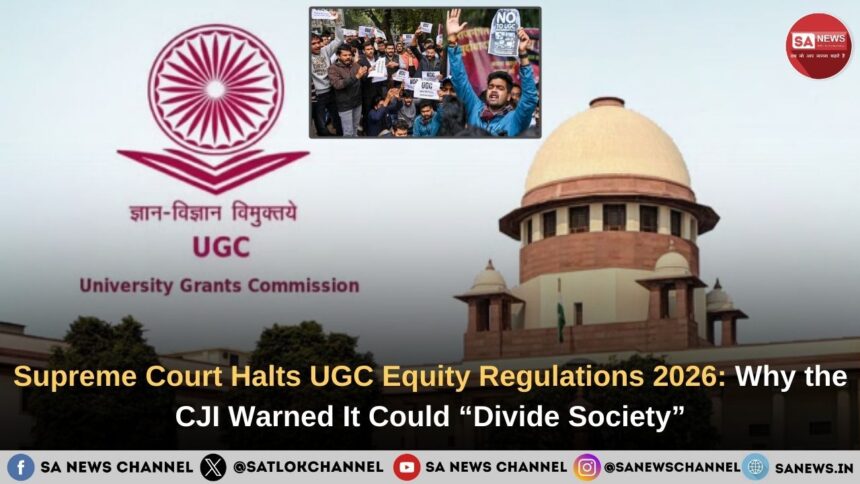
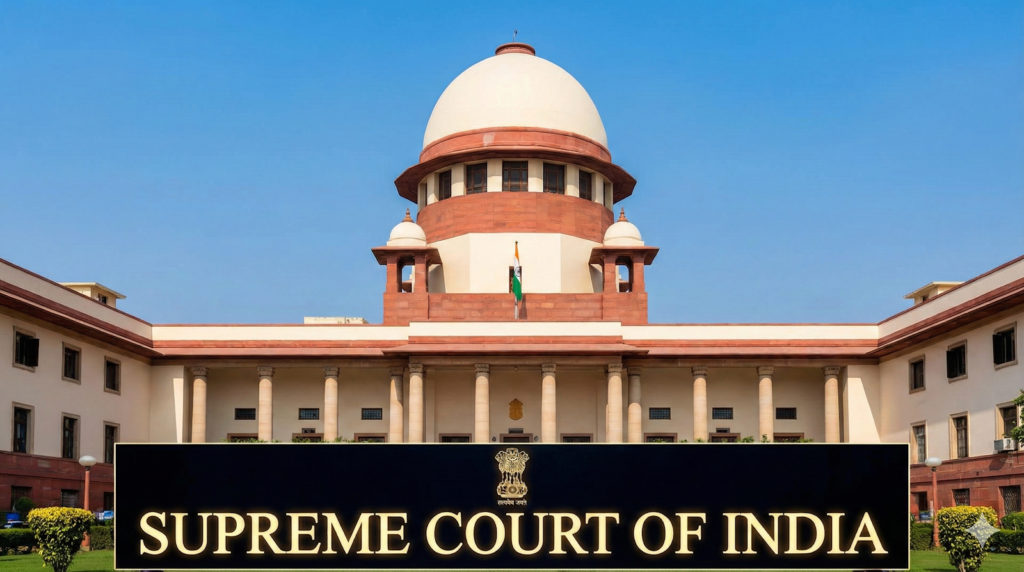
In a significant development for India’s higher education sector, the Supreme Court of India has placed an immediate stay on the University Grants Commission (Promotion of Equity in Higher Education Institutions) Regulations, 2026. The order, passed on January 29, 2026, follows intense debate and criticism over provisions that the Court described as vague, regressive, and potentially dangerous for social harmony.
- Why the Supreme Court Intervened
- The Core Controversy: General vs Reserved Categories
- 1. Exclusionary Definition of Discrimination
- 2. Concerns for General Category Students
- 3. Alarming Segregation Implications
- UGC and Government’s Position
- What Happens Next?
- The Path to True Unity
- FAQs on UGC Equity Regulations 2026
The apex court’s intervention has temporarily halted the implementation of the new regulations and reopened a crucial national conversation on how equity, inclusion, and equality should be balanced within India’s education system.
Why the Supreme Court Intervened
A Bench comprising Chief Justice of India Surya Kant and Justice Joymalya Bagchi expressed serious concerns over the structure and language of the 2026 regulations.
During the hearing, the Court acknowledged that preventing discrimination in higher education is a legitimate and necessary goal. However, it strongly questioned whether the new framework would actually promote unity or instead deepen existing divisions.
Key Observations by the Court
- Warning of Social Division:
The CJI cautioned that if left unchecked, the regulations could “create a lot of complications and divide society,” adversely affecting the country’s social fabric. - Regressive Outlook:
Questioning the direction of the policy, the Bench remarked,
“In a country after 75 years of independence… are we becoming a regressive society?” - Vague and Misusable Provisions:
The Court noted that loosely drafted definitions and enforcement mechanisms could lead to misuse rather than justice.
Also Read- UGC New Rules 2026: Rules Applicable Nationwide, Students and Teachers Concerned
The Core Controversy: General vs Reserved Categories
At the heart of the legal challenge lies the definition of discrimination under the new rules.
1. Exclusionary Definition of Discrimination
The 2026 regulations defined caste-based discrimination as acts committed specifically against Scheduled Castes (SC), Scheduled Tribes (ST), and Other Backward Classes (OBC).
2. Concerns for General Category Students
Petitioners argued that this narrow definition effectively excludes General Category students from seeking protection or redressal if they face discrimination.
The Supreme Court highlighted this inconsistency, noting that while one section of the regulations was narrowly framed, others were overly broad-creating legal ambiguity.
3. Alarming Segregation Implications
One of the strongest objections raised by the Bench related to provisions that could encourage separate hostels or segregation based on caste.
Reacting sharply, the CJI observed:
“For God’s sake… we cannot go backwards.”
The Court emphasized that students from all communities must live, study, and grow together if India truly aims to build a casteless and inclusive society.
UGC and Government’s Position
The UGC notified the Equity Regulations earlier in January 2026 with the stated objective of curbing caste-based discrimination and ensuring institutional accountability.
Key Features of the Regulations
- Mandatory Equity Committees in Higher Education Institutions
- Specified representation from SC, ST, and OBC communities
- Institutional mechanisms to address complaints of discrimination
However, following widespread criticism and legal challenges, the Supreme Court issued notices to the Union Government and the UGC, directing them to submit detailed responses by March 19, 2026.
What Happens Next?
The Supreme Court has made it clear that the regulations will remain in abeyance until further orders.
Immediate Outcomes
- 2012 UGC Regulations Restored:
To ensure that anti-discrimination safeguards remain in place, the Court directed that the 2012 regulations will continue to operate for now. - Expert Review Suggested:
The Court recommended that the Union Government constitute a panel of eminent academicians and experts to re-examine the language, intent, and consequences of the 2026 regulations.
The objective, the Court stressed, must be to prevent discrimination without creating new fault lines in society.
The Path to True Unity
While the Supreme Court battles to prevent laws from dividing us, we must ask ourselves: can legislation alone truly unite human hearts? The Chief Justice’s fear of a “regressive society” is valid, but the permanent cure for this division lies deeper than any courtroom verdict. Sant Rampal Ji Maharaj Ji teaches that our true identity is not defined by caste, creed, or reservation status, but by our existence as souls-children of one Supreme God (Kabir Sahib).
Sant Rampal Ji Maharaj teaches:
Our race is living beings, Mankind is our Religion;
Hindu, Muslim, Sikh and Christian, There is no separate Religion.
His discourses remind us that social evils and discrimination stem from ignorance of this spiritual bond. Laws can enforce compliance, but only True Spiritual Knowledge (Tatvgyan) can erase the lines of division from our minds. By embracing the path of true worship, we don’t just follow rules; we naturally realize that our race is “Living Being” and our religion is “Humanity.” Perhaps the real “equity” we seek isn’t in a rulebook, but in realizing we are all one family. It is time to explore this spiritual truth to find the lasting peace and unity the world is searching for.
FAQs on UGC Equity Regulations 2026
1. Why did the Supreme Court stay the UGC Equity Regulations 2026?
Because the Court found the rules vague, regressive, and potentially divisive.
2. What was the main issue with the UGC 2026 rules?
They excluded General Category students from discrimination protection.
3. Are anti-discrimination rules still applicable in colleges?
Yes, the 2012 UGC regulations remain in force.
4. What did the CJI mean by “divide society”?
The rules could promote segregation instead of unity.
5. What happens next in this case?
The Centre and UGC must respond by March 19, 2026.