

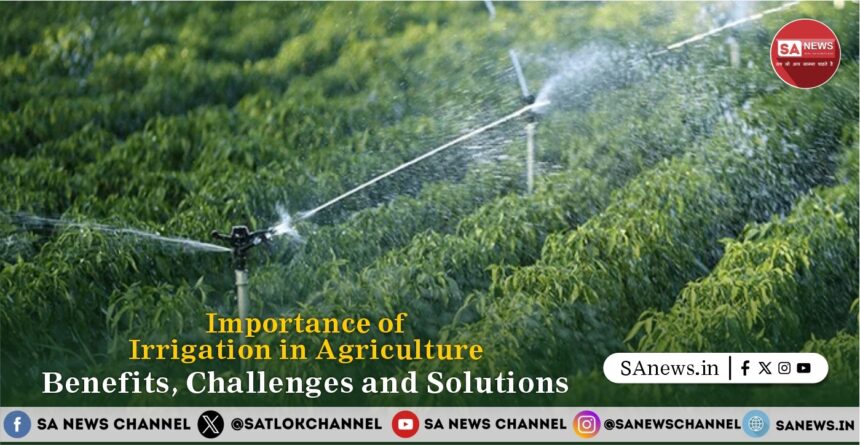
Irrigation refers to the artificial supply of water to crops through canals, wells, tube wells, sprinklers, or drip systems. While rainfall is a natural source of water for agriculture, it is often irregular and unreliable. In countries like India, where agriculture depends heavily on the monsoon, irrigation plays a critical role in ensuring stable food production.
- Regular Water Supply for Healthy Crop Growth
- Increasing Agricultural Production
- Reducing Dependence on Monsoon
- Supporting Cash Crop Cultivation
- Improving Soil Fertility
- Types of Irrigation Systems
- Challenges and Need for Water Conservation
- Role of Technology in Irrigation
- Spiritual and Ethical Perspective on Water Use
- Irrigation as the Backbone of Agriculture
Without proper irrigation, farming becomes highly uncertain, leading to crop failure, farmer distress, and food shortages. Therefore, irrigation is not just a farming practice but a necessity for economic stability and food security.
Key points:
- Ensures reliable water supply beyond rainfall
- Reduces risk of crop failure
- Supports national food security
- Strengthens rural economy
Regular Water Supply for Healthy Crop Growth
Water is vital for every stage of plant life, from seed germination to harvesting. Irrigation provides controlled and timely water to crops, helping them grow properly.
When crops receive adequate water, they develop stronger roots, healthier leaves, and better resistance to pests and diseases. Unlike rainfall, irrigation allows farmers to plan cultivation systematically.
Key points:
- Improves seed germination
- Supports root and plant development
- Prevents wilting in dry seasons
- Ensures uniform crop growth
Increasing Agricultural Production
One of the most significant advantages of irrigation is that it dramatically increases agricultural productivity. With assured water supply, farmers can cultivate high-yield crops and improve land utilization.
Irrigation enables multiple cropping, meaning farmers can grow two or even three crops in a year on the same piece of land. For example, a farmer can grow wheat in winter, rice in summer, and vegetables in the rainy season. This not only increases income but also enhances national food supply.
Irrigation also enables multiple cropping, meaning farmers can grow two or three crops in a year instead of just one. This increases both farm income and national food supply.
Key points:
- Boosts overall crop productivity
- Allows multiple cropping
- Makes better use of farmland
- Meets growing food demand
Reducing Dependence on Monsoon
Indian agriculture has traditionally depended on monsoon rains, which are unpredictable. Irrigation reduces this dependence and protects farmers from climate uncertainty.
Even in drought conditions, irrigated land can continue producing crops. This provides financial stability to farmers and reduces rural distress.
Key points:
- Protects crops during drought
- Reduces farmer losses
- Ensures stable food production
- Minimizes climate risks
Supporting Cash Crop Cultivation
Many cash crops such as sugarcane, rice, cotton, and banana require large amounts of water. Irrigation makes their cultivation possible and profitable.
With irrigation, farmers can shift from subsistence farming to commercial farming, improving their income and living standards.
Key points:
- Enables cultivation of water-intensive crops
- Increases farmer earnings
- Promotes commercial agriculture
- Encourages modern farming methods
Improving Soil Fertility
Irrigation plays a vital role in maintaining soil health. Proper watering helps preserve soil moisture, prevents erosion, and supports beneficial microbial activity.
Also Read: Biotechnology and Its Application: Transforming Agriculture, Medicine, and the Future
Water also aids in dissolving fertilizers and distributing nutrients evenly in the soil, ensuring that plants absorb them effectively. However, balanced irrigation is crucial; excessive watering can cause waterlogging and nutrient leaching, while insufficient watering can make soil dry and infertile.
Key points:
- Maintains soil moisture
- Enhances nutrient absorption
- Prevents soil erosion
- Supports long-term fertility
Types of Irrigation Systems
Different regions use different irrigation methods based on geography and water availability:
- Canal irrigation – Suitable for plains and river basins
- Well and tube-well irrigation – Common in groundwater areas
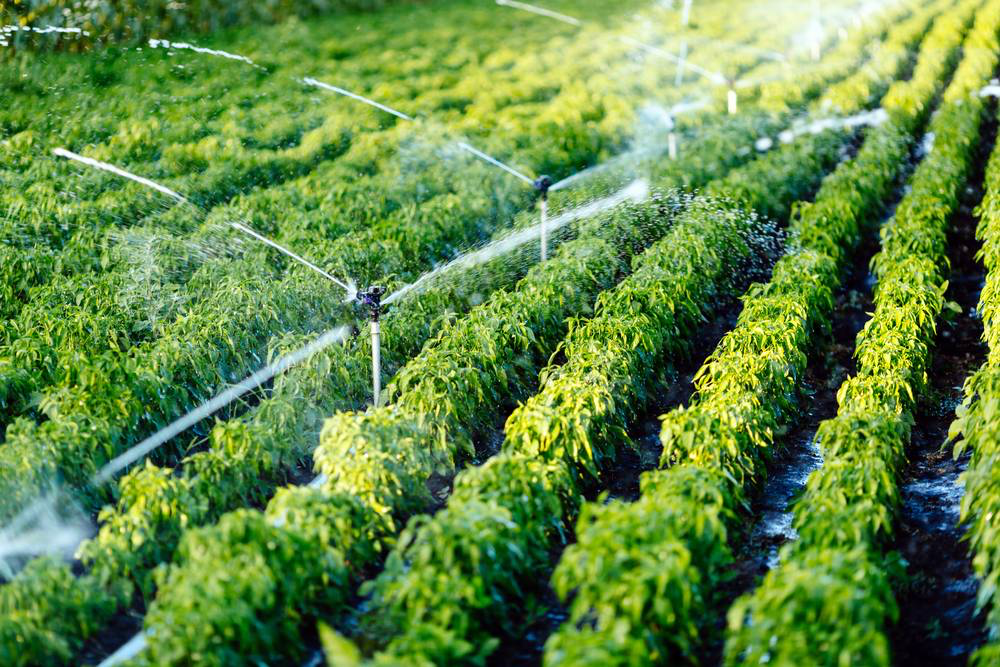
- Sprinkler irrigation – Good for uneven land
Drip irrigation – Most water-efficient method
Modern techniques like drip and sprinkler irrigation help conserve water while maximizing crop yield.
Challenges and Need for Water Conservation
Despite its benefits, irrigation faces challenges such as groundwater depletion and water wastage. Overuse of tube wells has lowered water levels in many regions.
To ensure sustainability, farmers must adopt water-saving techniques like rainwater harvesting and drip irrigation.
Key points:
- Groundwater is declining rapidly
- Excess irrigation harms soil
- Water conservation is necessary
- Sustainable practices must be adopted
Role of Technology in Irrigation
Modern technology has improved irrigation through automated pumps, soil sensors, and smart water management systems. These tools help farmers use water more efficiently.
Smart irrigation reduces wastage, saves electricity, and increases crop productivity.
Spiritual and Ethical Perspective on Water Use
rrigation sustains food security just as Sant Rampal Ji Maharaj’s flood relief seva sustains families in crisis both safeguard lives, crops, and rural futures through timely help and responsible use of nature’s resources. #Irrigation #FloodSeva #SantRampalJiMaharaj #SustainableFarming
For farmers, water means survival whether through reliable irrigation in fields or Sant Rampal Ji Maharaj’s selfless flood relief seva that restores homes, food, and hope. Irrigation increases productivity, reduces monsoon risk, and when combined with compassionate service like Maharaj Ji’s disaster relief efforts, it builds stronger, safer, and more resilient farming communities.
Irrigation keeps farms alive while Sant Rampal Ji Maharaj’s flood seva keeps families standing—together they protect food, faith, and the future
Irrigation as the Backbone of Agriculture
Irrigation is the foundation of modern agriculture. It ensures water supply, increases production, protects farmers from drought, and supports economic growth.
When combined with responsible water use and modern technology, irrigation leads to sustainable and prosperous agriculture. Balanced use of water today will secure food and resources for future generations.