


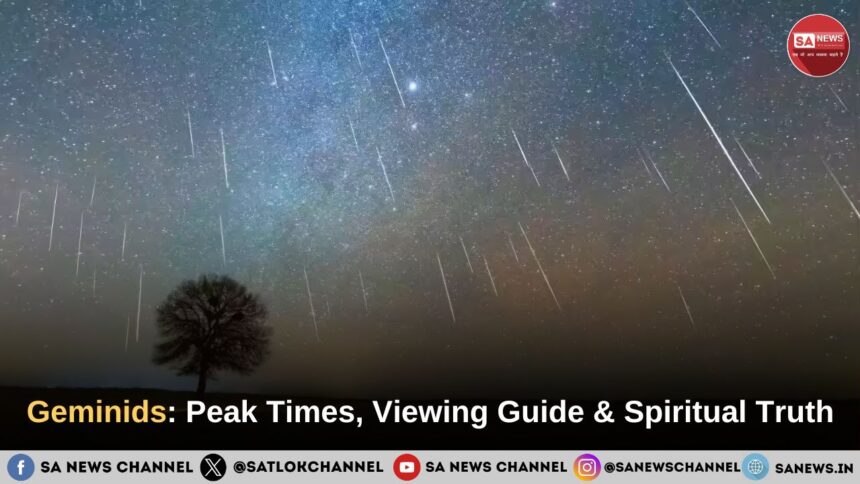
The year 2025 is set to conclude with a breathtaking astronomical display as the Geminids meteor shower prepares to illuminate the night sky. Renowned as one of the most reliable and intense meteor showers annually, the Geminids are expected to offer a spectacular show for stargazers worldwide, including enthusiasts in India.
Unlike most meteor showers that originate from comets, the Geminids are unique because they stem from an asteroid known as 3200 Phaethon. This distinct origin gives the meteors a rocky, gritty composition, often resulting in bright, yellowish streaks that can survive longer in the Earth’s atmosphere.
Peak Dates and Viewing Conditions
The 2025 edition of the Geminids is predicted to be particularly vibrant due to favorable lunar conditions. The shower will be active throughout early December, but the intensity will reach its zenith mid-month.
- Ideal Visibility: This year, the moon will be in a waning crescent phase (approx. 25% illuminated) during the peak nights.
- Dark Skies: With the moon rising late (around 1:30 AM), the early evening and post-midnight hours will provide dark, interference-free skies, perfect for spotting fainter meteors.
- Meteor Count: Under optimal conditions, observers may witness between 100 to 120 meteors per hour.
Key Data: Geminids 2025
| Feature | Details |
| Peak Activity | Night of December 13 to Early Morning of December 14 |
| Parent Body | Asteroid 3200 Phaethon |
| Radiant Point | Constellation Gemini (The Twins) |
| Zenith Hourly Rate (ZHR) | ~120-150 Meteors/Hour |
| Moon Phase | Waning Crescent (Favorable) |
| Best Viewing Time | Midnight to Pre-dawn (2:00 AM Local Time) |
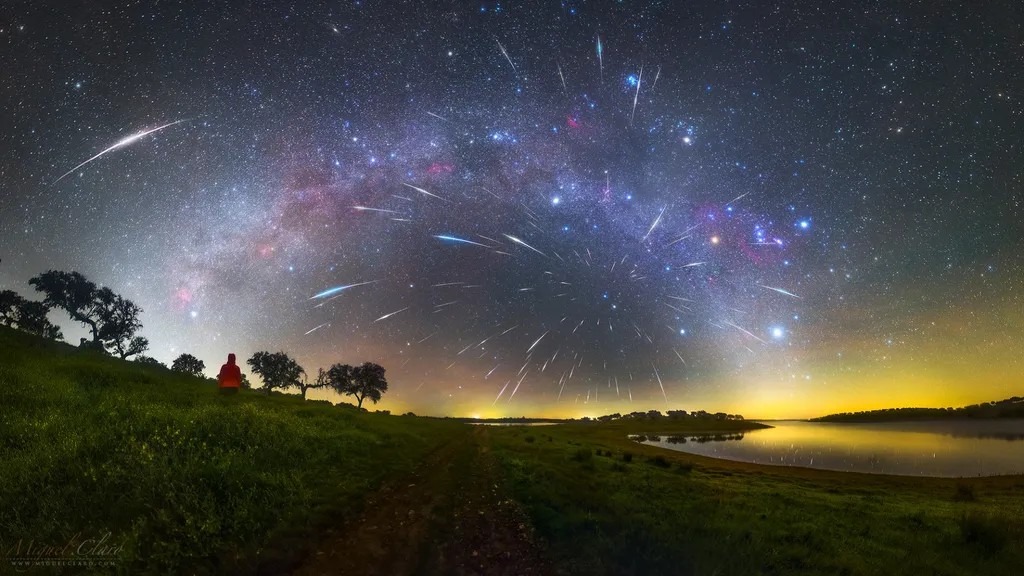
Image credit: Miguel Claro
How to Watch the Show
You do not need expensive telescopes or binoculars to enjoy this event; in fact, optical aids might limit your field of view. The best way to watch a meteor shower is with the naked eye.
- Find a Dark Spot: Move away from city lights and light pollution. A rooftop in a suburban area or an open field is ideal.
- Let Eyes Adjust: It takes about 20–30 minutes for human eyes to fully adapt to the dark. Avoid looking at phone screens during this time.
- Look Up: Lie on your back and look towards the zenith (the highest point in the sky). While the meteors radiate from Gemini, they can appear anywhere in the sky.
Beyond the Fading Stars: Aiming for the Eternal Beauty of Satlok
While the Geminids meteor shower offers a mesmerizing visual treat, it is ultimately a momentary glimpse of beauty in a perishable world. We spend hours waiting in the cold darkness just to see a streak of light that vanishes in a second. However, Supreme God Kabir Sahib reveals that the beauty we chase here is not even a fraction of the magnificence present in Satlok (The Eternal Place).
Also Read: NASA’s DART Mission May Create First Human-Made Meteor Shower
In Satlok, the environment is self-illuminated, and the beauty is constant, not fleeting. There is no day or night, only perpetual light and bliss. Why aim for temporary sights when we can aim for the Supreme Abode? No matter how much we enjoy the spectacles of this world-be it nature, wealth, or stars-we are bound by the harsh reality of death. One day, we must leave this body, and at that moment, these worldly experiences will offer no comfort.
To ensure we do not regret or cry at the time of death, we must prepare for our final destination now. The soul’s true home is Satlok, where there is no birth, death, or suffering. This highest state of existence can only be achieved by taking refuge in a Tatvadarshi Sant. Currently, Sant Rampal Ji Maharaj is the only True Guru showing the path to that eternal world where beauty never fades.
FAQs on Geminids Meteor Shower 2025
1 When is the best time to watch the Geminids meteor shower in 2025?
The best time is the night of December 13 leading into the early morning of December 14, specifically between midnight and 2:00 AM.
2 Do I need a telescope to see the Geminids?
No, telescopes limit your view. The naked eye is the best tool for watching meteor showers as it allows you to see the entire sky.
3 Will the moon affect visibility in 2025?
Visibility will be excellent in 2025. The moon will be a waning crescent and will not rise until later in the night, leaving the sky dark for prime viewing.
4 Where do the Geminid meteors come from?
They originate from debris left behind by the asteroid 3200 Phaethon, unlike most showers which come from comets.
5 Can I see the Geminids from India?
Yes, the Geminids are visible from the Northern Hemisphere, including India. Locations away from city pollution offer the best view.